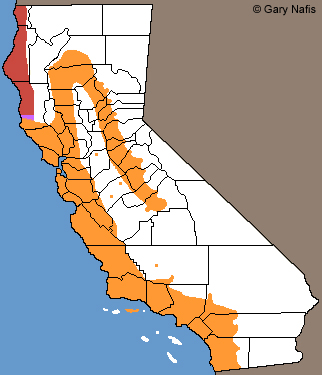
 Orange
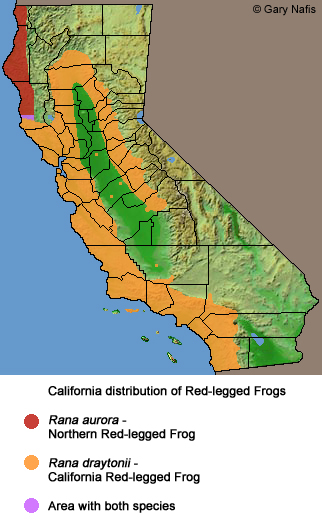
: Historic range in California of
Rana draytonii - California Red-legged Frog
(Now absent from most of southern California
and the Sierra Nevada.)
Red: range of Rana aurora - Northern Red-legged Frog
Purple: approximate range of intergradation
Click on the map for a topographical view
Map with California County Names
Listen to this frog:

A short example
|
 |
 |
 |
 |
| |
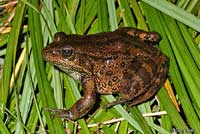
Adult, San Mateo County |
|
 |
 |
 |
 |
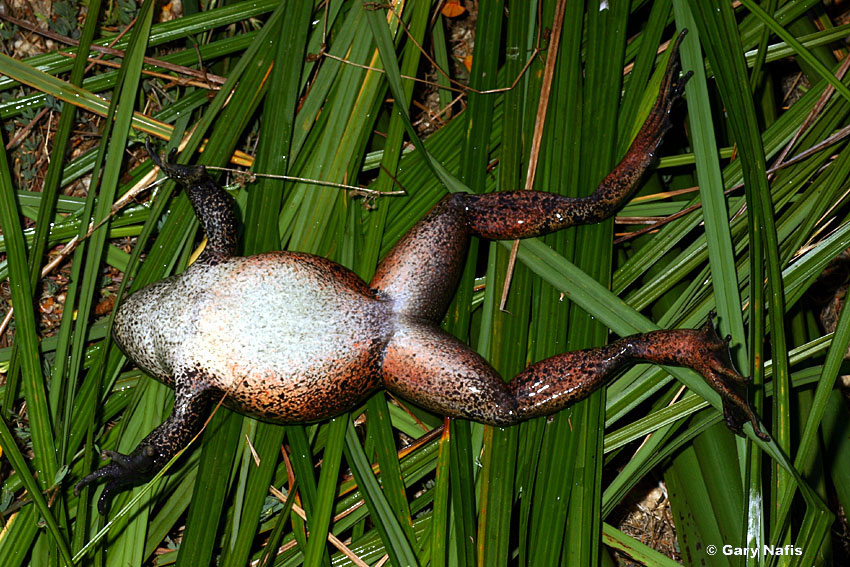
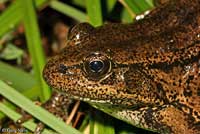
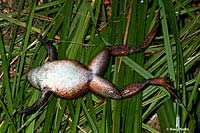
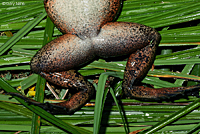
| Adult, showing the red coloring underneath the legs, San Mateo County |
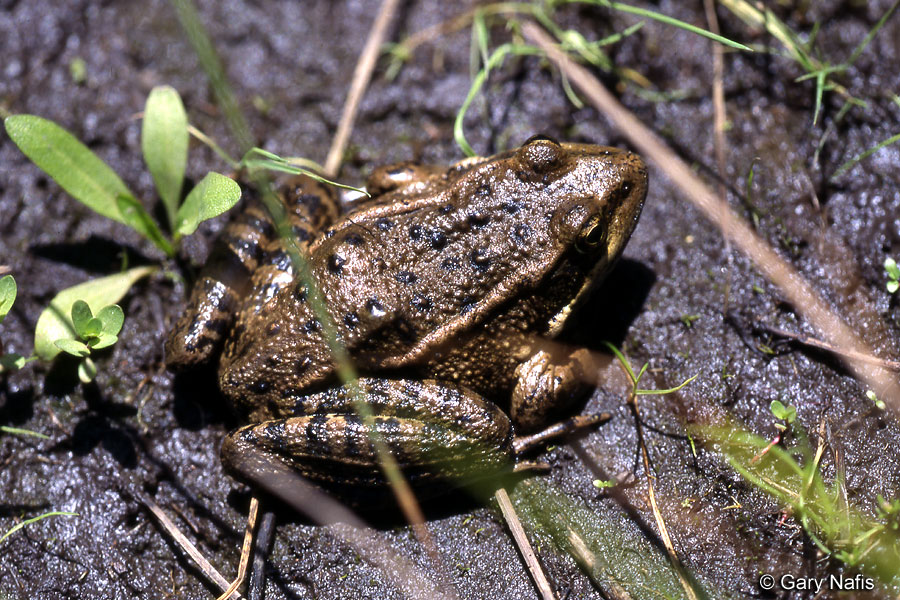
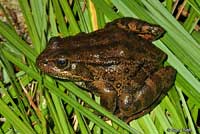
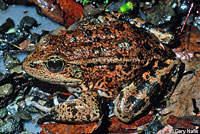
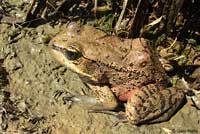
Adult male, interior of the Coast Range, western Fresno County |
 |
 |
 |
 |
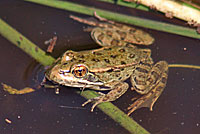
| Adult, Contra Costa County |
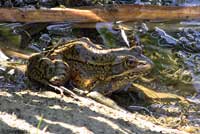
Adult, Marin County |
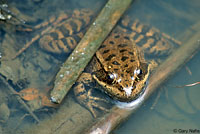
Adult, Contra Costa County |
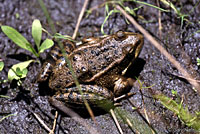
Adult, San Mateo County |
 |
 |
 |
 |
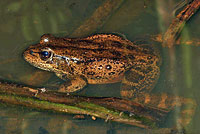
| Adult, San Mateo County |
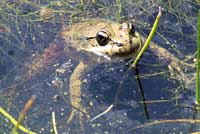
Adult, San Mateo County |
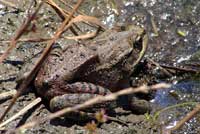
Adult, Contra Costa County |
Adult, Contra Costa County |
 |
 |
 |
 |
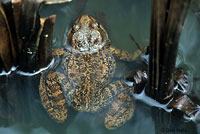
| Adult, San Mateo County |
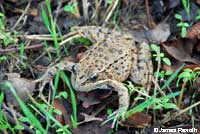
Adult, San Joaquin County
© James Rexroth |
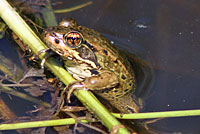
Adult, San Mateo County |
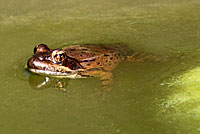
Adult, Marin County |
 |
 |
 |
 |
| Adult, Alameda County |
Adult, Alameda County |
Adult, Monterey County
© Anonymous Contributor |
Adult, Marin County |
 |
 |
 |
 |
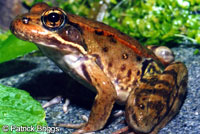
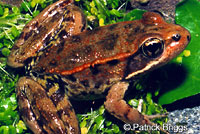
Adult, San Luis Obispo County
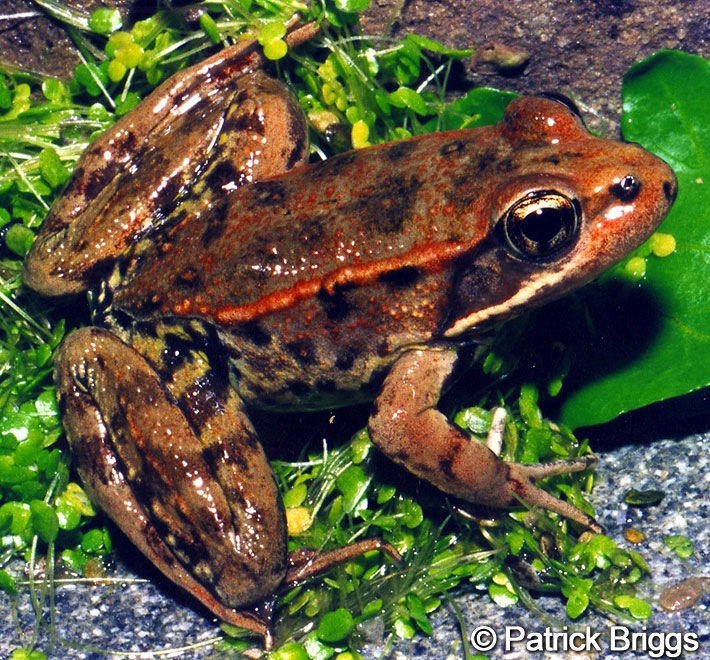
© Patrick Briggs |
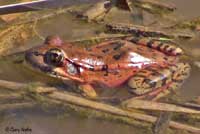
Adult, San Luis Obispo County
© Patrick Briggs |
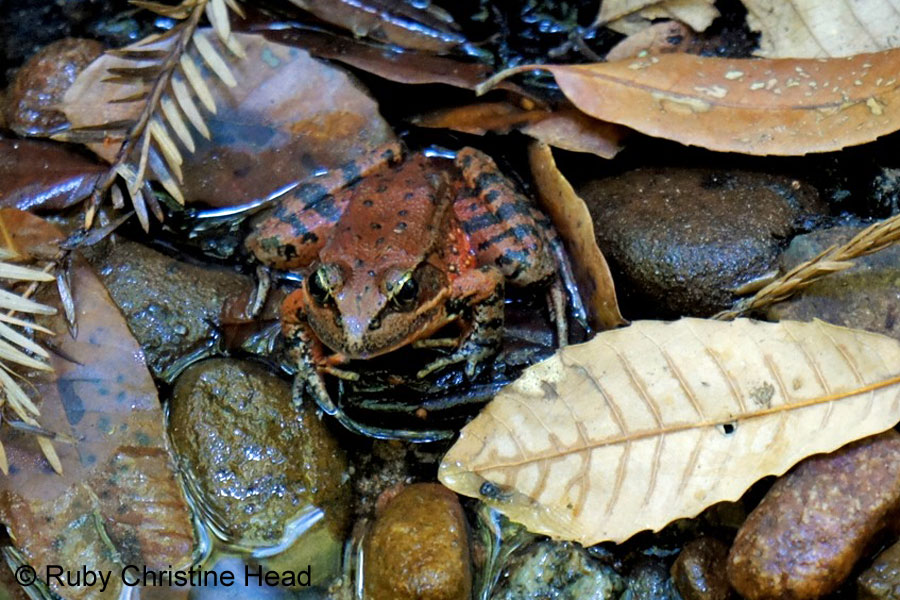
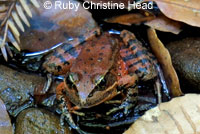
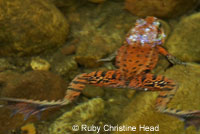
Adult , Santa Cruz County © Ruby Christine Head |
 |
 |
 |
 |
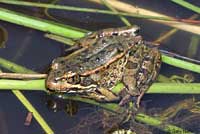
| Adult, Contra Costa County |
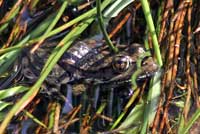
Adult, Marin County |
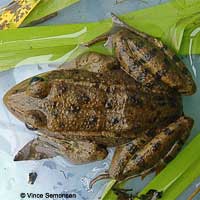
Adult, Santa Barbara County
© Vince Semonsen |
Adult, Marin County |
 |
 |
 |
 |
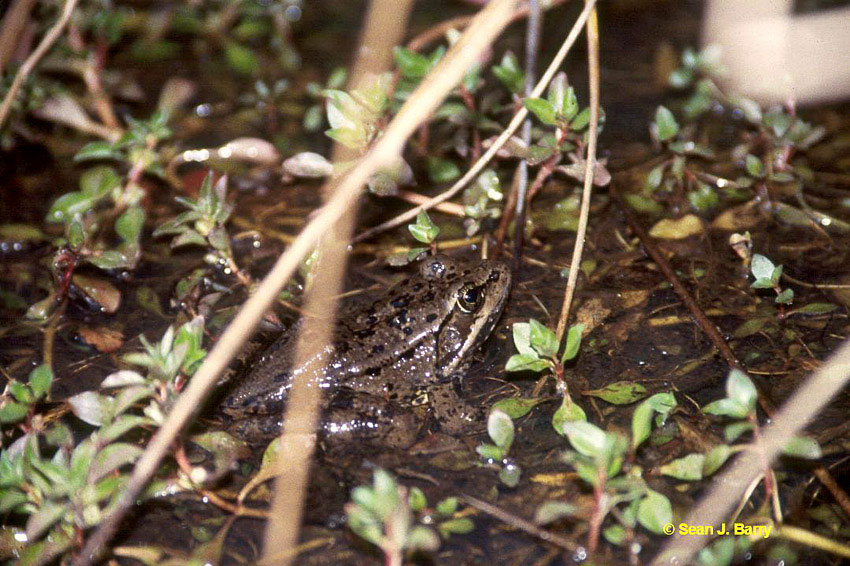
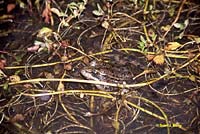
These frogs, discovered by Sean Barry in Butte County in 1997, are some of the last known California Red-legged Frogs remaining in the Sierra Nevada mountains.
© Sean Barry |
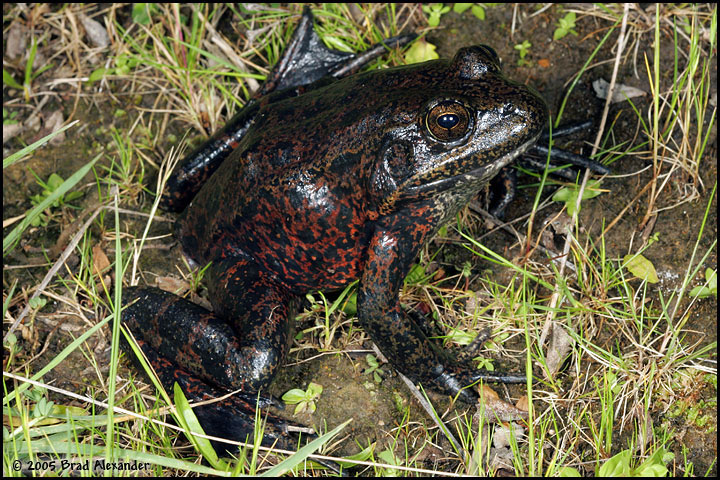
Adult, San Mateo County
© 2005 Brad Alexander
|
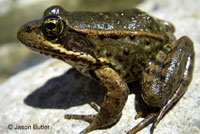
Adult, Santa Barbara County
© Jason Butler |
 |
 |
 |
 |
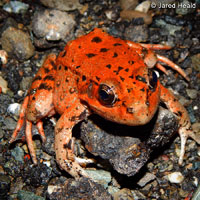
Adult, Contra Costa County
© Jared Heald |
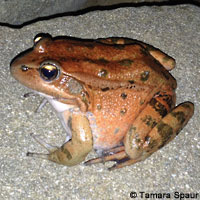
Adult, Nippomo, San Luis Obispo County
© Tamara Spaur |
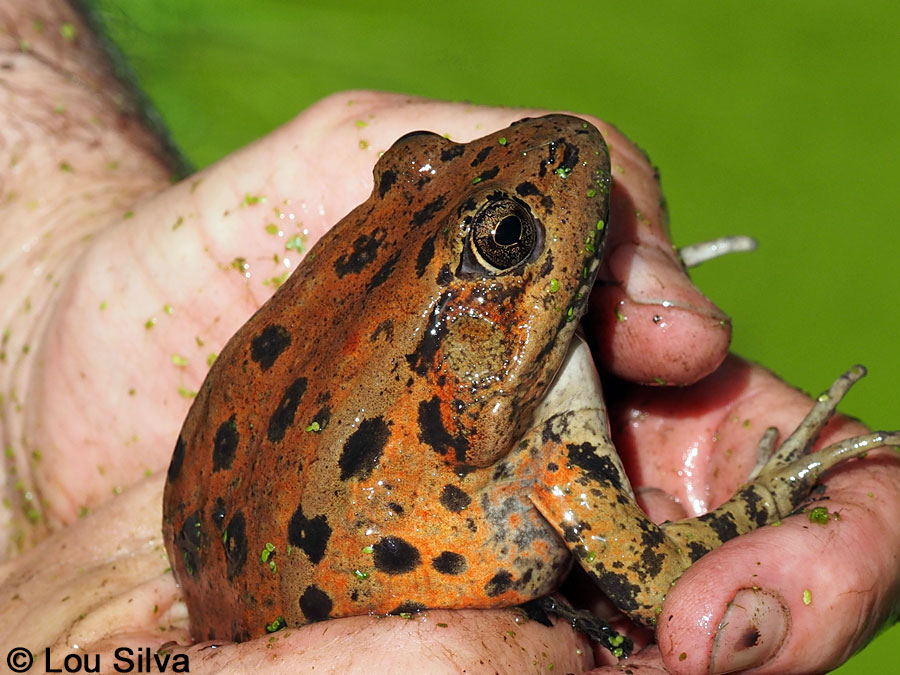
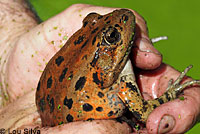
Adult, Sonoma County
© Lou Silva |
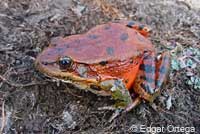
Adult, Contra Costa County
© Edgar Ortega |
 |
 |
 |
 |
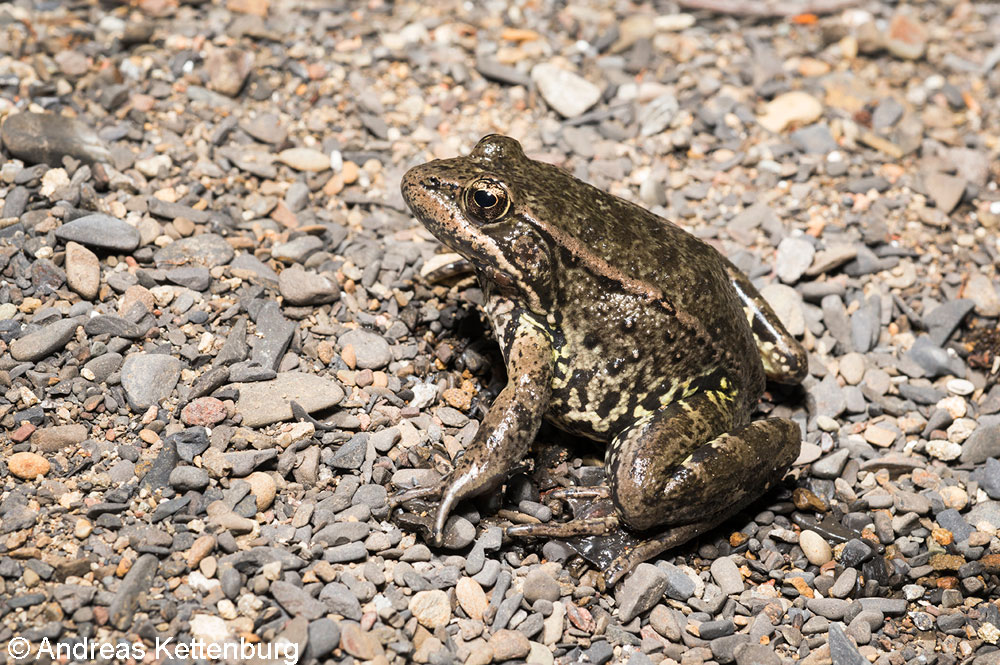
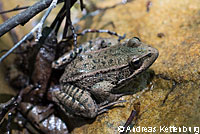
Adult, Ventura County
© Andreas Kettenburg |
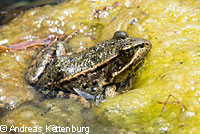
Adult, Ventura County
© Andreas Kettenburg |
Adult, Ventura County
© Andreas Kettenburg |
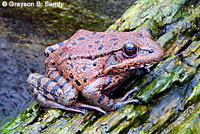
Adult, Contra Costa County
© Grayson B. Sandy |
 |
 |
 |
 |
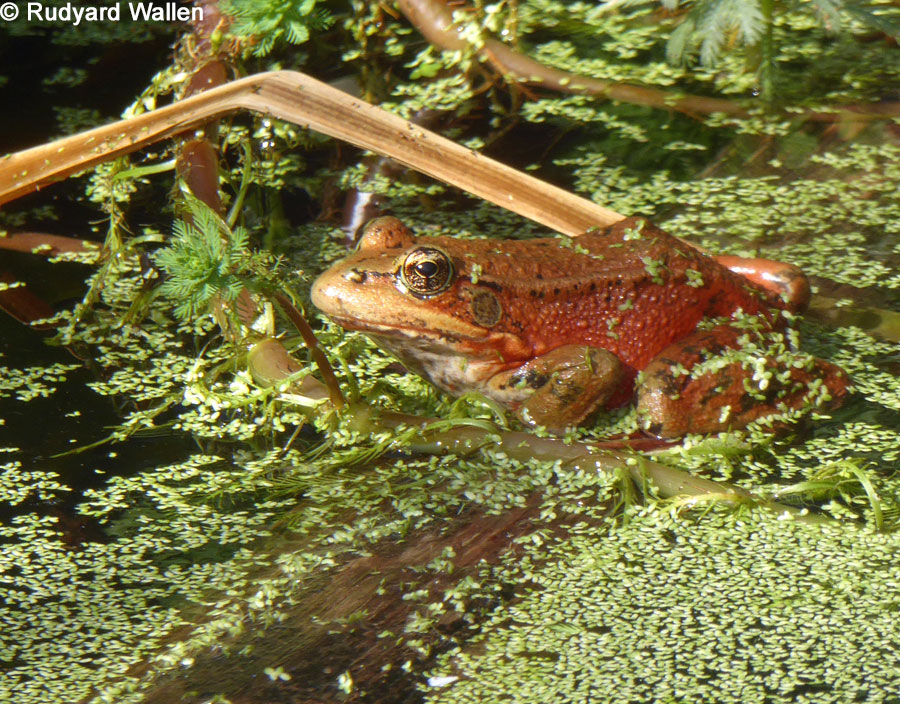
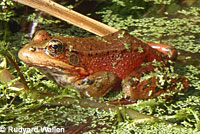
Adult, San Francisco County
© Rudyard Wallen |
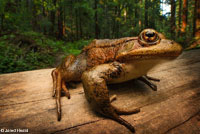
Adult found in a dark redwood ravine in San Mateo County, not the kind of habitat where you typically find this species. © Jared Heald |
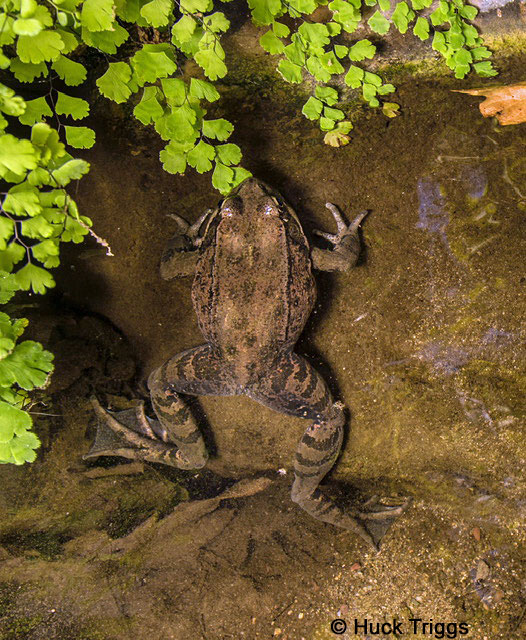
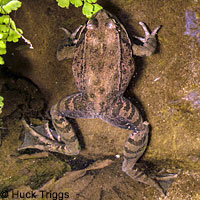
Adult, San Luis Obispo County
© Huck Triggs |
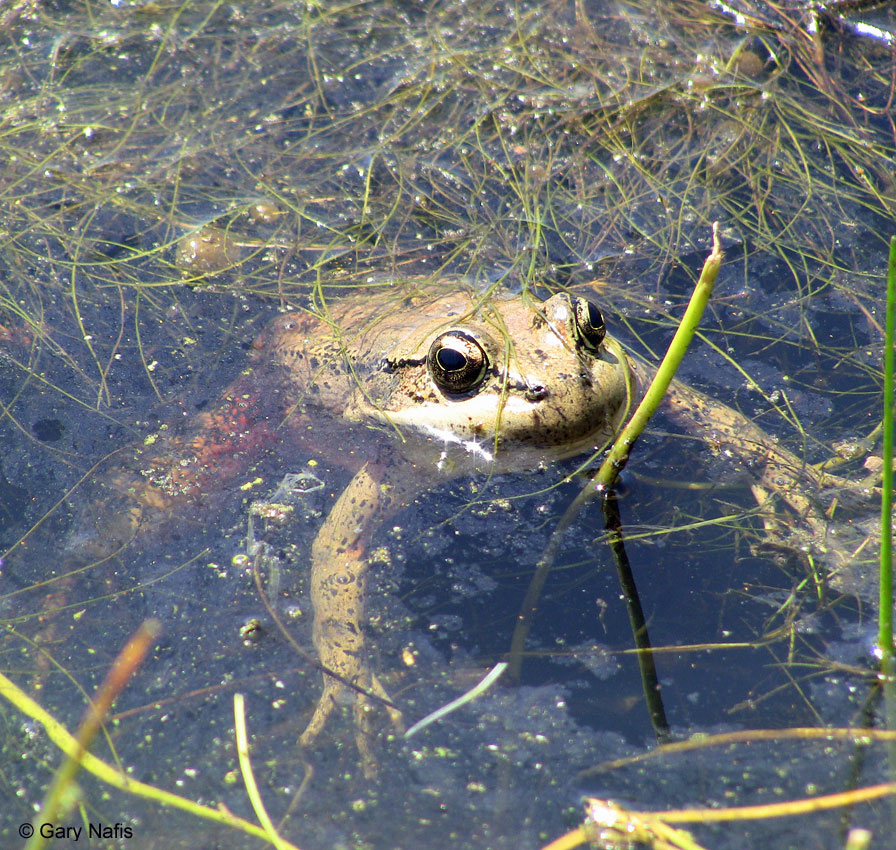
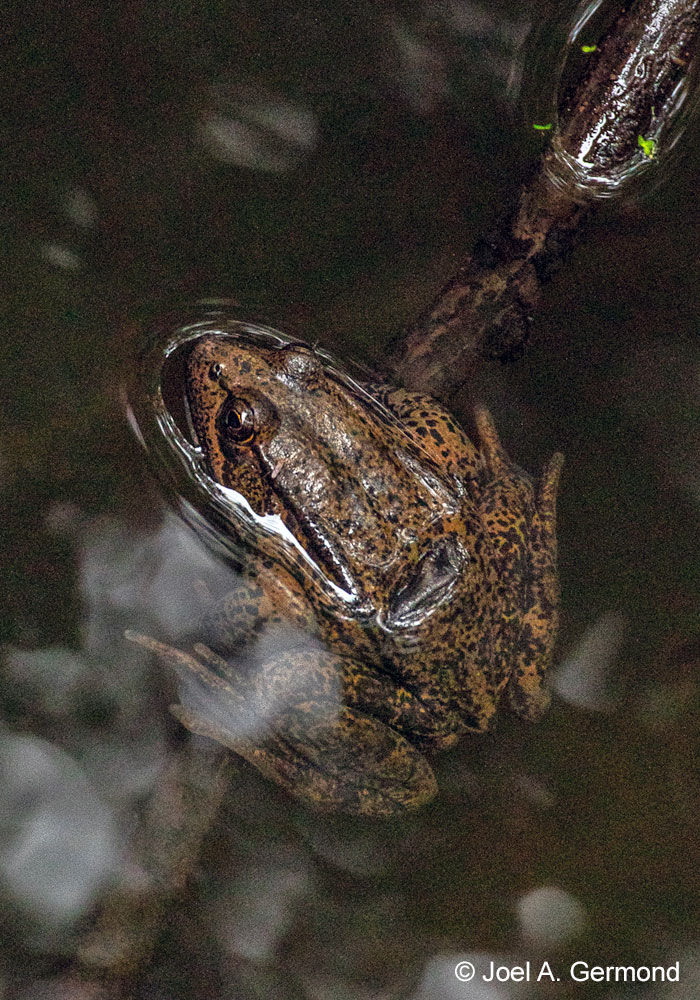
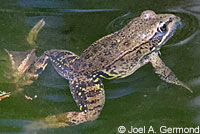
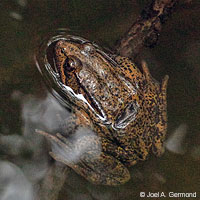
Adult in water, San Luis Obispo County
© Joel A. Germond |
 |
 |
 |
 |
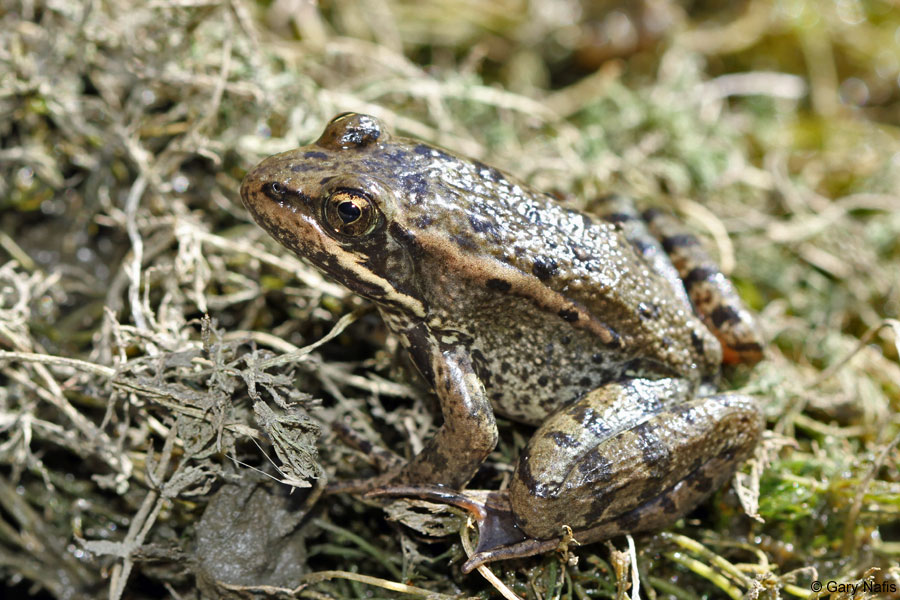
Adult, San Luis Obispo County
© Joel A. Germond |
Adult, Santa Monica Mountains, Los Angeles County © Huck Triggs |
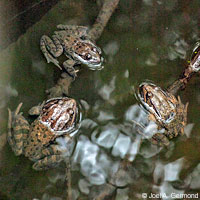
Adults, San Luis Obispo County
© Joel A. Germond |
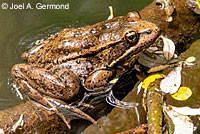
Adult, San Luis Obispo County
© Joel A. Germond |
 |
 |
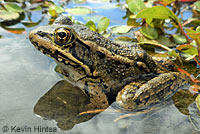 |
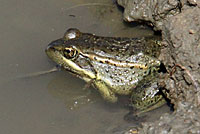 |
Adult, San Luis Obispo County
© Joel A. Germond |
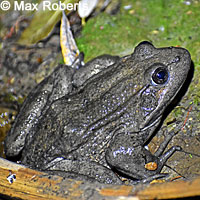
Adult, Santa Barbara County
© Max Roberts |
Young adult, Contra Costa County
© Kevin Hintsa |
Young adult, Contra Costa County |
 |
 |
 |
 |
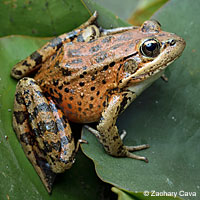
Adult, Contra Costa County
© Zachary Cava |
Unusually gray nearly-patternless adult, Santa Barbara County © Max Roberts |
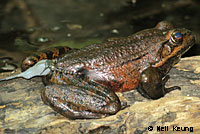
Adult, Santa Cruz County, with a transmitter attached to its waist. After it is released, the frog can be found later by using an antenna with a radio receiver that can track the transmitter. This way the frog's movement and behavior can be studied for part of the year. Mature frogs use fat stored in their thighs to produce gametes as the breeding season nears. When the thighs have been significantly reduced in size, the transmitters will slip off the frogs.
© Neil Keung
|
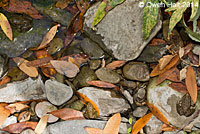
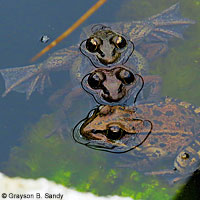
California Red-legged Frogs, upper left and lower right, and a Foothill Yellow-legged Frog, bottom middle, all in the same creek in Santa Clara County.
© Owen Holt |
|
|
|
|
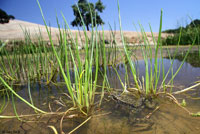
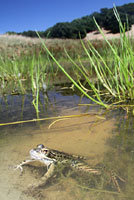
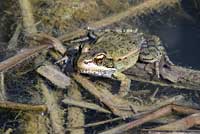
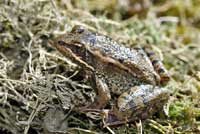
| Juveniles |
 |
 |
 |
 |
| |
Sub-adult, Contra Costa County |
|
 |
 |
 |
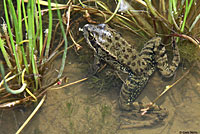 |
| Juvenile, Contra Costa County |
Juvenile, Contra Costa County |
Juvenile, Contra Costa County |
Sub-adult, Contra Costa County |
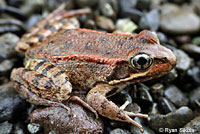 |
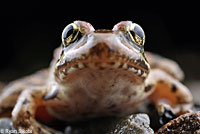 |
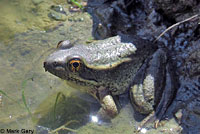 |
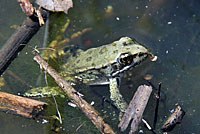 |
| Juvenile, San Luis Obispo County © Ryan Sikola |
This tiny frog has just transformed from a tadpole in early August, Contra Costa County © Mark Gary |
Juvenile, Contra Costa County |
 |
|
|
|
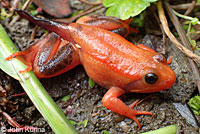
| This brightly-colored tiny juvenile has recently gone through metamorphosis, but has not yet lost the remnant of its tail. San Mateo County © John Kunna |
|
|
|
| |
|
|
|
| Reproduction, Eggs, and Tadpoles (More Pictures Here) |
 |
 |
 |
 |
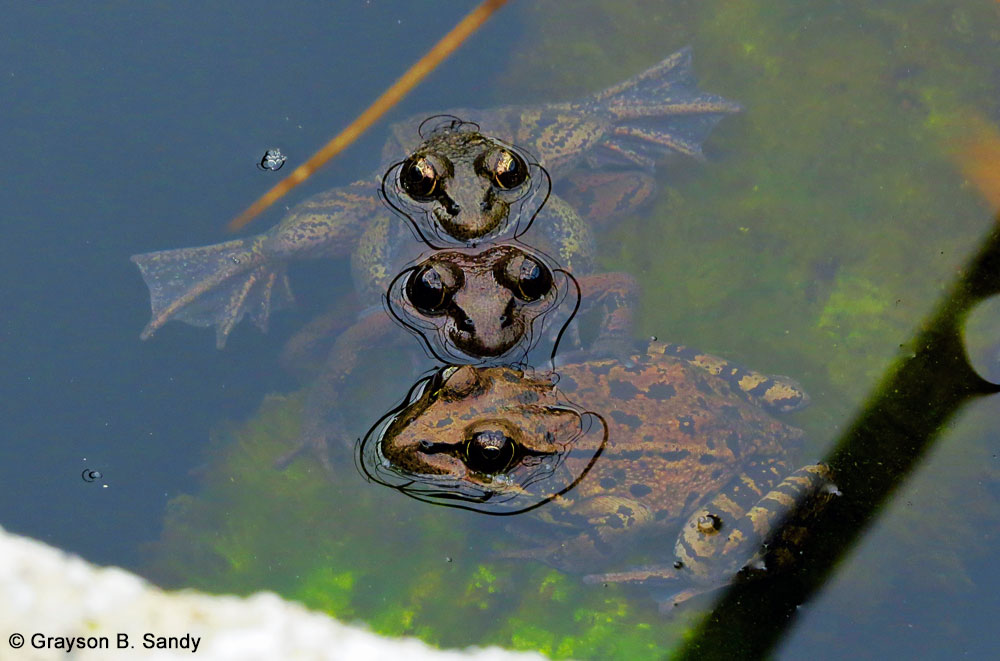
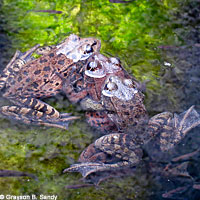
Male and female in amplexus and a second male that is probably trying to
chase off the other male, Contra Costa County © Grayson B. Sandy |
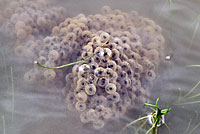
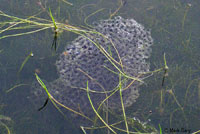
Eggs, Contra Costa County |
Eggs in a pond in mid March, Contra Costa County. © Mark Gary |
 |
 |
 |
 |
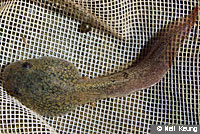
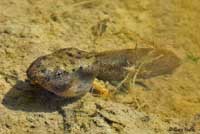
Tadpole, Santa Cruz County
© Neil Keung
|
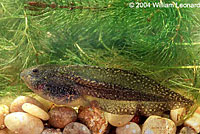
Tadpole, Monterey County
© 2004 William Leonard
|
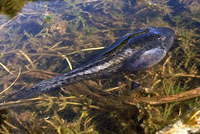
Mature tadpole in water at edge of pond, Contra Costa County. |
This Short Video shows quick looks at a few large California red-legged frog tadpoles in a couple of small ponds. It's hard to get good pictures of these tadpoles because I'm not allowed to catch them. The one shown above was actually injured and dying floating at the edge of a pond, so I was able to get it in focus, at least. |
| |
|
|
|
| Habitat |
 |
 |
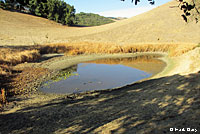 |
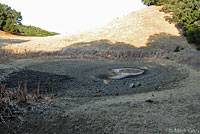 |
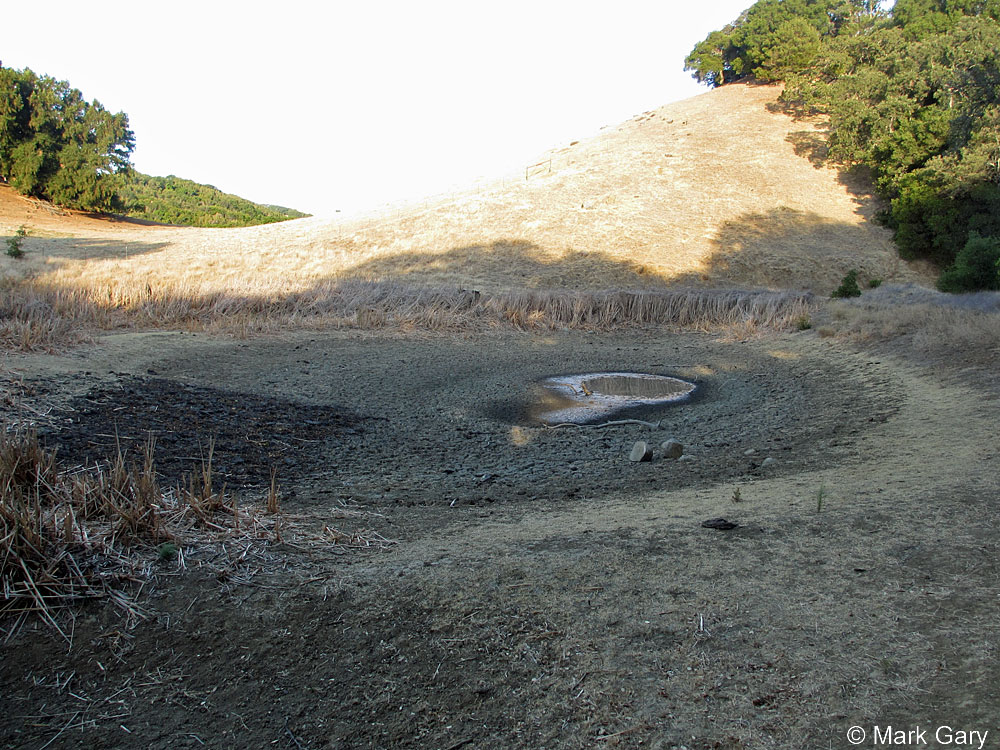
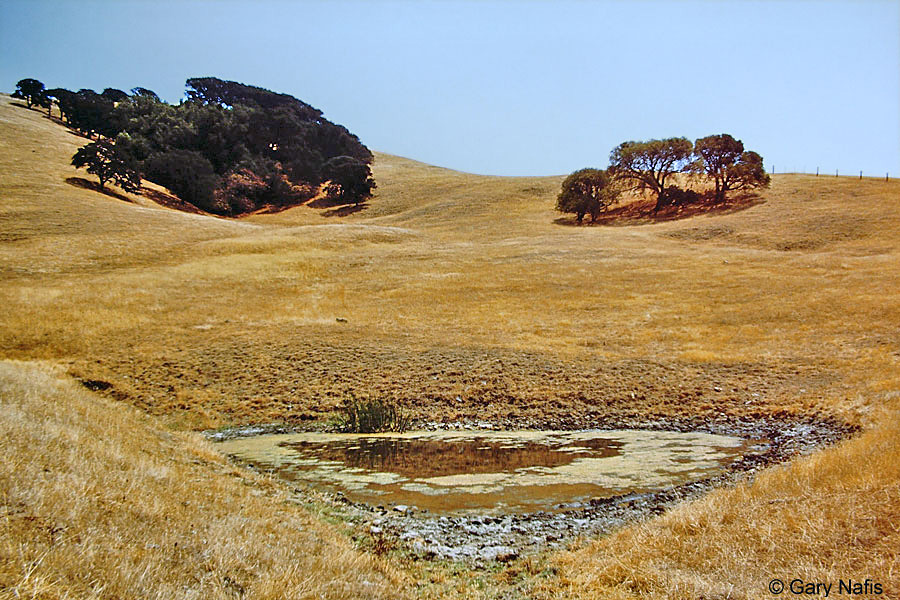
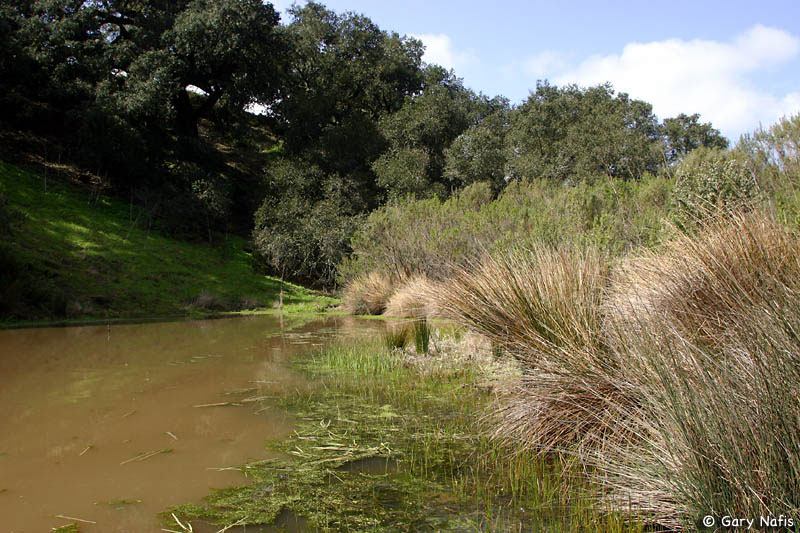
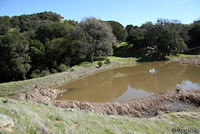
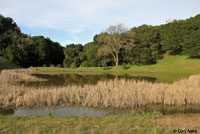
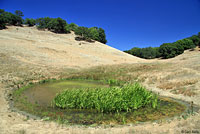
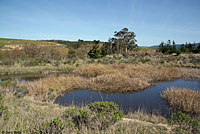
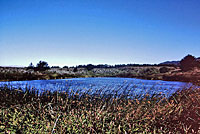
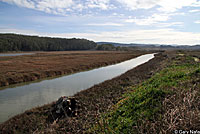
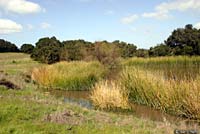
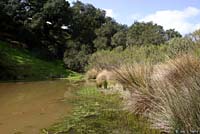
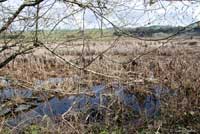
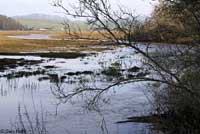
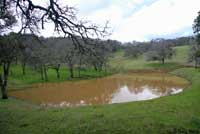
| These four pictures show the same pond in Contra Costa County at different times in different years, when it was full of water in the Spring or drying up in the Fall. |
| Breeding season, March 2008. |
Breeding season, March 2010. |
November 2013 - a very dry year.
The edge of the pond at this time is full of newly metamorphosed juvenile frogs.
© Mark Gary |
October 2014 - another drought year. The pond is almost completely dried up with no pond life remaining.
© Mark Gary |
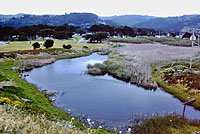 |
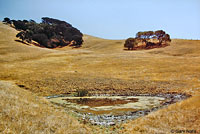 |
 |
 |
| Habitat, San Mateo County |
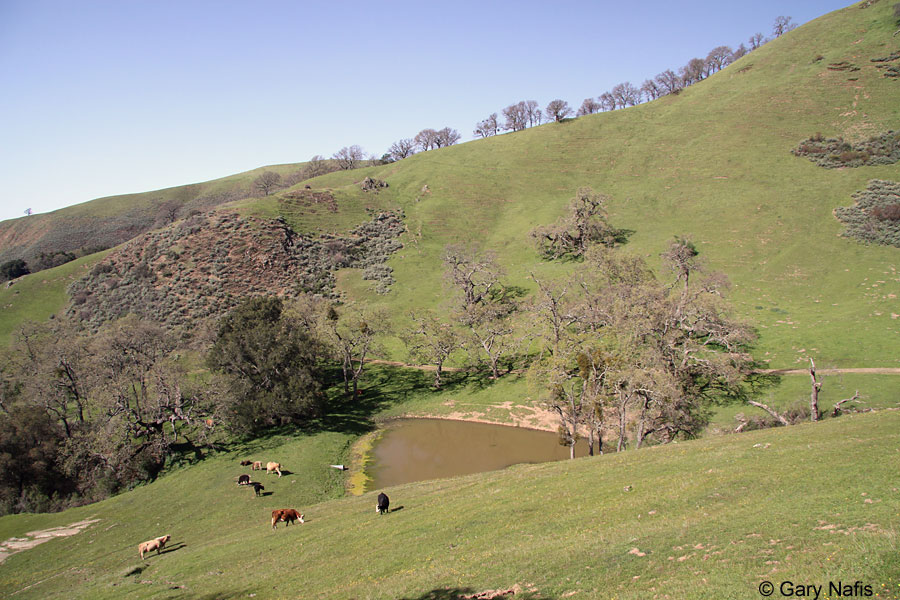
Habitat, cattle pond,
Contra Costa County |
Seasonal pond used for breeding,
Contra Costa County.
Follow this link to see more pictures of this pond as it looked in different months
(of different years) showing how the pond and its surroundings change over the seasons.
|
Habitat, pond,
San Mateo County |
 |
 |
 |
 |
| Habitat, San Mateo County |
Habitat, San Mateo County |
Habitat, breeding pond, Santa Lucia Preserve, Monterey County. Courtesy of David Keegan & Susan Whitford |
Habitat, breeding pond, Santa Lucia Preserve, Monterey County. Courtesy of David Keegan & Susan Whitford |
 |
 |
 |
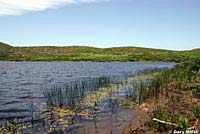 |
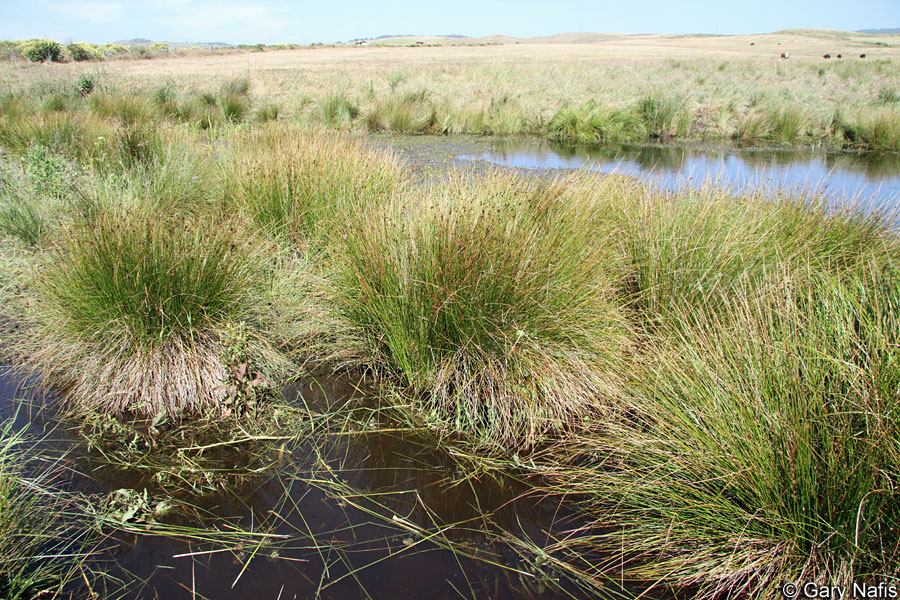
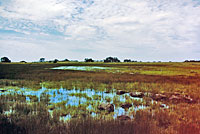
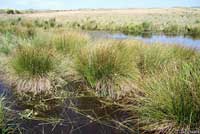
| Habitat, coastal marsh, Marin County |
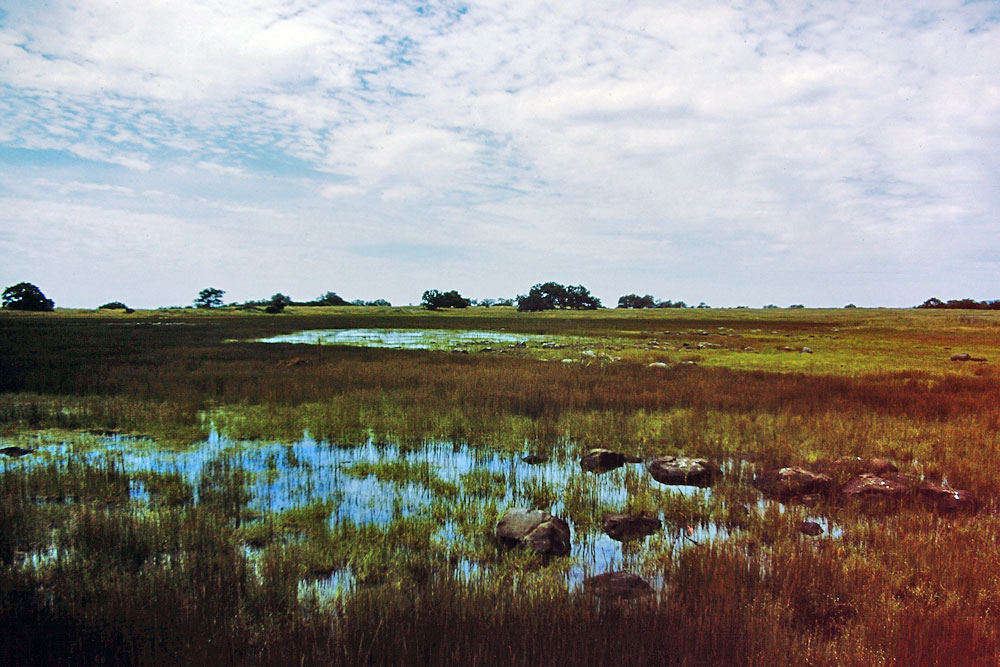
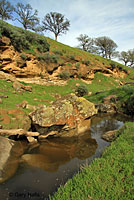
Habitat, Riverside County wetlands |
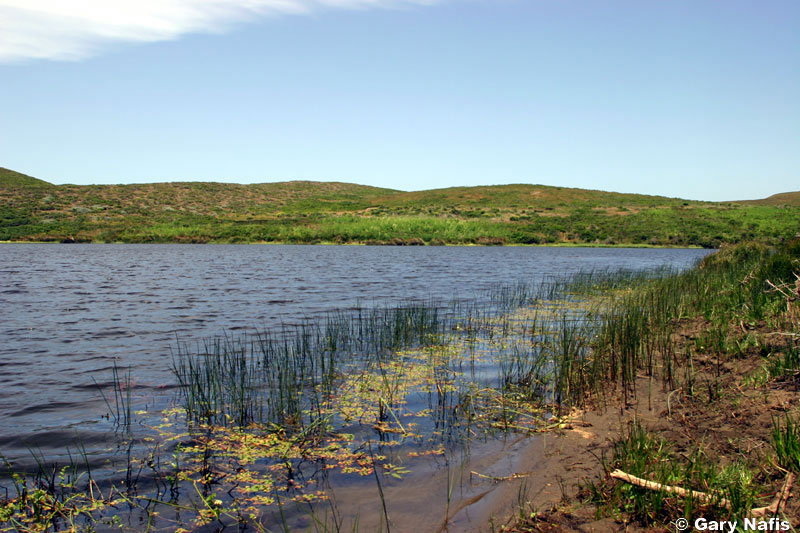
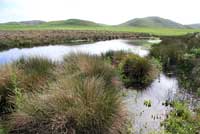
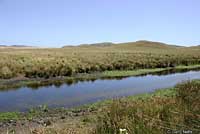
Habitat, coastal lagoon, Marin County |
 |
 |
 |
 |
| Habitat, small coastal pond, Marin County, shown during different seasons |
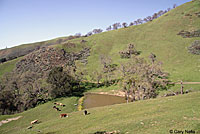
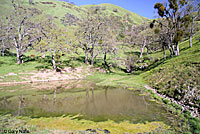
Breeding pond, Contra Costa County |
 |
 |
 |
 |
| Habitat, Alameda County |
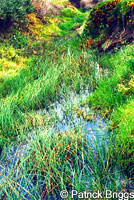
Habitat, small creek,
Contra Costa County |
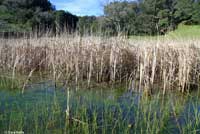
Habitat, small drainage, San Luis Obispo County © Patrick Briggs
|
 |
 |
 |
 |
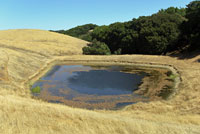
Breeding area, Contra Costa County
|
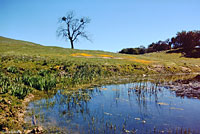
Habitat, Contra Costa County |
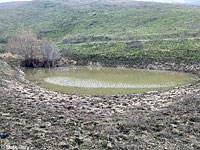
Habitat, Contra Costa County |
Habitat, Ventura County
© Andreas Kettenburg |
 |
 |
|
|
Breeding pond, Alameda County
© Mark Gary |
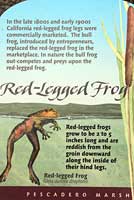
San Mateo County Park Sign
|
|
|
| |
|
|
|
Short Videos
|
 |
 |
 |
 |
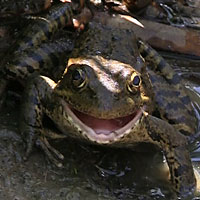
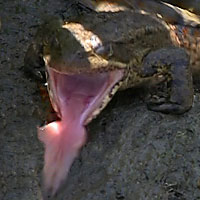
| A large adult California Red-legged Frog sits still at the edge of a pond under some vegetation until a grasshopper lands nearby when it explodes into action, grabbing the insect on the underside of its long sticky pink tongue. |
The same frog to the left eating grasshoppers, but this time shown in slow motion so you can see its large tongue in action. |
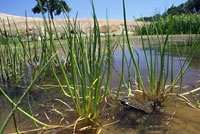
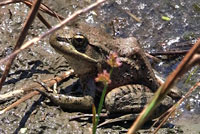
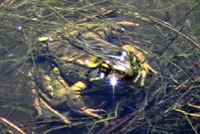
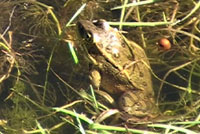
Red-legged frogs at a couple of small ponds in July. |
Red-legged frogs at a small pond
in August. |
 |
 |
 |
|
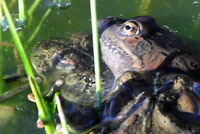
| Two male California Red-legged Frogs are seen here in a Contra Costa County pond in March in amplexus with California Toads (possibly females.) Male toads attempt to wrestle the frogs off their prospective mates. When they grab the frogs, the frogs give their low chuckling release call, while the toads make their peeping release call. The video also starts and ends with the frog release calls. |
A bunch of juvenile California Red-legged Frogs sit around on a sunny summer afternoon in a pond in Contra Costa County. |
Adult frogs in ponds in Contra Costa and Marin Counties. |
|
|
|
|
|
| Description |
| |
| Size |
Adults are 1.75 - 5.25 inches long from snout to vent ( 4.4 - 13.3 cm.)
|
| Appearance |
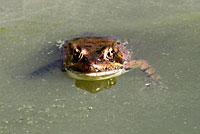
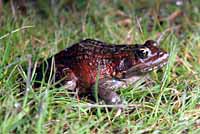
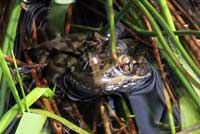
A medium-sized frog with a slim waist, long legs, smooth skin and webbing on the hind feet.
Ridges on the sides (dorsolateral folds) are prominent.
Legs are relatively long.
The eyes are outward oriented. |
| Color and Pattern |
Coloring is reddish -brown or brown, gray, or olive, with small black flecks and spots on the back and sides and dark banding on the legs.
Dark blotches marking the back typically have no light coloring in the center.
There is a dark mask on the head and a stripe extending from the shoulder to the front of the upper jaw.
The hind legs and lower belly are red underneath, giving this frog its name.
On older frogs the red coloring extends onto the belly and sides.
The chest and throat are creamy and marbled with dark gray.
Yellowish-green and black coloring mottles the groin.
|
| Male/Female Differences |
| Males develop enlarged forearms and a dark nuptial pad on each thumb during the breeding season. |
| Young |
| Often the coloring under the legs and lower belly is yellowish. |
| Larvae (Tadpoles) |
Tadpoles are brown marked with small dark spots with eyes set in from the margin of the head. (Compare with P. regilla.)
Creamy white coloring flecked with small spots covers the lower body.
Rows of dorsolateral light spots may be evident running back from behind the eyes.
|
| Comparing Red-legged Frogs and Yellow-legged Frogs and Bullfrogs |
| |
| Life History and Behavior |
| Activity |
Primarily diurnal.
Typically a pond frog, found in or near water, but can wander overland at times, sometimes found in damp places far from water, including cool and moist bushes and thickets.
Found active all year except in wetlands that dry out in summer, where frogs will estivate in moist refuges until the late fall rains. |
| Movement |
Long rear legs give this frog excellent leaping ability, which it relies on to avoid predators by quickly leaping into vegetation or water.
Also a good climber: observed climbing a 4 foot high (1.2 meters) plastic barrier. (Rathbun et al. 1997. Herpetol. Rev. 28:85–86) |
| Defense |
Frogs remain immobile to avoid detection, but when a threat gets too close, they will quickly leap off into the brush or water.
|
Territoriality
|
| Not known, but not considered territorial except when breeding males act aggressively with each other at breeding sites. |
| Longevity |
| Unknown. |
| Voice (Listen) |
| The call is a weak series of 5 - 7 notes, sounding like uh-uh-uh-uh-uh, lasting 1 - 3 seconds. After the series there is sometimes a last note which is similar to a growl or groan. The calls are made during the day or at night in the air and underwater and are easily missed because of their low volume. Calling lasts only one to two weeks at a location. Rana draytonii south of San Francisco have paired vocal sacs. Frogs north to Del Norte County, including Rana aurora, have rudimentary vocal sacs. |
| Diet and Feeding |
Diet consists of a wide variety of invertebrates, and occasionally small vertebrates such as fish, mice, voles, frogs and salamander larvae.
Typical of most frogs, the prey is located by vision, then a large sticky tongue is used to catch the prey and bring it into the mouth to eat.
Tadpoles probably feed on algae, diatoms, and detritus by grazing the surface of rocks and plants. |
| Reproduction |
Reproduction is aquatic. Fertilization is external.
Fertilization is external, with the male grasping the back of the female and releasing sperm as the female lays her eggs.
The reproductive cycle is similar to that of most North American Frogs and Toads. Mature adults come into breeding condition and the males call to advertise their fitness to competing males and to females. Males and females pair up in amplexus in the water where the female lays her eggs as the male fertilizes them externally. The eggs hatch into tadpoles which feed in the water and eventually grow four legs, lose their tails and emerge onto land where they disperse into the surrounding territory.
Males typically become reproductively mature at 2 years, females at 3 years of age.
Males develop enlarged forearms and a dark nuptial pad on each thumb during the breeding season.
Mating and egg-laying occurs in permanent and temporary bodies of water - mostly ponds, but also marshes, lagoons, and slow-moving parts of streams.
Breeding occurs from late November to April, depending on the location, and lasts for only a week or two.
Some adults inhabit the breeding pond all year, but other frogs disperse into other habitats and must travel overland some distance, usually on rainy nights, to get to the breeding pond.
|
| Eggs |
Females lay from 300 - 4,000 eggs (average 2,000) in a large gelatinous oval cluster which is attached to plants near the water surface.
Eggs hatch after about four weeks.
|
| Tadpoles and Young |
Tadpoles typically metamorphose in four to seven months, but at some sites they overwinter and metamorphose the following summer.
|
| Habitat |
Found mainly near ponds in humid forests, woodlands, grasslands, coastal scrub, and vegetated stream edges.
Most common in lowlands or foothills.
Frequently found in woods adjacent to streams.
Breeding habitat is in permanent or ephemeral water sources; lakes, ponds, reservoirs, slow streams, marshes, bogs, and swamps.
Ephemeral wetland habitats require animal burrows or other moist refuges for estivation when the wetlands are dry.
|
| Geographical Range |
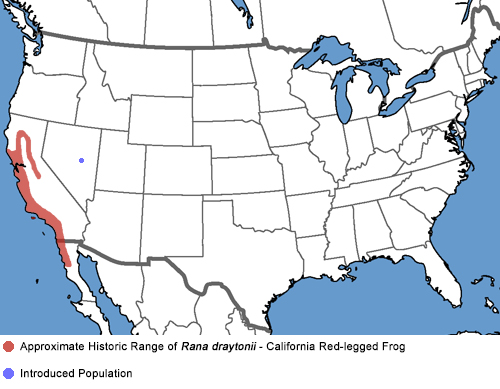
Endemic to California and northern Baja California. Historically, this species was found along the coast and Coast Ranges from Mendocino County in northern California south to northern Baja California, and inland east through the northern Sacramento Valley into the foothills of the Sierra Nevada mountains, south to Tulare county, and possibly Kern county.
They probably did not occur in the Central Valley due to annual floods. Three museum specimens of California Red-legged Frogs were collected from Santa Cruz Island in 1919, but the species is probably no longer present on the island.
A narrow range overlap with Rana aurora (about 5 km) occurs in Mendocino County: Shaffer et. al. in research for their 2004 paper found only Rana aurora north of Big River, Mendocino County, both Rana aurora and Rana draytonii between Big River and Mills Creek, Mendocino County, and only Rana draytonii south of Mills Creek.
Notes
* In 2013, Sean Barry and Gary Fellers published a report evaluating the status of Rana draytonii in the Sierra Nevada, documenting only 20 historical Sierra Nevada localities and one Cascades Mountains locality. After conducting field surveys they found frogs extant in large numbers at only one of those localities, but they found an additional 7 new populations and 3 single-specimen occurrances extending from Butte County southeast to Mariposa County, a distance of about 171 miles (275 km.)
* "Historically, R. draytonii in the Sierra Nevada probably bred in stream pools, which tend to be small with limited forage and thus may have constrained the historical size and number of Sierra Nevada R. draytonii populations. Since the 1850's, man-made ponds sometimes capable of supporting large R. draytonii populations have supplemented stream pool breeding habitat. Excluding the southernmost and Yosemite historical localities, the current range of Sierra Nevada R. draytonii differs little from the historical range, and further surveys may reveal additional surviving Sierra Nevada R. draytonii populations."
In 2009, only six recently-discovered populations were known in the Sierra Nevada, and these were all discovered after 1997.
Only two very small extant populations are known from South of Santa Barbara and one in Ventura County. The species apparently persists in northern Baja California.
The population once found on the Santa Rosa Plateau in Riverside County was apparently extirpated in the early 2000s.
(Backlin, A. R., J. Q. Richmond, E. A. Gallegos, C. K. Christensen, and R. N. Fisher. 2017. An extirpated lineage of a threatened frog species resurfaces in southern California. Oryx 52:718-722.)
In the fall of 2010, the Placer Land Trust partnered with Westervelt Ecological Services to permanently protect the Big Gun Preserve, 52 acres of mixed conifer woodlands, chaparral, and riparian corridors, located in the Middle Fork American River watershed, which contains the largest remaining Sierra Nevada population of California Red-legged Frogs.
In 2017 a population of Rana draytonii was discovered at the Whitewater Preserve in Riverside County. Their genetic makeup suggests that the frogs were not transplanted there from populations outside Southern California or Mexico, which makes them appropriate donors for reintroducing Rana draytonii to sites in Southern California where the species has been extirpated.
(Backlin, A. R., J. Q. Richmond, E. A. Gallegos, C. K. Christensen, and R. N. Fisher. 2017. An extirpated lineage of a threatened frog species resurfaces in southern California. Oryx 52:718-722.)
An isolated population of ranid frogs at Duckwater on a Shoshone Indian Reservation in central Nevada was determined to be Rana (aurora) draytonii. The frogs were brought from the San Francisco Bay Area to start a frog farm.
(Green 1985. Biochemical identification of red-legged frogs, Rana aurora draytoni (Ranidae) at Duckwater, Nevada. Southwestern Naturalist 30(4):614–616)
|
 |
| Elevational Range |
From sea level to 5,000 ft. (1,525 m.)
|
| Notes on Taxonomy |
Schaeffer et al. in a 2004 genetics study determined that R. aurora actually consists of two species, R. aurora, and R. draytonii, whose ranges overlap only in a narrow zone in Mendocino County. R. aurora is found to be closely related to R. cascadae. Other studies, including an analysis of vocal sacs, have supported separate species status, concluding that R. aurora and R. draytonii are biologically quite different.
Before being split into two species, two subspecies of Rana aurora were recognized: R. a. aurora, and R. a. draytonii. Frogs in the very large area between Del Norte County and the Walker Creek drainage in Marin County were considered to be intergrades.
Alternate and Previous Names (Synonyms)
Rana aurora draytonii - California Red-legged Frog (Stebbins 1966 1985, 2003)
Rana aurora draytonii - California Red-legged Frog (Drayton's Frog, Bullfrog, Long-footed Frog, Bloody Nouns, Rocky Mountain Frog, Western Wood Frog, French Frog, Leconte's Frog) (Wright & Wright 1949)
Rana aurora draytonii - California Red-legged Frog (Storer 1925)
Rana aurora draytonii - California Red-legged Frog Drayton's Frog, Bull-frog, Long-footed Frog, Bloody Nouns, Rocky Mountain Frog, Western Wood Frog, Leconte's Frog. (Rana nigricans; Rana longipes; Epirhexis longipes; Rana agilis aurora; Rana catesbiana; Rana septrionalis; Rana temporiaria Rana temporaria aurora)
(Grinnell and Camp 1917)
Rana draytonii (Baird & Girard 1852)
|
| Conservation Issues (Conservation Status) |
Populations in the Sierra Nevada Mountains and in southern California have declined seriously possibly due to introductions of non-native predators such as American Bullfrogs and introduced fish, including Mosquitofish, habitat loss due to development and agriculture, and pesticide pollution. Wind-borne pollutants from agriculture in the Central Valley have probably contributed considerably to the extirpation of the species in the nearby Sierra Nevada foothills. Much of this frog's prime habitat of foothills grassland has been destroyed by development in the Bay Area and in the Sierra Nevada foothills. The role of the Chytrid fungus and of the introduced American Bullfrog in Rana draytonii declines are not well understood.
The National Park Service appears to have been successful in re-introducing Rana draytonii into the Santa Monica Mountains, where the species has not been seen naturally since the 1970s. (Orange County Register, 3/23/17)
Commercial use of California Red-legged Frogs and the impact of the introduced American Bullfrog
According to Tracy I. Storer, in "The Eastern Bullfrog in California" (California Fish and Game Volume 8, Number 4, October 1922) the term "French frogs" was commonly used throughout California for any frog large enough to eat, including American Bullfrogs and California Red-legged Frogs. (I speculate that the commercial use of red-legged frogs most likely began during the mass immigration of miners during the gold rush of the mid to late 19th century when any kind of food source was exploited, but I don't know that for sure.) According to Stebbins & McGinnis (2012)
American Bullfrogs were first introduced into California at the turn of the 20th century in order to use their legs as a food source. Bullfrog legs are nearly twice as large as the legs of the California Red-legged Frog that had previously been used for food, so frog hunters first concentrated on catching the rapidly-expanding bullfrogs instead of red-legged frogs, but since red-legged frog legs were considered to have a much better taste than bullfrog legs, both frogs continued to be hunted. Stebbins & McGinnis (2012) also report that the California Red-legged Frog was already declining due to unregulated frogging for commercial markets when the American Bullfrog was introduced into the state. The rapid spread of the bullfrogs continued the decline as the red-legged frogs could not compete with the bullfrogs, which ate up most of the tadpoles and young red-legged frogs.
* In 2013, Sean Barry and Gary Fellers published a report evaluating the status of Rana draytonii in the Sierra Nevada, documenting only 20 historical Sierra Nevada localities and one Cascades Mountains locality. After conducting field surveys they found frogs extant in large numbers at only one of those localities, but they found an additional 7 new populations and 3 single-specimen occurrances extending from Butte County southeast to Mariposa County, a distance of about 171 miles (275 km.) which differs little from the historical range. "R. draytonii are threatened primarily by habitat modification and loss related to human population increase."
** A 2009 study by Antonia D'Amore and others documented male Rana draytonii in amplexus with juvenile American Bullfrogs and has proposed that this causes reproductive interference by the invasive species which could cause a reduction in the population growth rate of Rana draytonii since these males no longer call to attract females which causes fewer females to attempt to breed at the site, and because males engaged in amplexus are at greater risk of predation. And it raises the possibility that male Rana draytonii will find the smaller female Rana draytonii unattractive, leaving them without mates. This preference by the males leads them into an "evolutionary trap."
Successful efforts to repatriate Rana draytonii have taken place at Pinnacles National Monument, Golden Gate National Recreation Area, and in the Santa Monica Mountains National Recreation Area. (Backlin, A. R., J. Q. Richmond, E. A. Gallegos, C. K. Christensen, and R. N. Fisher. 2017. An extirpated lineage of a threatened frog species resurfaces in southern California. Oryx 52:718-722.) Efforts have also been made at Yosemite National Park.
|
| Official California State Amphibian |
Governor Jerry Brown signed legislation that made the California Red-legged Frog California's official state amphibian in June, 2014. The bill was proposed to the "Save The Frogs!" organization by an after school club at Sea View Elementary School in Imperial County and carried by Assemblyman V. Manuel Perez of Coachella.
It probably helped that Mark Twain's "Jumping Frog" short story is assumed to be about a California Red-legged Frog. It also seems that you have to be a threatened or extinct species to earn this distinction, so maybe it's not such an honor after all.
The California Red-legged Frogs in the foothills of the Sierra Nevada mountains were nearly eaten into extinction by the sudden influx of hundreds of thousands of hungry alien predators known as the Miners of the California Gold Rush of 1849. The frogs were then almost finished off by the proliferation of another uncontrollable and insatiable apex predator, the Land Developer, which used its bulldozers to eradicate the species in almost all of Southern California and forced it into exile into the few remnant ponds they have not turned into shopping malls and housing developments in the northern part of the state. Land developers have also been known to drain the remaining ponds killing all the frogs then claim that there are no frogs there to protect so the habitat destruction should be allowed to go on.
I would have voted for the equally-endangered California Tiger Salamander to be the California state amphibian. Maybe Californians would learn what a salamander is, and that they're valuable even though you can't eat them. But unfortunately, Mark Twain did not write a short story about the California Tiger Salamander which could be used to justify their value, and as of yet, there is no "Save the Salamanders" organization to rally the school children. |
|
|
Taxonomy |
| Family |
Ranidae |
True Frogs |
Rafinesque, 1814 |
| Genus |
Rana |
True Frogs |
Linnaeus, 1758 |
| Species |
draytonii |
California Red-legged Frog
|
Baird and Girard, 1852 |
|
Original Description |
Rana aurora - Baird and Girard, 1852 - Proc. Acad. Nat. Sci. Philadelphia, Vol. 6, p. 174
from Original Description Citations for the Reptiles and Amphibians of North America © Ellin Beltz
|
|
Meaning of the Scientific Name |
Rana - Latin = frog - probably mimics how the Romans heard their call
aurora - Latin = dawn, red - referring to the red color of the underside of the hind legs.
draytonii - honors Drayton, Joseph
from Scientific and Common Names of the Reptiles and Amphibians of North America - Explained © Ellin Beltz
|
|
Alternate Names |
Formerly Rana aurora draytonii - California Red-legged Frog
|
|
Related or Similar California Frogs |
Rana aurora
Rana boylii
Lithobates catesbeiana
Rana cascadae
|
|
More Information and References |
California Department of Fish and Wildlife
AmphibiaWeb
Center for Biological Diversity
Shaffer, H. Bradley, G. M. Fellers, S. Randal Voss, J. C. Olive and Gregory B. Pauly (2004 Species boundaries, phylogeography and conservation genetics of the red-legged frog (Rana aurora/draytonii) complex. Molecular Ecology 13(9): 2667-2677)
Hansen, Robert W. and Shedd, Jackson D. California Amphibians and Reptiles. (Princeton Field Guides.) Princeton University Press, 2025.
Stebbins, Robert C., and McGinnis, Samuel M. Field Guide to Amphibians and Reptiles of California: Revised Edition (California Natural History Guides) University of California Press, 2012.
Stebbins, Robert C. California Amphibians and Reptiles. The University of California Press, 1972.
Flaxington, William C. Amphibians and Reptiles of California: Field Observations, Distribution, and Natural History. Fieldnotes Press, Anaheim, California, 2021.
Nicholson, K. E. (ed.). 2025. Scientific and Standard English Names of Amphibians and Reptiles of North America North of Mexico, with Comments Regarding Confidence in Our Understanding. Ninth Edition. Society for the Study of Amphibians and Reptiles. [SSAR] 87pp.
Samuel M. McGinnis and Robert C. Stebbins. Peterson Field Guide to Western Reptiles & Amphibians. 4th Edition. Houghton Mifflin Harcourt Publishing Company, 2018.
Stebbins, Robert C. A Field Guide to Western Reptiles and Amphibians. 3rd Edition. Houghton Mifflin Company, 2003.
Behler, John L., and F. Wayne King. The Audubon Society Field Guide to North American Reptiles and Amphibians. Alfred A. Knopf, 1992.
Robert Powell, Roger Conant, and Joseph T. Collins. Peterson Field Guide to Reptiles and Amphibians of Eastern and Central North America. Fourth Edition. Houghton Mifflin Harcourt, 2016.
Powell, Robert., Joseph T. Collins, and Errol D. Hooper Jr. A Key to Amphibians and Reptiles of the Continental United States and Canada. The University Press of Kansas, 1998.
American Museum of Natural History - Amphibian Species of the World 6.2
Bartlett, R. D. & Patricia P. Bartlett. Guide and Reference to the Amphibians of Western North America (North of Mexico) and Hawaii. University Press of Florida, 2009.
Elliott, Lang, Carl Gerhardt, and Carlos Davidson. Frogs and Toads of North America, a Comprehensive Guide to their Identification, Behavior, and Calls. Houghton Mifflin Harcourt, 2009.
Lannoo, Michael (Editor). Amphibian Declines: The Conservation Status of United States Species. University of California Press, June 2005.
Storer, Tracy I. A Synopsis of the Amphibia of California. University of California Press Berkeley, California 1925.
Wright, Albert Hazen and Anna Wright. Handbook of Frogs and Toads of the United States and Canada. Cornell University Press, 1949.
Davidson, Carlos. Booklet to the CD Frog and Toad Calls of the Pacific Coast - Vanishing Voices. Cornell Laboratory of Ornithology, 1995.
Jones, Lawrence L. C. , William P. Leonard, Deanna H. Olson, editors. Amphibians of the Pacific Northwest. Seattle Audubon Society, 2005.
* Sean J. Barry and Gary M. Fellers. History and Status of the California Red-legged Frog (Rana draytonii) in the Sierra Nevada, California, USA Herpetological Conservation and Biology 8(2):456-502. Published: 15 September 2013.
** D'Amore, Antonia, Erik Kirby and Valentine Hemingway. Reproductive Interference By An Invasive Species: An Evolutionary Trap? Herpetological Conservation and Biology 4(3):325-330. Submitted: 2 September 2008; Accepted: 9 November 2009.
Backlin, A. R., J. Q. Richmond, E. A. Gallegos, C. K. Christensen, and R. N. Fisher. 2017. An extirpated lineage of a threatened frog species resurfaces in southern California. Oryx 52:718-722.
Joseph Grinnell and Charles Lewis Camp. A Distributional List of the Amphibians and Reptiles of California. University of California Publications in Zoology Vol. 17, No. 10, pp. 127-208. July 11, 1917.
|
|
|
The following conservation status listings for this animal are taken from the April 2024 State of California Special Animals List and the April 2024 Federally Listed Endangered and Threatened Animals of California list (unless indicated otherwise below.) Both lists are produced by multiple agencies every year, and sometimes more than once per year, so the conservation status listing information found below might not be from the most recent lists. To make sure you are seeing the most recent listings, go to this California Department of Fish and Wildlife web page where you can search for and download both lists:
https://www.wildlife.ca.gov/Data/CNDDB/Plants-and-Animals.
A detailed explanation of the meaning of the status listing symbols can be found at the beginning of the two lists. For quick reference, I have included them on my Special Status Information page.
If no status is listed here, the animal is not included on either list. This most likely indicates that there are no serious conservation concerns for the animal. To find out more about an animal's status you can also go to the NatureServe and IUCN websites to check their rankings.
Check the current California Department of Fish and Wildlife sport fishing regulations to find out if this animal can be legally pursued and handled or collected with possession of a current fishing license. You can also look at the summary of the sport fishing regulations as they apply only to reptiles and amphibians that has been made for this website.
ESA Notes:
Synonymous with Rana aurora draytonii.
2023 Special Animals List Notes:
An mtDNA study (Shaffer et al. 2004) concluded that Rana aurora aurora and Rana aurora draytonii should be recognized as separate species with a narrow zone of overlap, and that the range of draytonii extends about 100 km further north in coastal California than previously thought.
|
| Organization |
Status Listing |
Notes |
| NatureServe Global Ranking |
G2G3 |
Imperiled - Vulnerable |
| NatureServe State Ranking |
S2S3 |
Imperiled - Vulnerable |
| U.S. Endangered Species Act (ESA) |
FT |
Listed as Threatened 6/24/1996 |
| California Endangered Species Act (CESA) |
None |
|
| California Department of Fish and Wildlife |
SSC |
Species of Special Concern |
| Bureau of Land Management |
None |
|
| USDA Forest Service |
None |
|
| IUCN |
VU |
Vulnerable |
|
|
|