|
 |
 |
 |
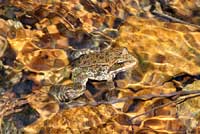 |
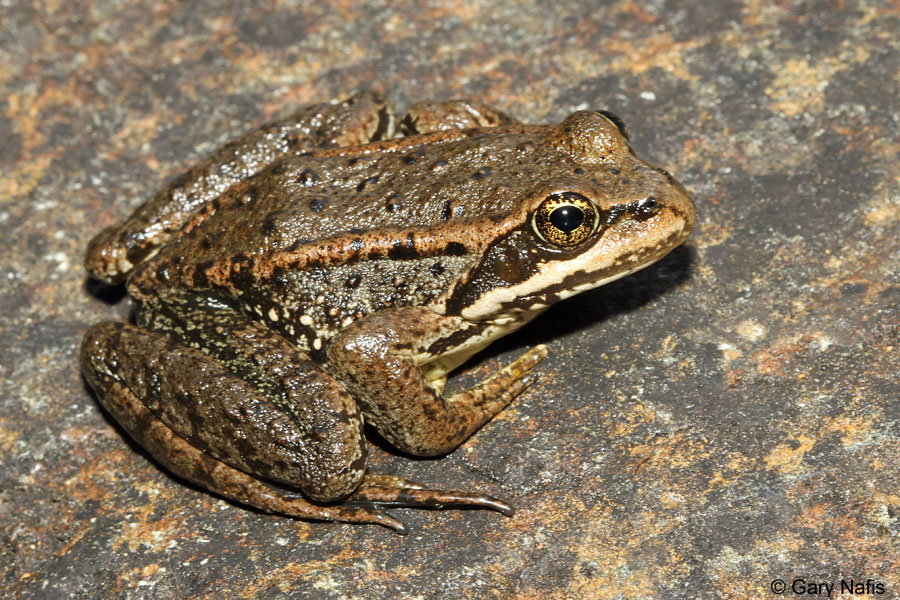
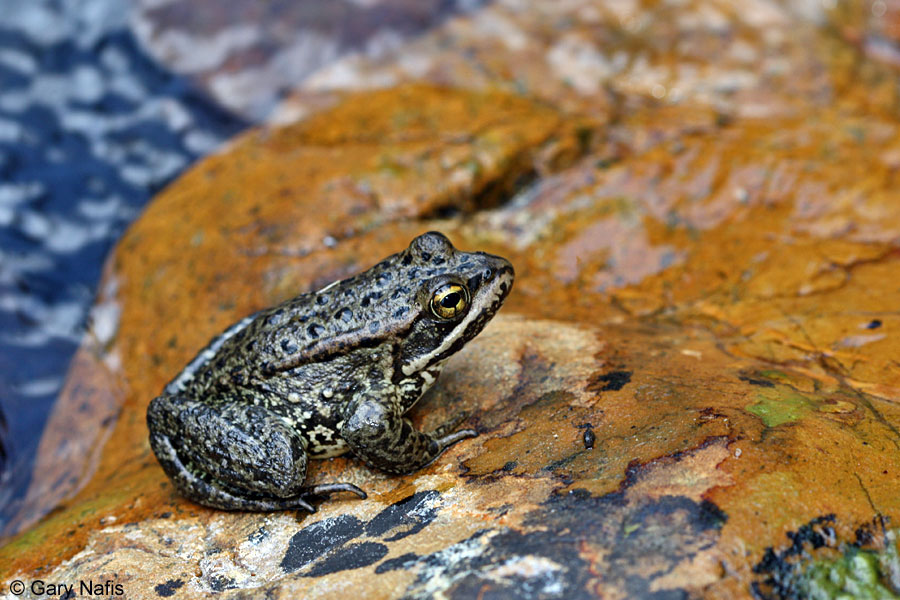
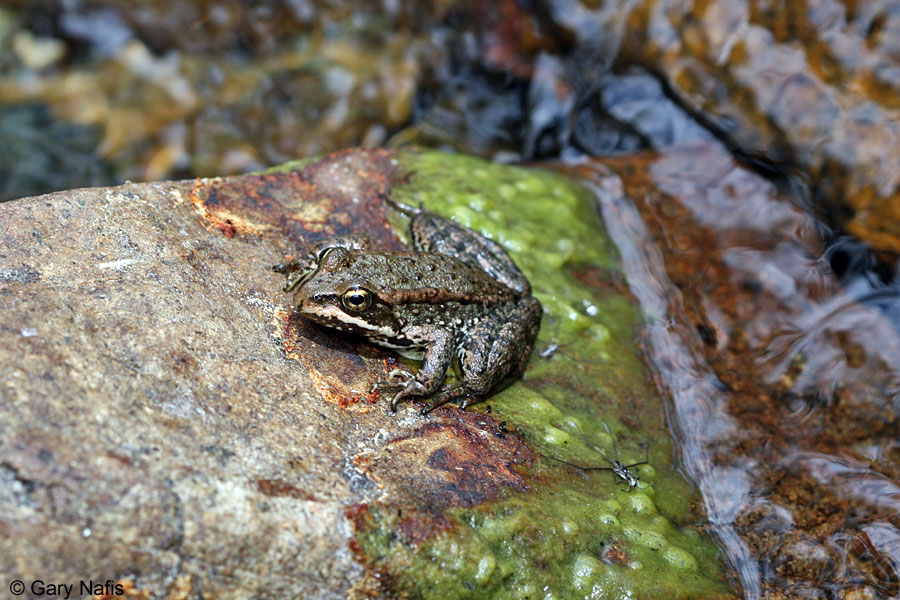
| Adult, Siskiyou County |
Adult, Siskiyou County |
Adult, Siskiyou County |
Adult in creek, Siskiyou County |
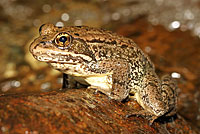 |
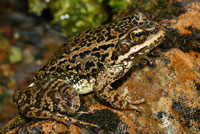 |
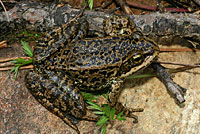 |
 |
| Adult, Siskiyou County |
Adult, Siskiyou County |
Adult, Siskiyou County |
Adult, Siskiyou County |
 |
 |
 |
 |
| Adult, Siskiyou County |
Adult under water, Siskiyou County |
Adult in pond, Siskiyou County |
Adult, Siskiyou County |
 |
 |
 |
 |
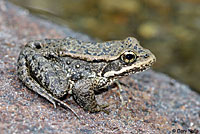
| Adult, Siskiyou County |
Adult, Siskiyou County |
Adult, Siskiyou County |
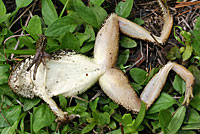
Adult underside Siskiyou County |
 |
 |
 |
 |
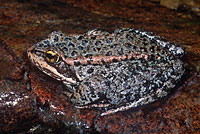
| Adult, Siskiyou County |
Adult, Siskiyou County |
Adult, Siskiyou County |
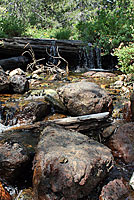
Adult in habitat, Siskiyou County |
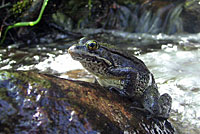 |
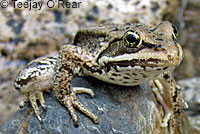 |
 |
|
| Adult, Siskiyou County |
Adult, Trinity Alps, Trinity County
© Teejay O'Rear |
Adult, found near Bear Creek east of Mt. Shasta in the southeastern corner of Siskiyou County. © Dave Biggs
|
|
| |
|
|
|
| Cascades Frogs from the Disjunct Southern Population - aka the Mt. Lassen Region |
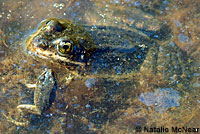 |
 |
|
|
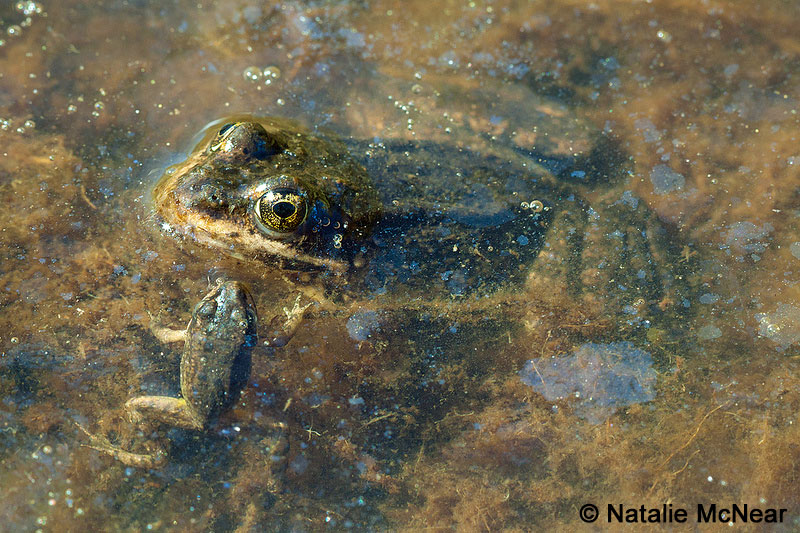
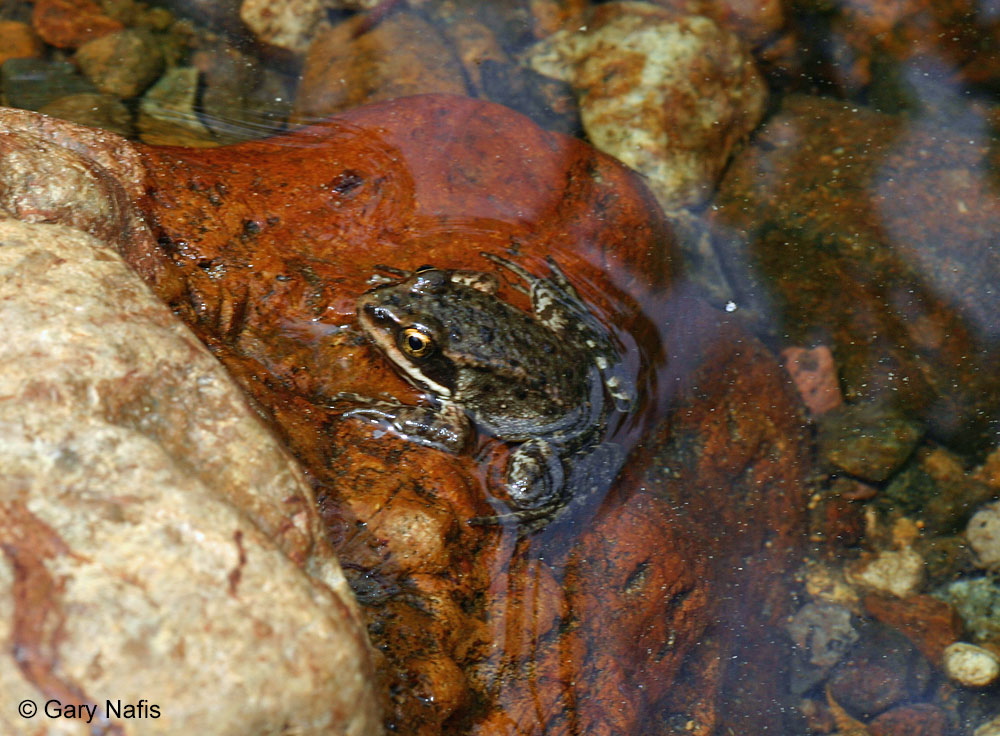
Adult and juvenile, Tehama County
© Natalie McNear |
Adult, Shasta County © Ryan Aberg |
|
|
| |
|
|
|
| Juveniles |
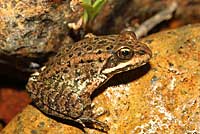 |
 |
 |
 |
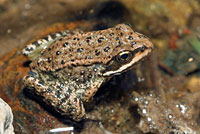
| Juvenile, Siskiyou County |
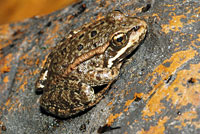
Juvenile, Siskiyou County |
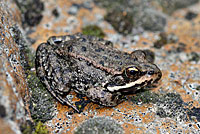
Juvenile, Siskiyou County |
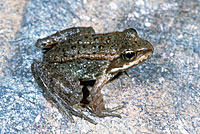
Juvenile, Siskiyou County |
 |
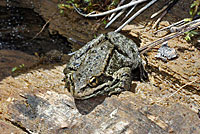 |
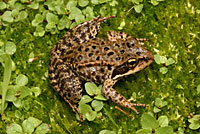 |
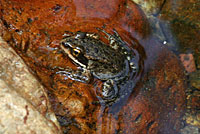 |
| Juvenile, Siskiyou County |
Juvenile, Siskiyou County |
Juvenile, Siskiyou County |
Juvenile, Siskiyou County |
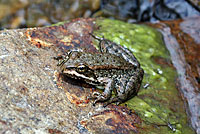 |
 |
|
|
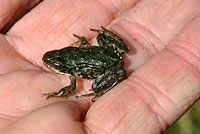
| Juvenile, Siskiyou County |
Juvenile, King County, Washington |
|
|
| |
|
|
|
| Unusually-pigmented Cascades Frog |
 |
 |
|
|
| This unusually yellow-orange juvenile, found at a high-elevation lake in Trinity County, appears to be missing its dark pigment, including the dark pigment normally found in the eyes. © Lauren Clark |
|
|
| |
|
|
|
| Reproduction, Eggs and Tadpoles |
 |
 |
 |
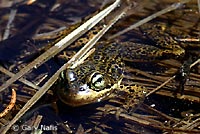 |
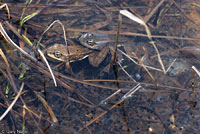
Male and female in amplexus,
Kittitas County, Washington |
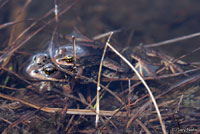
Male and female in amplexus,
Kittitas County, Washington |
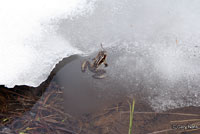
A very cold-tolerant male frog next to melting snow in the breeding season, Kittitas County, Washington |
Calling male, Pierce County, Washington |
 |
 |
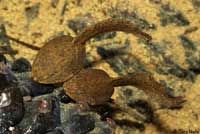 |
 |
| Adults in amplexus, Trinity County (captured and handled under state Scientific Collecting Permit and released at point of capture.) © Adam Clause |
Egg mass, 4,000 ft.,
Clackamas County, Oregon |
Tadpoles, 6,400 ft., Siskiyou County |
Tadpole, King County, Washington |
More pictures of eggs, tadpoles, and breeding habitat can be viewed here.
|
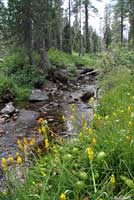
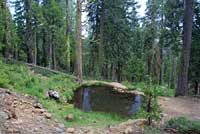
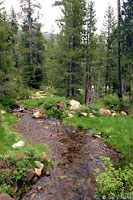
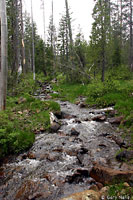
| Habitat |
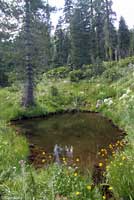 |
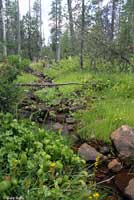 |
 |
 |
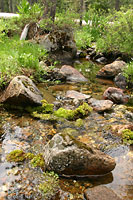
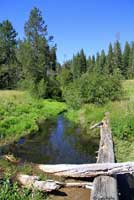
| Habitat, 6,300 ft. Siskiyou County |
Habitat, 5,700 ft. Siskiyou County |
Habitat, 5,700 ft. Siskiyou County |
Habitat, 6,100 ft. Siskiyou County |
 |
 |
 |
 |
| Habitat, 5,700 ft. Siskiyou County |
Habitat, 5,700 ft. Siskiyou County |
Habitat, 5,700 ft. Siskiyou County |
Habitat, 5,000 ft. Tehama County |
 |
 |
 |
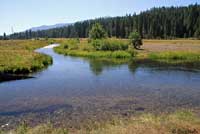 |
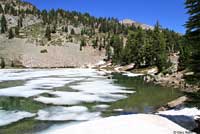
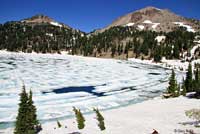
| The population of Cascades frogs on Mt. Lassen has declined dramatically to the point where they may now be extinct. They were once so abundant at 8100 ft. Emerald Lake (left) that herpetologist Joseph Grinnell reported in the 1920s that there was one frog per yard around the lake. They are no longer at adjacent 8200 ft. Lake Helen either (right two pictures). |
Former habitat, 5,000 ft. Tehama County |
| |
|
| Short Videos |
 |
 |
 |
 |
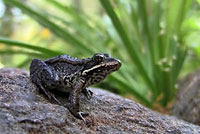
| Cascades frogs along a creek and in ponds in Siskiyou County. |
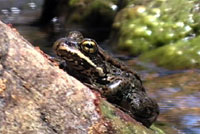
Lots of Cascades frogs filmed as they were encountered one summer morning along a creek in the mountains of Siskiyou County. |
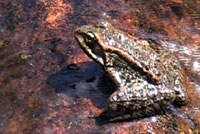
Views of several Cascades frogs in their habitat, a creek in the mountains of Siskiyou County. |
A look at a Cascades Frog breeding pond high in the Washington Cascades, including the pond surrounded by melting snow, male frogs in calling position, two calling males, and two episodes of male frogs attempting to mount other males with sounds of protest. |
 |
 |
 |
 |
| Several adult male frogs make calling sounds in the Washington Cascade Mountains. |
An adult male frog floats on the breeding pond, trading calls with two other frogs heard in the background. |
Male frogs chase each other around in the breeding pond, chattering and clucking. |
The bottom frog of this pair in amplexus (probably a female) makes a few release calls as it tries to shake off the male on its back. |
 |
 |
 |
 |
| A male frog discovers another frog (probably a female that has already laid eggs) grabs on to her, and is carried around the pond as she tries to shake him off. |
Views of some of the many egg masses in a breeding pond in the Cascades Mountains in Washington |
These short videos were recorded under the water of a small snow-melt pond at about 7,145 ft. elevation (2178 m) in July in Siskiyou County. © Risa Okuyama
In the video on the left, we hear the underwater calls of a male Cascades Frog and see a male in amplexus with a female as she lays her eggs. You can see her small dark eggs coming out before they expand from exposure to the water into a large egg mass like the one we see in front of her. Then another male swims onto the amplexing male's back and tries to knock him off the female, but he holds on. You can watch a larger version of the video on Risa Okuyama's YouTube channel.
You can also watch another attempt by the male to steal the female and fertilize her eggs and listen to lots of good underwater calls on Risa Okuyama's YouTube channel.
In the video on the right we see a male Cascades Frog in amplexus with a presumed female, his arms stretched under her armpits and wrapped tightly around her chest as they float at the surface of the pond above a large egg mass. You can watch a larger version of the video on Risa Okuyama's YouTube channel.
|
More pictures of this frog and its habitat are available on our Northwest Herps page.
|
| Description |
| |
| Size |
Adults are 1.75 - 3 inches long from snout to vent (4.4 - 7.5 cm). (Stebbins, 2003)
Females grow up to 3 inches long (7.5 cm) males up to 2.25 inches (5.8 cm.)
|
| Appearance |
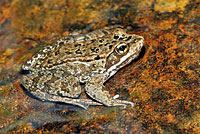
A medium-sized frog with a slim waist, long legs, smooth skin, and reduced webbing on the hind feet.
Raised ridges on the sides (dorsolateral folds) are distinct.
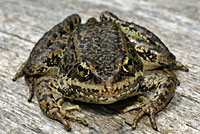
The eyes are positioned directly laterally - they are oriented outward. |
| Color and Pattern |
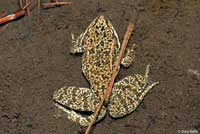
Brown, copper, tan, to olive green above, yellowish below and on the back of the legs.
Black spots with distinctly-marked edges are usually present on the back.
The sides are cream colored, and there is dark mottling on the groin.
A dark face mask is present with a light upper jaw stripe extending to the shoulder.
|
| Larvae (Tadpoles) |
Tadpoles grow to about 2 inches in length (5 cm.)
Color is dark brown, with copper to pinkish speckling, golden coloring on the sides and a finely speckled tail.
|
| Life History and Behavior |
| Activity |
Diurnal.
Typically found near water at higher elevations. Rarely found below 2,000 ft..
Occurs in areas covered by winter snow, hibernating throughout winter buried in mud under several feet of water or in saturated areas around ponds.
Often appears sluggish. |
| Defense |
| When frightened, a frog typically hops into water and swims away to escape, usually to the opposite shore or to the bottom where it goes head first into silt and mud. |
Territoriality
|
| Adults are not territorial, but males behave aggressively towards other males during the breeding season. |
| Longevity |
In the Oregon Cascades, both male and females are thought to live less than 5 years, sometimes reaching 7 years (Lanoo 2005).
Recent studies not yet published (2019) show that Cascades frogs live much longer than the 5-7 years previously thought.
|
| Voice (Listen) |
A quiet series of low grating clucking noises.
Calls at night and also during the day from above and under water. |
| Diet and Feeding |
| Diet is not well known, but probably consists of a wide variety of invertebrates. Prey is located by vision, then a large sticky tongue is used to catch the prey and bring it into the mouth to eat. |
| Predation |
| Predators of adult frogs include water bugs, garter snakes, small mammals, and birds. Tadpoles and newly metamorphosed frogs are also preyed on by aquatic salamanders (Rough-skinned Newts, Northwestern Salamanders, and Long-toed Salamanders), adult Cascades Frogs, introduced salmonid fish, and even some invertebrates. (A dragonfly was observed consuming a live metamorphosing Cascades Frog in Trinity County. (Herpetological Review 38(2), 2007)) |
| Reproduction |
Reproduction is aquatic.
Fertilization is external, with the male grasping the back of the female and releasing sperm as the female lays her eggs.
The reproductive cycle is similar to that of most North American Frogs and Toads. Mature adults come into breeding condition and the males call to advertise their fitness to competing males and to females. Males and females pair up in amplexus in the water where the female lays her eggs as the male fertilizes them externally. The eggs hatch into tadpoles which feed in the water and eventually grow four legs, lose their tails and emerge onto land where they disperse into the surrounding territory.
Adults are reproductively mature at 2 - 3 years.
Females breed only once per year.
Males sit in shallow water and make a faint advertisement call to attract females.
Frogs overwinter near the breeding ponds, becoming active as the ice thaws.
Breeding begins soon after the snow begins to melt, from March to mid August depending on the location.
Breeding takes place in temporary and permanent bodies of water generally lacking fish, with silt or mud substrates, often smaller bodies of water near larger lakes. Breeding is explosive, lasting only about a week or less at a location.
Adults return to the same location each year to breed. |
| Eggs |
Eggs are laid in a mass the size of an orange or small grapefruit containing 300 -800 eggs which is not attached to vegetation, but partly submerged in shallow water. Clusters of eggs are often laid in aggregations.
Eggs are black above, and white below, and are widely spaced in the gelatinous mass.
|
| Tadpoles and Young |
Tadpoles group together in large aggregations.
Tadpoles transform in about 2 months after hatching from the eggs.
There is no documented evidence that tadpoles overwinter, but it is possible.
|
| Habitat |
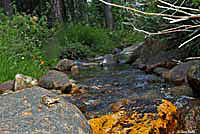
Inhabits wet mountain areas in open coniferous forests to near timberline, including small streams, small pools in meadows, lakes, bogs, ponds, and marshy areas near streams. Typically found in water with no predatory fishes.
|
| Geographical Range |
Historically, this frog was found in fragmented populations in extreme northern California, from the edge of the northern Sierra Nevada mountains to Mt. Lassen, Mt. Shasta, the Marble Mountains, and the Trinity Alps. It is now missing from an estimated 50 percent of its former range in California, and most of its former southernmost locations, including Mt. Lassen.
Beyond California the species ranges throughout the Cascades Mountains of Oregon and Washington, in the Olympic Mountains, and barely into British Columbia, Canada.
|
 |
| Elevational Range |
From 755 ft. (in Washington) to around 9,000 ft. (230 - 2740 m).
|
| Notes on Taxonomy |
Considered a subspecies of Rana pretiosa before 1939. No subspecies are currently recognized. Frogs in California are isolated from the main Cascades populations.
-----------------------------------------------------------------------------------------------------------------------------------------------------------------------------------------------------------------------------
Jennings and Hayes, who have extensively surveyed California's frogs, suggested in 1994 that California Cascades Frogs should be investigated for cryptic taxa.
-----------------------------------------------------------------------------------------------------------------------------------------------------------------------------------------------------------------------------
R. cascadae in the Lassen region are likely distinct from those in the Siskiyou-Klamath region:
Fellers et. al. (*2007) note that Monsen and Blouin (**2003) in a range-wide evaluation of the genetic diversity of Rana cascadae suggested that California R. cascadae are sufficiently distinct from populations in Oregon and Washington to warrant designation as a Distinct Population Segment and that Case (***2003) found evidence that R. cascadae in the Lassen region vary from those in the Klamath-Siskiyou region. They recommend that "a more detailed genetic evaluation [of] R. cascadae in California and southern Oregon is needed to determine the boundaries of genetic differentiation."
-----------------------------------------------------------------------------------------------------------------------------------------------------------------------------------------------------------------------------
Nicholson, K. E. (ed.). 2025 SSAR Scientific and Standard English Names List comment:
"The disjunct populations in the Olympic Mountains, Washington, and the Klamath-Siskiyou Mountains, California, should be investigated with respect to call characters and molecular data. Previous studies on the populations have produced conflicting results (Dodd, 2023, Frogs of the United States and Canada, 2nd edition, Johns Hopkins University Press: 992pp)."
-----------------------------------------------------------------------------------------------------------------------------------------------------------------------------------------------------------------------------
Alternate and Previous Names (Synonyms)
Rana cascadae - Cascades Frog (Stebbins 1966, 1985, 2003, Stebbins & McGinnis 2012)
Rana aurora cascadae (Stebbins 1954)
Rana cascadae - Slater's Frog (Slater's Spotted Frog, Cascade Frog) (Wright & Wright 1949)
|
| Conservation Issues (Conservation Status) |
Although it is still common and apparently in no trouble in Oregon and Washington, the Cascades Frog is no longer present in approximately 50 percent of its historical range in California, and has disappeared from as much as 99 percent of their southernmost California populations, including Mt. Lassen, where they were once abundant. Numbers are small in extant populations.
Introduced sport fish, solar UV-B radiation, contaminants such as airborne environmental pollution and fungal pathogens, and loss of open meadow habitat due to fire suppression, have all been suggested as factors contributing to the decline of Cascade Frogs in California. |
|
| Taxonomy |
| Family |
Ranidae |
True Frogs |
Rafinesque, 1814 |
| Genus |
Rana |
True Frogs |
Linnaeus, 1758 |
| Species |
cascadae |
Cascades Frog
|
Slater, 1939 |
|
Original Description |
Slater, 1939 - Herpetologica, Vol. 1, p. 145
from Original Description Citations for the Reptiles and Amphibians of North America © Ellin Beltz
|
|
Meaning of the Scientific Name |
Rana - Latin = frog - probably mimics how the Romans heard their call
cascadae - of the Cascade Mountains, WA - "named from the region in which it was 1st found"
from Scientific and Common Names of the Reptiles and Amphibians of North America - Explained © Ellin Beltz
|
|
Related or Similar California Frogs |
Lithobates yavapaiensis
Lithobates catesbeiana
Rana draytonii
Rana boylii
Rana aurora
Rana pretiosa
Lithobates pipiens
|
|
More Information and References |
California Department of Fish and Wildlife
AmphibiaWeb
Hansen, Robert W. and Shedd, Jackson D. California Amphibians and Reptiles. (Princeton Field Guides.) Princeton University Press, 2025.
Stebbins, Robert C., and McGinnis, Samuel M. Field Guide to Amphibians and Reptiles of California: Revised Edition (California Natural History Guides) University of California Press, 2012.
Stebbins, Robert C. California Amphibians and Reptiles. The University of California Press, 1972.
Flaxington, William C. Amphibians and Reptiles of California: Field Observations, Distribution, and Natural History. Fieldnotes Press, Anaheim, California, 2021.
Nicholson, K. E. (ed.). 2025. Scientific and Standard English Names of Amphibians and Reptiles of North America North of Mexico, with Comments Regarding Confidence in Our Understanding. Ninth Edition. Society for the Study of Amphibians and Reptiles. [SSAR] 87pp.
Samuel M. McGinnis and Robert C. Stebbins. Peterson Field Guide to Western Reptiles & Amphibians. 4th Edition. Houghton Mifflin Harcourt Publishing Company, 2018.
Stebbins, Robert C. A Field Guide to Western Reptiles and Amphibians. 3rd Edition. Houghton Mifflin Company, 2003.
Behler, John L., and F. Wayne King. The Audubon Society Field Guide to North American Reptiles and Amphibians. Alfred A. Knopf, 1992.
Robert Powell, Roger Conant, and Joseph T. Collins. Peterson Field Guide to Reptiles and Amphibians of Eastern and Central North America. Fourth Edition. Houghton Mifflin Harcourt, 2016.
Powell, Robert., Joseph T. Collins, and Errol D. Hooper Jr. A Key to Amphibians and Reptiles of the Continental United States and Canada. The University Press of Kansas, 1998.
Corkran, Charlotte & Chris Thoms. Amphibians of Oregon, Washington, and British Columbia. Lone Pine Publishing, 1996.
Jones, Lawrence L. C. , William P. Leonard, Deanna H. Olson, editors. Amphibians of the Pacific Northwest. Seattle Audubon Society, 2005.
Leonard et. al. Amphibians of Washington and Oregon. Seattle Audubon Society, 1993.
Nussbaum, R. A., E. D. Brodie Jr., and R. M. Storm. Amphibians and Reptiles of the Pacific Northwest. Moscow, Idaho: University Press of Idaho, 1983.
American Museum of Natural History - Amphibian Species of the World 6.2
Bartlett, R. D. & Patricia P. Bartlett. Guide and Reference to the Amphibians of Western North America (North of Mexico) and Hawaii. University Press of Florida, 2009.
Elliott, Lang, Carl Gerhardt, and Carlos Davidson. Frogs and Toads of North America, a Comprehensive Guide to their Identification, Behavior, and Calls. Houghton Mifflin Harcourt, 2009.
Lannoo, Michael (Editor). Amphibian Declines: The Conservation Status of United States Species. University of California Press, June 2005.
Storer, Tracy I. A Synopsis of the Amphibia of California. University of California Press Berkeley, California 1925.
Wright, Albert Hazen and Anna Wright. Handbook of Frogs and Toads of the United States and Canada. Cornell University Press, 1949.
Davidson, Carlos. Booklet to the CD Frog and Toad Calls of the Pacific Coast - Vanishing Voices. Cornell Laboratory of Ornithology, 1995.
* Fellers, Gary M., Karen L. Pope, Jonathan E. Stead, Michelle S. Koo, and Hartwell H. Welsh, Jr. Turning Population Trend Monitoring into Active Conservation: Can We Save the Cascades Frog (Rana cascadae) in the Lassen Region of California? Herpetological Conservation and Biology 3(1):28-39. Submitted: 30 May 2007; Accepted: 19 October 2007.
**Monsen, K.J., and Blouin, M.S. Genetic structure in a montane ranid frog: Restricted gene flow and nuclear-mitochondrial discordance. Molecular Ecology 12:3275-3286. 2003.
***Case, S.M. Biochemical systematics of members of the genus Rana native to western North America. Systematic Zoology 27:299-311. 1978.
|
|
|
The following conservation status listings for this animal are taken from the April 2024 State of California Special Animals List and the April 2024 Federally Listed Endangered and Threatened Animals of California list (unless indicated otherwise below.) Both lists are produced by multiple agencies every year, and sometimes more than once per year, so the conservation status listing information found below might not be from the most recent lists. To make sure you are seeing the most recent listings, go to this California Department of Fish and Wildlife web page where you can search for and download both lists:
https://www.wildlife.ca.gov/Data/CNDDB/Plants-and-Animals.
A detailed explanation of the meaning of the status listing symbols can be found at the beginning of the two lists. For quick reference, I have included them on my Special Status Information page.
If no status is listed here, the animal is not included on either list. This most likely indicates that there are no serious conservation concerns for the animal. To find out more about an animal's status you can also go to the NatureServe and IUCN websites to check their rankings.
Check the current California Department of Fish and Wildlife sport fishing regulations to find out if this animal can be legally pursued and handled or collected with possession of a current fishing license. You can also look at the summary of the sport fishing regulations as they apply only to reptiles and amphibians that has been made for this website.
ESA Note:
Date of FGC vote to advance to candidacy was 20171011.
|
| Organization |
Status Listing |
Notes |
| NatureServe Global Ranking |
G3 |
Vulnerable |
| NatureServe State Ranking |
S3 |
Vulnerable |
| U.S. Endangered Species Act (ESA) |
None |
|
| California Endangered Species Act (CESA) |
SC |
Listed as Candidate for Endangered Species 6/27/17 |
| California Department of Fish and Wildlife |
SSC |
Species of Special Concern |
| Bureau of Land Management |
None |
|
| USDA Forest Service |
S |
Sensitive |
| IUCN |
NT |
Near Threatened |
|
|
|