
A Guide to California's
Reptiles and Amphibians
Sounds of
Pacific Treefrog - Pseudacris regilla
(Baird and Girard, 1852)
(= Pacific Chorus Frog, = Pacific Treefrog. See Alternate Names)
 |
|
Male frogs and toads sometimes make a variety of sounds. These calls can have different functions. Advertisement Calls The advertisement call is the most well-known call of a frog or toad. It is made by a male during the breeding season to establish his territory and repel rival males and to attract females as potential mates. Males usually make the call in or near bodies of water near areas that are attractive to a female as a good place to lay her eggs. Advertisement calls can be heard during the evening and at night, and often during daylight at the peak of the breeding season. Sometimes an advertisement call will be heard outside of the breeding season and away from water. The reason for this is not understood. Each species has its own unique advertisement call. This is necessary to differentiate them when there is more than one species calling. The evolution of this specific male advertisement call and its recognition by females is considered to be an important isolating mechanism in the evolution of a species. The Pacific Treefrog produces two different kinds of very loud advertisement calls: a two-part, or diphasic call, typically described as rib-it, or krek-ek, with the last syllable rising in inflection, and a one-part, or monophasic call, also called the enhanced mate attraction call. The call of the Baja California Treefrog is known throughout the world through its wide use as a nighttime background sound in many Hollywood movies, even those which are set in areas well outside the range of this frog. The call of the Baja California Treefrog is identical to that of the Sierran Treefrog and the Pacific Treefrog, and it is possible that the calls of all of these species were also used as movie sound effects. | ||||||||||||||
Diphasic (two-part) Call This call is produced during the day and at night, often in large choruses. |
||||||||||||||
 |
This is a 35 second recording of a large group of Pacific Treefrogs calling at night from a pond in Del Norte County. It begins with one frog breaking the silence, then others quickly follow until the chorus rises in volume before it is faded out. This is the typical sound of a large chorus of these frogs, which often continues for more than ten minutes, | |||||||||||||
|
This is a 9 second recording of the advertisement call of single male Pacific Treefrog recorded at night near the Columbia River in Klickitat County, Washington. This call is faster and higher in pitch than the Yakima frog. |
|||||||||||||
|
This is a recording of a small group of frogs calling at night in Grant County, Washington. |
|||||||||||||
|
This is a 4 second
recording
of the advertisement calls of a single male Pacific Treefrog, recorded at night on the banks of a small pond in Yakima County, Washington. Insects can be heard in the background. |
|||||||||||||
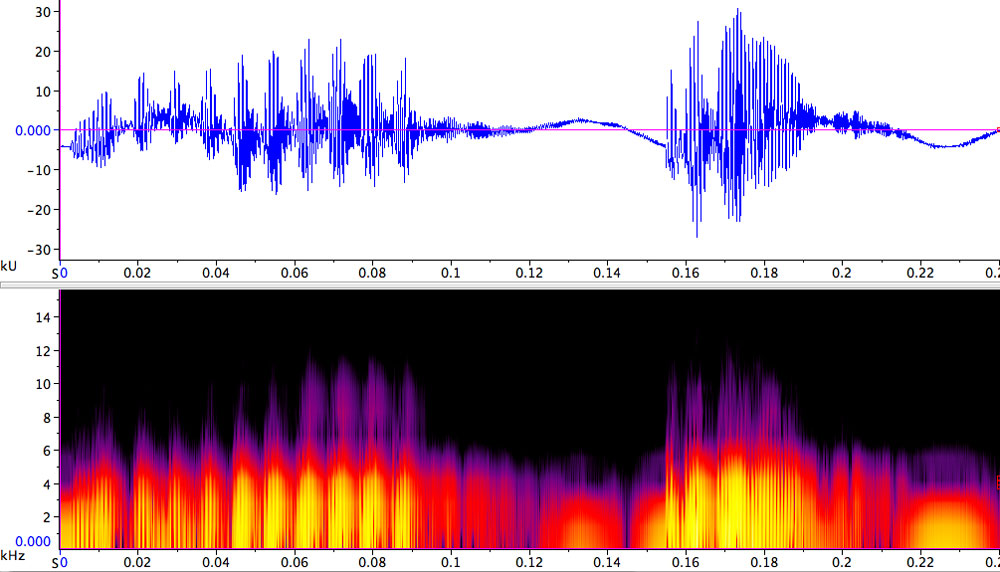
| Waveform and Sonogram | ||||||||||||||
 |
||||||||||||||
|
This is a recording of one repetition of the call of a male Pacific Treefrog calling at night in Yakima County, Washington. The image above is a visual representation of this call. Click on it to see a larger image. Click here for information about how to read the waveform and sonogram images. |
|||||||||||||
Monophasic (one-part) (enhanced) Call This call is produced during the day and at night. It is produced at a high rate when a male is approached by a female, and he continues to produce it until he has amplexed the female. |
||||||||||||||
|
This is a 12 second recording of the fast enhanced mate attraction cal of a male Sierran Treefrog. It was recorded at about 9,000 ft. in Alpine County in late June at the beginning of the breeding season when the snow was melting around the breeding pond. Another deeper single-note call is heard along with birds and flowing water. |
|||||||||||||
Trilled Encounter Call The trilled encounter call is a raspy trilled sound. It is an aggressive signal aimed at other males and is used to establish spacing between them at the calling site during a breeding chorus. The encounter call is typically heard during the beginning of the chorus when territories are being established and then later when a male intrudes on the territory of another male either physically or with very loud calling. |
||||||||||||||
|
This is a 7 second recording of trilled encounter calls made by male Baja California Treefrogs, recorded in Riverside County in mid March on a sunny afternoon. The recording starts with some typical advertisement calls, then ends with three trilled calls. |
|||||||||||||
| Land Call The land call is a prolonged one-note kr-r-r-ek sound. Land calls can be heard during the day, often in wooded areas away from water. I have heard frogs produce this call while they were sitting high on a tree branch as well as when they were on the ground, usually hidden in dense vegetation. The call is sometimes referred to as the "Fall awakening call" and it does appear to be made mostly during Fall when the rains are beginning and the frogs are coming out of their summer slumber. |
||||||||||||||
|
This is a 17 second recording of land calls of a single Pacific Treefrog during daylight in October on a wooded trail, King County, Washington. An airplane is heard in the background. | |||||||||||||
| This adult frog was found as seen here about 10 feet up in a tree producing a land call during the afternoon in Thurston County, Washington. |
 |
|||||||||||||
Release Call The release call is made by a frog when another male frog attempts to clasp its back in amplexus. A frog will also produce this call when it is grabbed across the back by a human, and probably also when it is grabbed by other types of predators. |
||||||||||||||
|
This is a 5 second recording of 3 release calls produced by a male Sierran Treefrog in breeding phase as it was grabbed across the back. (The frog was not harmed.) Recorded in Alpine County. | |||||||||||||
| Short Videos | ||||||||||||||
|
||||||||||||||
You can listen to more recordings of Northern Pacific (Pacific) Treefrogs on this cd: Carlos Davidson - Frog and Toad Calls of the Pacific Coast  and on the cd that comes with this book: Lang Elliott, Carl Gerhardt, and Carlos Davidson - The Frogs and Toads of North America - Houghton Mifflin Harcourt.  |
||||||||||||||

Return to the Top
© 2000 -