|
This subspecies was merged with the subspecies Diadophis punctatus similis - San Diego Ring-necked Snake.
Pictures of snakes in that former subspecies are grouped separately below.
|
 |
 |
| Adult, San Bernardino Mountains, San Bernardino County |
Adult, San Gabriel Mountains, Los Angeles County © Grigory Heaton |
 |
 |
 |
 |
| Adult, San Bernardino Mountains, San Bernardino County |
Adult, San Gabriel Mountains foothills, Los Angeles County |
 |
 |
 |
 |
An adult from Redlands, San Bernardino County, with a belly
that looks more orange than expected. © Mark Miller |
Adult, Los Angeles County
© Huck Triggs |
Neonates, Los Angeles County
© Huck Triggs |
 |
 |
 |
 |
| Adults, Santa Catalina Island, Los Angeles County © Nathan Smith |
Adult, Orange County © Tadd Kraft |
 |
 |
 |
 |
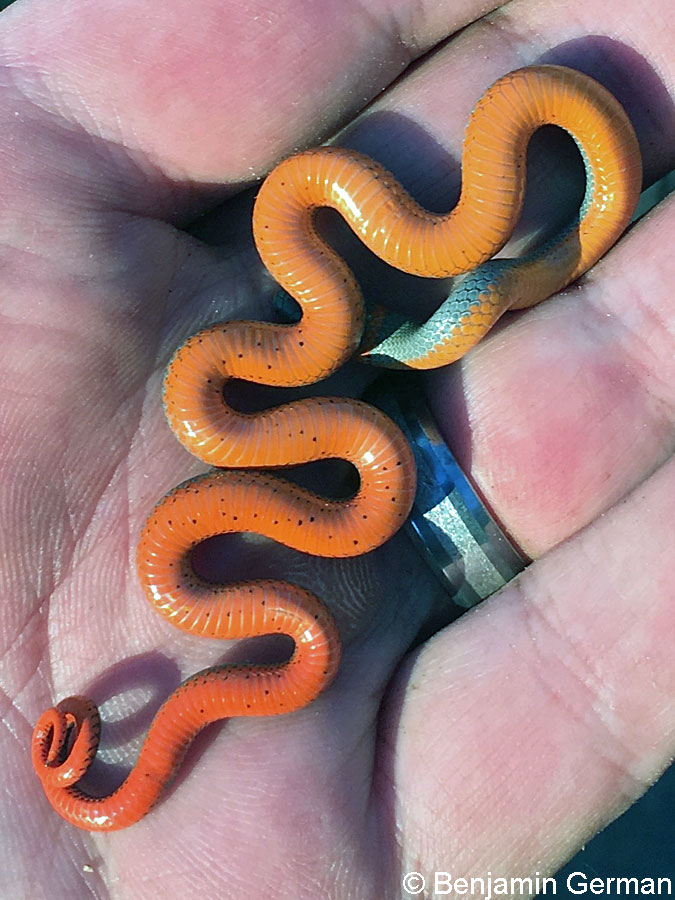
Adult, Ventura County, from the intergrade range with D. p. vandenburghii.
© Benjamin German |
Adult, Los Angeles County © Zeev Nitzan Ginsburg |
 |
 |
 |
| Adult, Santa Catalina Island, Los Angeles County © Matthias Lemm |
 |
 |
|
|
Adult, Los Angeles County
© Zeev Nitzan Ginsberg |
Adult, Santa Catalina Island
© Matthias Lemm |
|
|
| |
San Bernardino Ring-necked Snakes Formerly Known as San Diego Ring-necked Snake - Diadophis punctatus similis
|
 |
| Adult, San Diego County |
 |
 |
 |
 |
 |
 |
 |
 |
| |
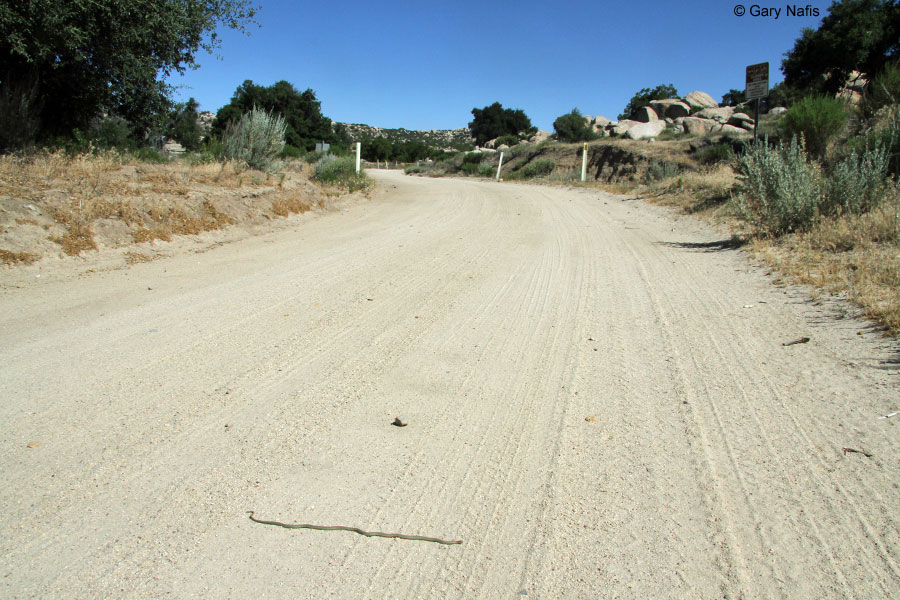
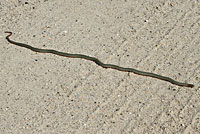
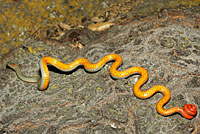
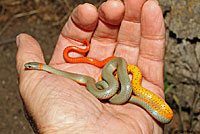
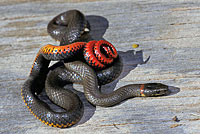
Adult, San Diego County, found stretched out on a road on a morning in mid June. |
|
 |
 |
 |
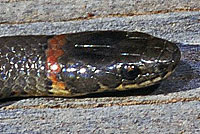 |
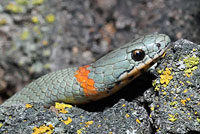
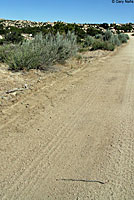
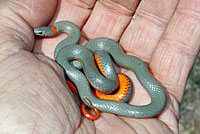
Adult, San Diego County, found stretched out on the same
road half a mile away from the ringneck shown above. |
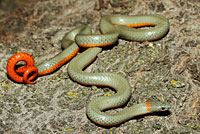
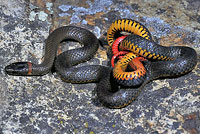
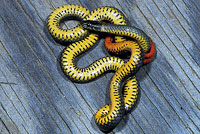
Adult, Spring Valley, San Diego County |
 |
 |
 |
 |
| |
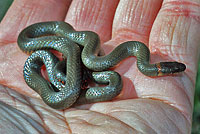
Adult, Spring Valley, San Diego County |
|
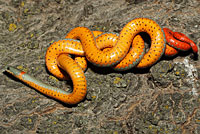
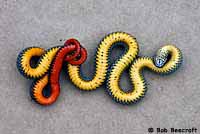
Adult, underside, Fallbrook, San Diego County. © Robert Beecroft |
 |
 |
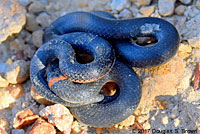 |
 |
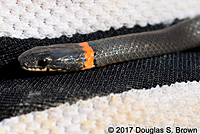
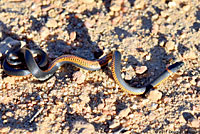
| Juvenile, San Diego County © Douglas Brown |
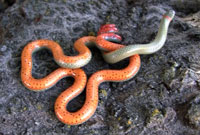
Juvenile, San Diego County, curled up in a defensive pose, with the head hidden.
© Douglas Brown |
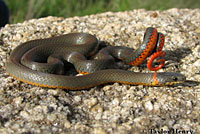
Adult, San Diego County. © Taylor Henry |
 |
|
|
|
Adult, San Diego County
© Brad Alexander |
Adult, Laguna Mountains, San Diego County © John Stoklosa |
|
|
| |
|
|
|
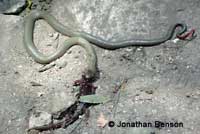
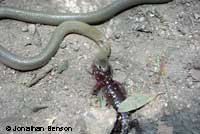
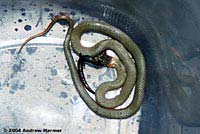
| Ring-necked Snakes Feeding |
 |
 |
 |
|
An adult San Bernardino Ring-necked Snake eating an adult Arboreal Salamander in Los Angeles County © Jonathan Benson |
Adult Monterey Ring-necked Snake eating a Slender Salamander, San Luis Obispo County © Andrew Harmer |
|
 |
 |
 |
|
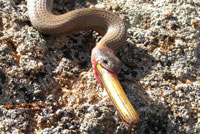
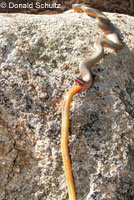
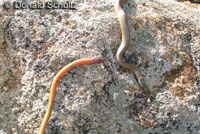
| Ring-necked Snakes use a mild venom to subdue their prey which include snakes and lizards. This San Diego Ring-necked Snake from San Diego County regurgitated a California Legless Lizard that it had recently eaten. © Donald Schultz |
|
| |
| Predation on Ring-necked Snakes |
| |
 |
|
|
| |
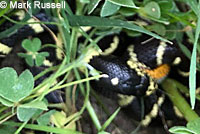
A juvenile California Kingsnake eats a San Bernardino Ring-necked Snake in Riverside County. © Mark Russell |
|
|
| |
|
|
|
| Habitat |
 |
 |
 |
 |
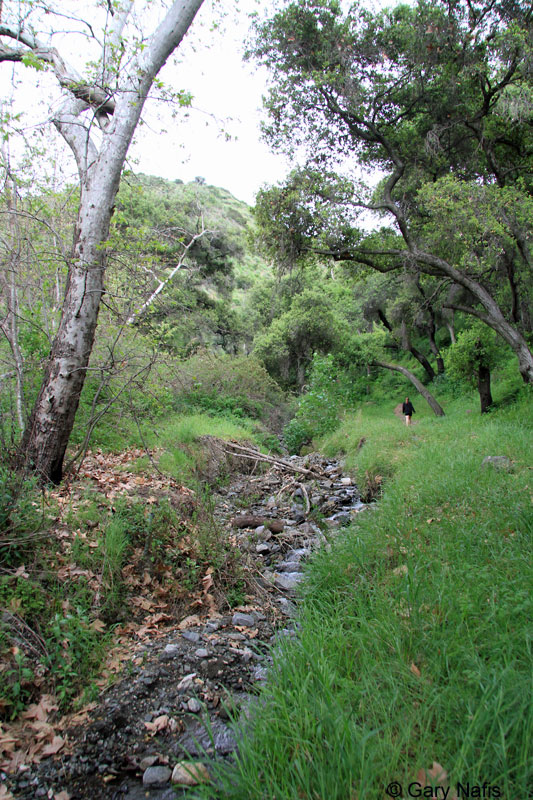
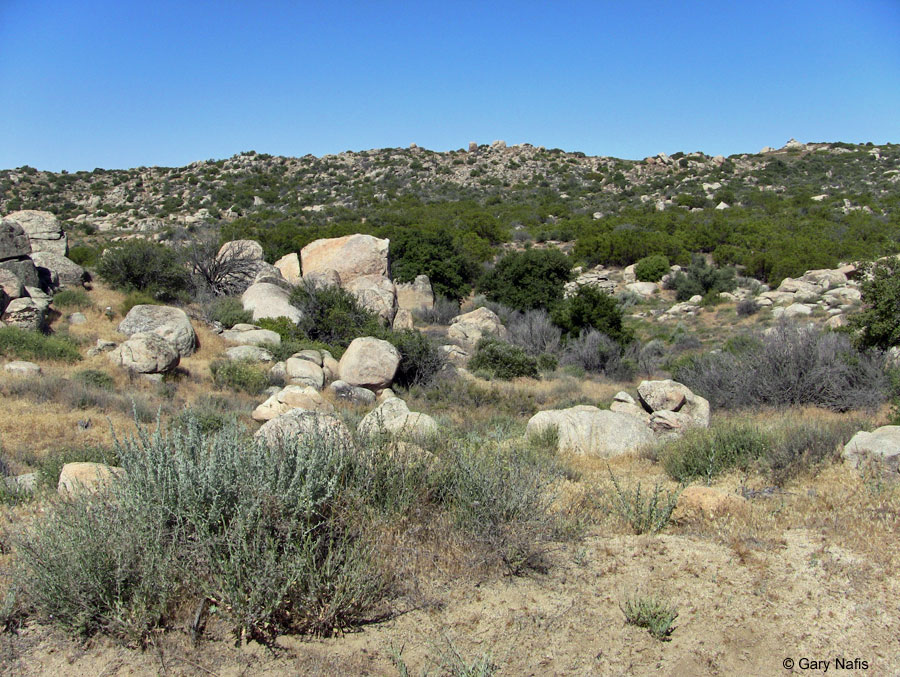
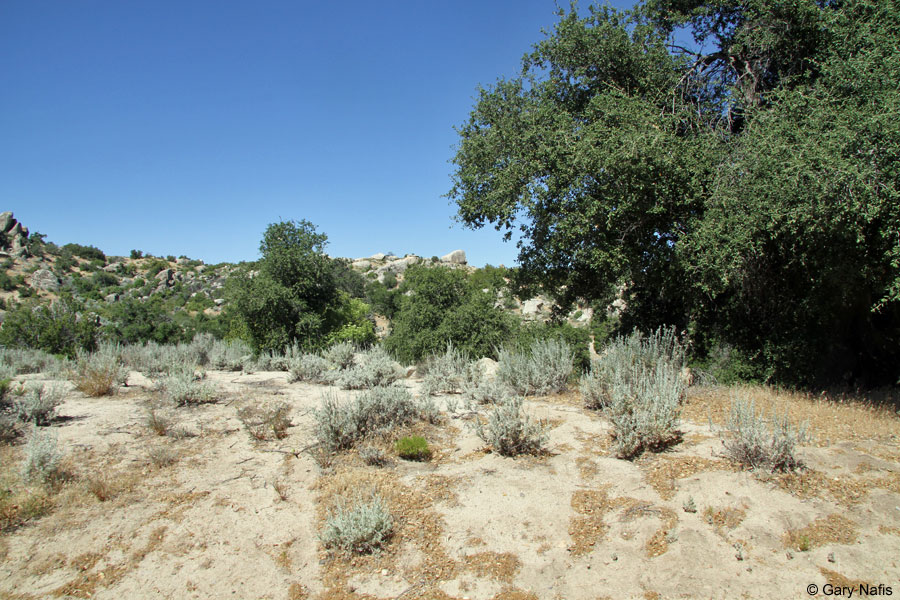
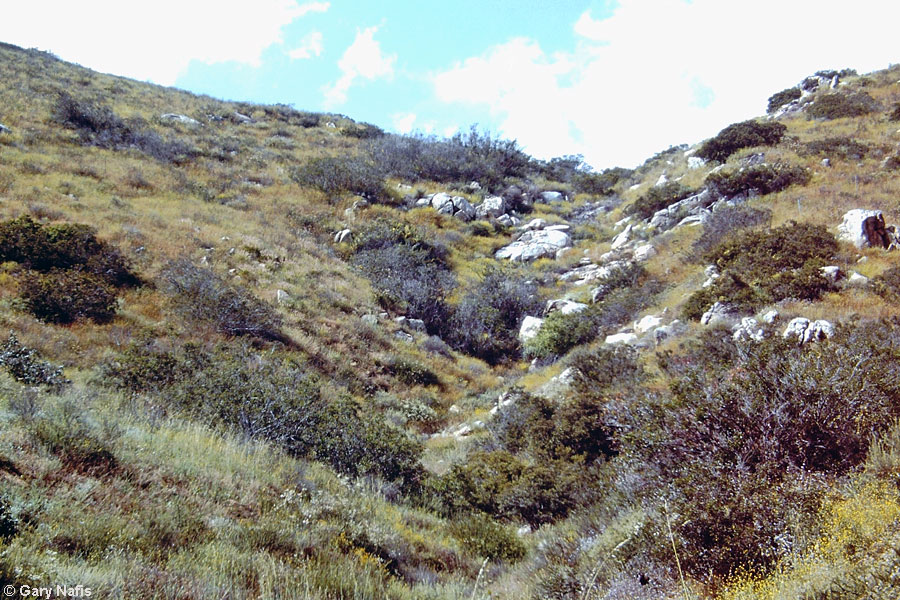
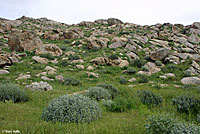
| Habitat, Riverside County |
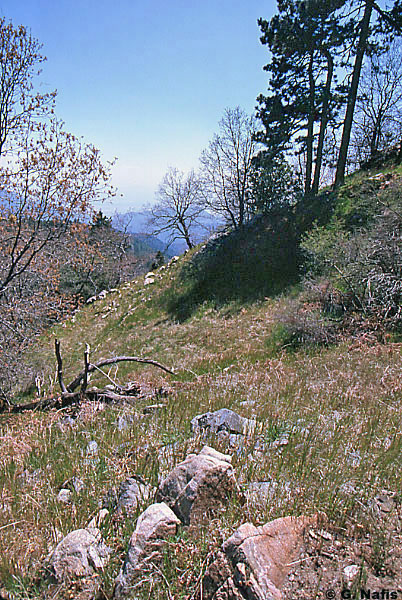
Habitat, 6,100 ft, San Bernardino Mountains, San Bernardino County |
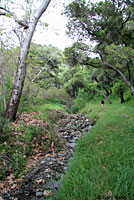
Habitat, 1400 ft., San Gabriel Mountains, Los Angeles County |
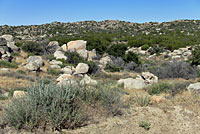
Habitat, San Bernardino Mountains,
San Bernardino County |
 |
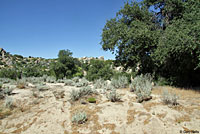 |
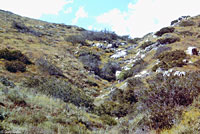 |
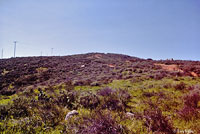 |
| Habitat, 3900 ft. San Diego County |
Habitat, 3800 ft. San Diego County |
Habitat, coastal chaparral,
San Diego County |
Habitat, hillside coastal chaparral,
San Diego County |
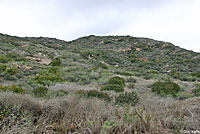 |
 |
 |
 |
| Habitat, San Diego County |
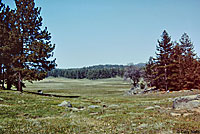
Habitat, mountain meadow,
San Diego County |
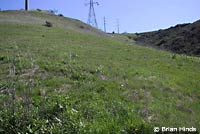
Coastal San Diego County grassland habitat that is rapidly disappearing due to development. © Brian Hinds |
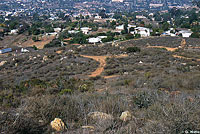
Habitat, hill next to suburbs,
San Diego County |
|
|
|
|
| Habitat, 3900 ft. San Diego County |
Habitat, 3800 ft. San Diego County |
Habitat, coastal chaparral,
San Diego County |
Habitat, hillside coastal chaparral,
San Diego County |
|
|
|
|
| Habitat, San Diego County |
Habitat, mountain meadow,
San Diego County |
Coastal San Diego County grassland habitat that is rapidly disappearing due to development. © Brian Hinds |
Habitat, hill next to suburbs,
San Diego County |
 |
 |
|
|
| Santa Catalina Island © Matthias Lemm |
Santa Catalina Island © Matthias Lemm |
|
|
| |
|
|
|
| Short Videos |
 |
 |
|
|
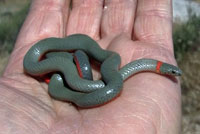
| A San Bernardino Diego Ring-necked snake is released back where it was found. |
A few brief views of a large San Bernardion Ring-necked snake and its habitat. |
|
|
|
|
|
|
| Description |
Not Dangerous - This snake may produce a mild venom that does not typically cause death or serious illness or injury in most humans, but its bite should be avoided.
Commonly described as "harmless" or "not poisonous" to indicate that its bite is not dangerous, but "not venomous" is more accurate since the venom is not dangerous. (A poisonous snake can hurt you if you eat it. A venomous snake can hurt you if it bites you.)
Rear teeth on the upper jaw are enlarged but not grooved which may aid in injecting mild venom into small prey.
|
| Size |
The typical total length of an adult Ring-necked snake (Diadophis punctatus) varies somewhat by subspecies but in general it is about 11 - 16 inches (28 - 42 cm.)
Hatchlings are much smaller and longer specimens are sometimes found.
The record length is 33-5/8 inches (85.4 cm.)
|
| Appearance |
| A small, thin snake with smooth scales. |
| Color and Pattern |
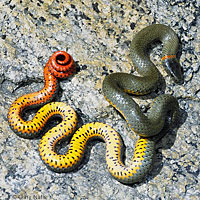
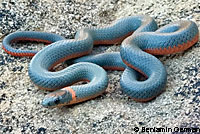
Gray, blue-gray, blackish, or dark olive dorsal coloring, with a bright orange to reddish underside, speckled with black markings.
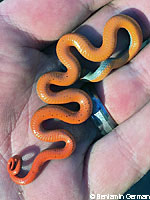
The underside of the tail is a bright reddish orange.
A narrow orange band around the neck, 1.5 - 2 scale rows wide.
|
| Similar Species |
Western Black-headed Snakes and San Bernardino Ring-necked Snakes might be found in the same location.
Both are small slender long-tailed snakes with a ring around the neck and red coloring on the belly.
Click the photo below to learn how to tell them apart easily.

|
| Life History and Behavior |
Activity |
| Secretive - usually found under the cover of rocks, wood, bark, boards and other surface debris, but occasionally seen moving on the surface on cloudy days, at dusk, or at night. |
| Defense |
| When disturbed, coils its tail like a corkscrew, exposing the underside which is usually bright red. It may also smear musk and cloacal contents. |
| Diet and Feeding |
| Eats slender salamanders and other small salamanders, tadpoles, small frogs, small snakes, lizards, worms, slugs, and insects. The mild venom may help to incapacitate prey. |
| Reproduction |
Females are oviparous, laying eggs in the summer, sometimes in a communal nest.
|
| Habitat |
Prefers moist habitats, including wet meadows, rocky hillsides, gardens, farmland, grassland, chaparral, mixed coniferous forests, woodlands.
|
| Geographical Range |
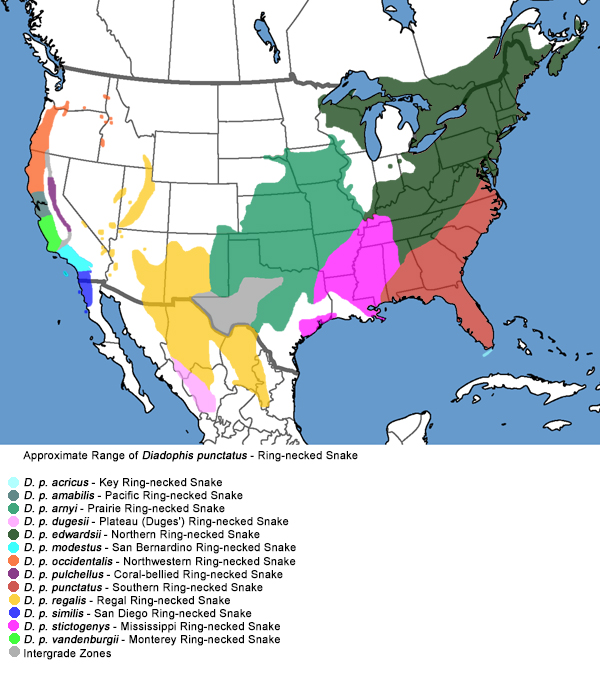
The subspecies D. p. modestus is found in the southern California coastal region from the Santa Barbara area south into Baja California.
The species Diadophis punctatus - Ring-necked Snake, has a very wide range, occurring along the entire east coast of the United States west to the Great Lakes and southwest from there through the Midwest into Arizona, with scattered isolated populations throughout most of the western states including the western half of California, Oregon west of the Cascades, and south central Washington.
In 2010 a ring-necked snake was found on the eastern slope of the Sierra Nevada (where it had not been found before) .5 miles east of the Inyo/Tulare county line, making it only the second of this species recorded in Inyo County.
(Herpetological Review 41(3), 2010)
In 2014, D. punctatus was documented from the Piute Mountains in Kern County. (Herpetological Review 45(3), 2014)
|
 |
Approximate range of Diadophis punctatus - Ring-necked Snake
Bright Blue: Diadophis punctatus modestus - San Bernardino Ring-necked Snake
Orange: Diadophis punctatus amabilis - Pacific Ring-necked Snake
Purple: Diadophis punctatus pulchellus - Coral-bellied Ring-necked Snake
Black: Diadophis punctatus regalis - Regal Ring-necked Snake
- Not found in California
Light Blue: Diadophis punctatus acricus - Key Ring-necked Snake
Green: Diadophis punctatus arnyi - Prairie Ring-necked Snake
Pink: Diadophis punctatus dugesii - Plateau (Duges') Ring-necked Snake
Dark Green: Diadophis punctatus edwardsii - Northern Ring-necked Snake
Red: Diadophis punctatus punctatus - Southern Ring-necked Snake
Fuscia: Diadophis punctatus stictogenys - Mississippi Ring-necked Snake
|
| Notes on Taxonomy |
Based on research published in 2021,
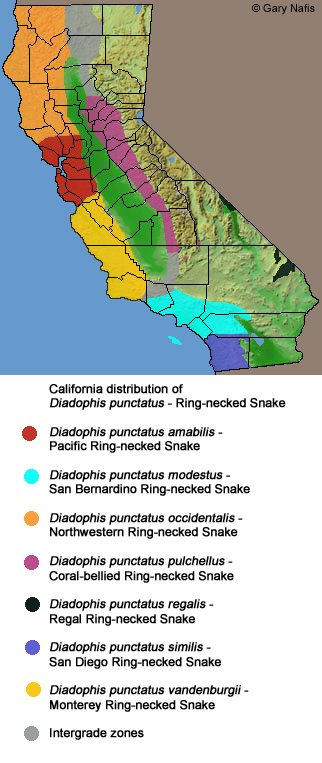
it appears that Diadophis punctatus is composed of several distinct lineages that do not follow the geographic ranges of the subspecies. Showing seven subspecies of Diadophis punctatus in California
appears to be inaccurate now, but since it is closer to the newer three or four species interpretation than it would be to show them all as one species, I will continue to show these seven subspecies until someone formally describes them as three or four species.
-------------------------------------------------------------------------------------------------------------------------------------------------------------------
For years many herpetologists have not recognized the traditional morphologically-based subspecies of Diadophis punctatus (including seven found in California) pending a thorough molecular study of the whole species. One ongoing study (Feldman and Spicer, 2006, Mol. Ecol. 15:2201-2222) has found all of the D. punctatus subspecies in California (except D. p. regalis) to be indistinguishable.
-------------------------------------------------------------------------------------------------------------------------------------------------------------------
In their 2025 field guide, Hansen and Shedd adopt "...the subspecies arrangement proposed in a paper by Fontanella et al. (2021). Those authors examined geographic variation in Pacific Coast ring-necked snakes using both nuDNA and mtDNA sequences, finding that California populations fall into three groups, or subspecies, in addition to the highly distinctive Regal Ringneck Snake (D. p. regalis)." ... "Characters such as color pattern and scale counts, historically used to diagnose subspecies of ringneck snakes, have proven to be unreliable across California populations. An updated scheme for field identification of subspecies is needed."
In this arrangement, the names and (tentative) ranges of most of the seven subspecies currently shown on this website are changed:
- D. p. amabilis retains the same name but its range now includes the ranges of D. p. occidentalis and D. p. vandenburghii.
- D. p. modestus retains the Latin name - with the common name Southern California Ring-necked snake and the range now includes the range of D. p. similis.
- D. p. occidentalis becomes D. p. amabilis - Pacific Ring-necked Snake
- D. p. pulchellus retains the same name and range
- D. p. regalis retains the same name and range
- D. p. similis becomes D. p. modestus - Southern California Ring-necked Snake
- D. p. vandenburghii becomes D. p. amabilis - Pacific Ring-necked Snake
|
This is the old range map showing the formerly-recognized seven Diadophis punctatus subspecies in California.

|
Red: Diadophis punctatus amabilis - Pacific Ring-necked Snake
Light Blue: Diadophis punctatus modestus - San Bernardino Ring-necked Snake
Orange: Diadophis punctatus occidentalis - Northwestern Ring-necked Snake (Became D. p. amabilis)
Purple: Diadophis punctatus pulchellus - Coral-bellied Ring-necked Snake
Black: Diadophis punctatus regalis - Regal Ring-necked Snake
Dark Blue: Diadophis punctatus similis - San Diego Ring-necked Snake (Became D. p. modestus)
Yellow: Diadophis punctatus vandenburgii - Monterey Ring-necked Snake (Became D. p. amabilis)
|
---------------------------------------------------------------------------------------------------------------------------------------------------------------------
In a phylogeographic analysis of the species, Fontanella, et. al (2008) identified fourteen lineages of Diadophis punctatus. They did not recognize these lineages as separate species, pending a full taxonomic review that will require further dna sampling and evaluation, including populations in Mexico.
In our area, they recognized four distinct lineages, which loosely follow existing subspecies boundaries, but merge the seven subspecies into 4 groups:
1 - A southern California lineage, which includes the San Diego and San Bernardino subspecies, D. p. similis, and D. p. modestus.
2 - An eastern California lineage, which includes the Coral-bellied subspecies, D. p. pulchellus, and some of the northern intergrades with D. p. occidentalis.
3 - A Coastal California lineage, which includes the Monterey subspecies, D. p. vandenburghi, the Pacific subspecies, D. p. amabilis, the Northwestern subspecies, D. p. occidentalis, and snakes from one region of the western Sierra Nevada currently recognized as D. p. pulchellus, along with the southern intergrades in the Tehachapi mountains region.
4 - A Great Basin lineage which presumably includes the Regal subspecies, D. p. regalis, found in isolated locations in the eastern Mojave desert.
-------------------------------------------------------------------------------------------------------------------------------------------------------------------
Using new samples, nuclear genes, and morphology, Fontanella, et al, (2021), confirmed the three California lineages (not including D. p. regalis) shown in the mtDNA study of Fontanella, et al in 2008, described above, and implied that they are species-level taxa, but they did not formally describe them as new taxa.
-------------------------------------------------------------------------------------------------------------------------------------------------------------------
Following the 2008 Fontanella, et al. study, The 2025 SSAR Names List recognizes four subspecies of Diadophis punctatus in California:
D. p. amabilis - Pacific Ring-necked Snake
D. p. modestus - San Bernardino Ring-necked Snake
D. p. pulchellus - Coral-bellied Ring-necked Snake
D. p. regalis - Regal Ring-necked Snake
"Fontanella et al. (2017, Zoological Journal of the Linnean Society 182: 444– 458) evaluated the contact zone between two of the lineages (D. p. edwardsi North and D. p. edwardsi South). Morphological differences between these two lineages were clinal, whereas mtDNA sequence data were discrete but with zones of secondary contact. Fontanella et al. (2021, Biological Journal of the Linnean Society 133: 105-119) used combined morphometric and genomic data for Pacific Coast populations and determined that those populations represented three subspecific taxa. They synonymized D. p. occidentalis and D. p. vandenburghi with D. p. amabilis, and D. p. similis with D. p. modestus. Otherwise, our arrangement follows the traditional subspecies groupings."
(Nicholson, K. E. (ed.). 2025 SSAR Scientific and Standard English Names List)
-------------------------------------------------------------------------------------------------------------------------------------------------------------------
|
Alternate and Previous Names (Synonyms)
Diadophis punctatus modestus - San Bernardino Ringneck Snake - (iNaturalist 4/25)
Diadophis punctatus modestus - Southern California Ring-necked Snake - (Hansen and Shedd 2025)
Diadophis punctatus - Ring-necked Snake (no subspecies) (Stebbins & McGinnis 2018)
Diadophis punctatus - Ring-necked Snake (no subspecies) (Stebbins & McGinnis 2012)
Diadophis punctatus - Ring-necked Snake (no subspecies) (Stebbins 2003)
Diadophis punctatus modestus - San Bernardino Ringneck Snake (Stebbins 1966, 1985)
Diadophis punctatus modestus (Wright & Wright 1957)
Diadophis amabilis modestus - (Stebbins 1954)
Los Angeles ring-neck snake / San Bernardino ring-necked snake (Ditmars 1936)
Diadophis amabilis - Western Ring-necked Snake (Diadophis pulchellus; Diadophis punctatus pulchellus; Diadophis punctatus amabilis; Diadophis amabilis pulchellus; Coronella amabilis; Ablabs punctatus; Coluber punctatus; Diadophis punctatus. California Ring-necked Snake; Red-bellied Snake; Spotted Ring Snake) (Grinnell and Camp 1917)
Van Denburgh's ring-neck snake; western ring-neck snake (Ditmars 1907)
|
| Conservation Issues (Conservation Status) |
| On the US Forest Service watch list. |
|
| Taxonomy |
| Family |
Colubridae |
Colubrids |
Oppel, 1811 |
| Genus |
Diadophis |
Ring-necked Snakes |
Baird and Girard, 1853 |
| Species |
punctatus |
Ring-necked Snake |
(Linnaeus, 1766) |
Subspecies
|
modestus |
San Bernardino Ring-necked Snake |
Bocourt, 1886 |
|
Original Description |
Diadophis punctatus - (Linnaeus, 1766) - Syst. Nat., 12th ed., Vol. 1, p. 376
Diadophis punctatus modestus - Bocourt, 1886 - in Dumeril, Bocourt and Mocquard, Miss. Sci. Mex. et dans L'Amerique Centrale, Vol. 3, Pt. 10, p. 623
from Original Description Citations for the Reptiles and Amphibians of North America © Ellin Beltz
|
|
Meaning of the Scientific Name |
Diadophis - Latin - diadema = crown + Greek -ophis = snake -- "generally with a light ring on the occipital region."
punctatus - Latin = dotted - refers to spotted belly of species
modestus - Latin = calm, modest, unpretentious
from Scientific and Common Names of the Reptiles and Amphibians of North America - Explained © Ellin Beltz
|
|
Related or Similar California Snakes |
D. p. amabilis - Pacific Ring-necked Snake
D. p. pulchellus - Coral-bellied Ring-necked Snake
D. p. regalis - Regal Ring-necked Snake
C. tenuis - Sharp-tailed Snake
T. hobartsmithi - Southwestern Black-headed Snake
T. planiceps - California Black-headed Snake
|
|
More Information and References |
California Department of Fish and Wildlife
Hansen, Robert W. and Shedd, Jackson D. California Amphibians and Reptiles. (Princeton Field Guides.) Princeton University Press, 2025.
Stebbins, Robert C., and McGinnis, Samuel M. Field Guide to Amphibians and Reptiles of California: Revised Edition (California Natural History Guides) University of California Press, 2012.
Stebbins, Robert C. California Amphibians and Reptiles. The University of California Press, 1972.
Flaxington, William C. Amphibians and Reptiles of California: Field Observations, Distribution, and Natural History. Fieldnotes Press, Anaheim, California, 2021.
Nicholson, K. E. (ed.). 2025. Scientific and Standard English Names of Amphibians and Reptiles of North America North of Mexico, with Comments Regarding Confidence in Our Understanding. Ninth Edition. Society for the Study of Amphibians and Reptiles. [SSAR] 87pp.
Samuel M. McGinnis and Robert C. Stebbins. Peterson Field Guide to Western Reptiles & Amphibians. 4th Edition. Houghton Mifflin Harcourt Publishing Company, 2018.
Stebbins, Robert C. A Field Guide to Western Reptiles and Amphibians. 3rd Edition. Houghton Mifflin Company, 2003.
Behler, John L., and F. Wayne King. The Audubon Society Field Guide to North American Reptiles and Amphibians. Alfred A. Knopf, 1992.
Robert Powell, Roger Conant, and Joseph T. Collins. Peterson Field Guide to Reptiles and Amphibians of Eastern and Central North America. Fourth Edition. Houghton Mifflin Harcourt, 2016.
Powell, Robert., Joseph T. Collins, and Errol D. Hooper Jr. A Key to Amphibians and Reptiles of the Continental United States and Canada. The University Press of Kansas, 1998.
Bartlett, R. D. & Patricia P. Bartlett. Guide and Reference to the Snakes of Western North America (North of Mexico) and Hawaii. University Press of Florida, 2009.
Bartlett, R. D. & Alan Tennant. Snakes of North America - Western Region. Gulf Publishing Co., 2000.
Brown, Philip R. A Field Guide to Snakes of California. Gulf Publishing Co., 1997.
Ernst, Carl H., Evelyn M. Ernst, & Robert M. Corker. Snakes of the United States and Canada. Smithsonian Institution Press, 2003.
Taylor, Emily. California Snakes and How to Find Them. Heyday, Berkeley, California. 2024.
Wright, Albert Hazen & Anna Allen Wright. Handbook of Snakes of the United States and Canada. Cornell University Press, 1957.
Fontanella , Frank M., Chris R. Feldman, Mark E. Siddall, & Frank T. Burbrink. Phylogeography of Diadophis punctatus: Extensive lineage diversity and repeated patterns of historical demography in a trans-continental snake. Molecular Phylogenetics and Evolution 46 (2008) 1049–1070. 2008.
Frank M. Fontanella, Emily Miles, and Polly Strott. Integrated analysis of the ringneck snake Diadophis punctatus complex (Colubridae: Dipsadidae) in a biodiversity hotspot provides the foundation for conservation reassessment. Biological Journal of the Linnean Society, 2021, XX, 1–15
Joseph Grinnell and Charles Lewis Camp. A Distributional List of the Amphibians and Reptiles of California. University of California Publications in Zoology Vol. 17, No. 10, pp. 127-208. July 11, 1917.
|
|
|
The following conservation status listings for this animal are taken from the July 2025 State of California Special Animals List and the July 2025 Federally Listed Endangered and Threatened Animals of California list (unless indicated otherwise below.) Both lists are produced by multiple agencies every year, and sometimes more than once per year, so the conservation status listing information found below might not be from the most recent lists, but they don't change a great deal from year to year.. To make sure you are seeing the most recent listings, go to this California Department of Fish and Wildlife web page where you can search for and download both lists:
https://www.wildlife.ca.gov/Data/CNDDB/Plants-and-Animals.
A detailed explanation of the meaning of the status listing symbols can be found at the beginning of the two lists. For quick reference, I have included them on my Special Status Information page.
If no status is listed here, the animal is not included on either list. This most likely indicates that there are no serious conservation concerns for the animal. To find out more about an animal's status you can also go to the NatureServe and IUCN websites to check their rankings.
Check the current California Department of Fish and Wildlife sport fishing regulations to find out if this animal can be legally pursued and handled or collected with possession of a current fishing license. You can also look at the summary of the sport fishing regulations as they apply only to reptiles and amphibians that has been made for this website.
|
| Organization |
Status Listing |
Notes |
| NatureServe Global Ranking |
G5T2T3 |
The species is: Secure
This subspecies is Imperiled - Vulnerable.
There are taxonomic questions associated with it. |
| NatureServe State Ranking |
S2? |
Imperiled?
|
| U.S. Endangered Species Act (ESA) |
None |
|
| California Endangered Species Act (CESA) |
None |
|
| California Department of Fish and Wildlife |
None |
|
| Bureau of Land Management |
None |
|
| USDA Forest Service |
S |
Sensitive |
| IUCN |
Not listed |
|
|
|