|
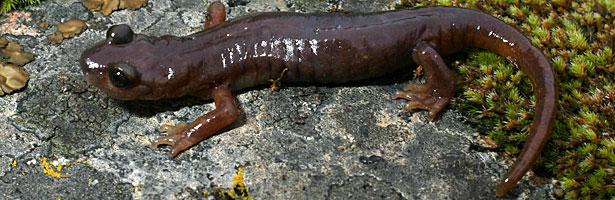 |
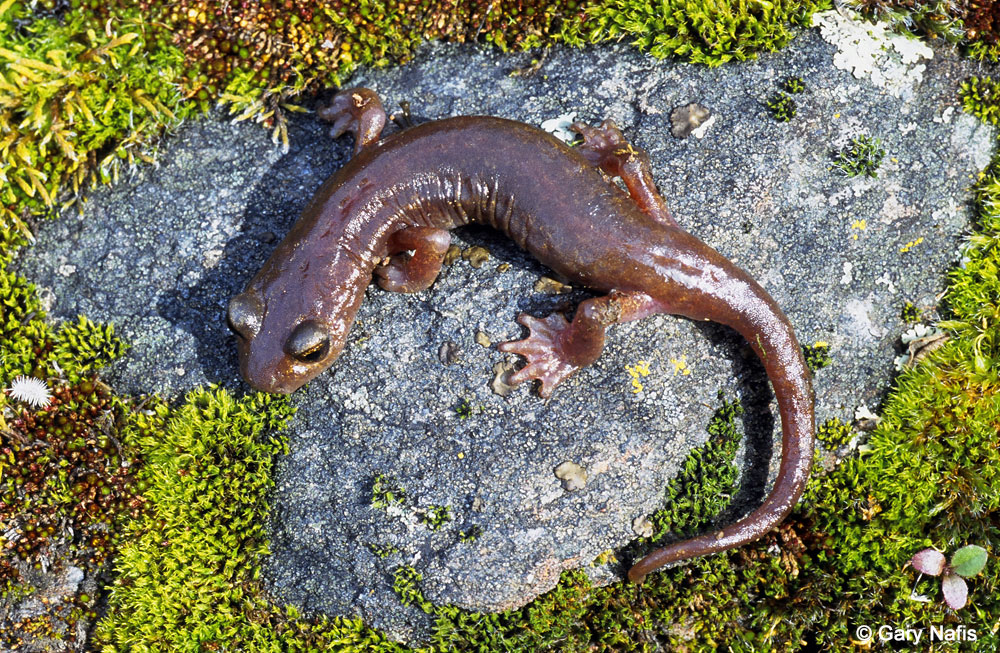
| Adult, Mariposa County |
 |
 |
 |
| Adult, Mariposa County |
Adult, Mariposa County |
Adult, Mariposa County |
 |
 |
 |
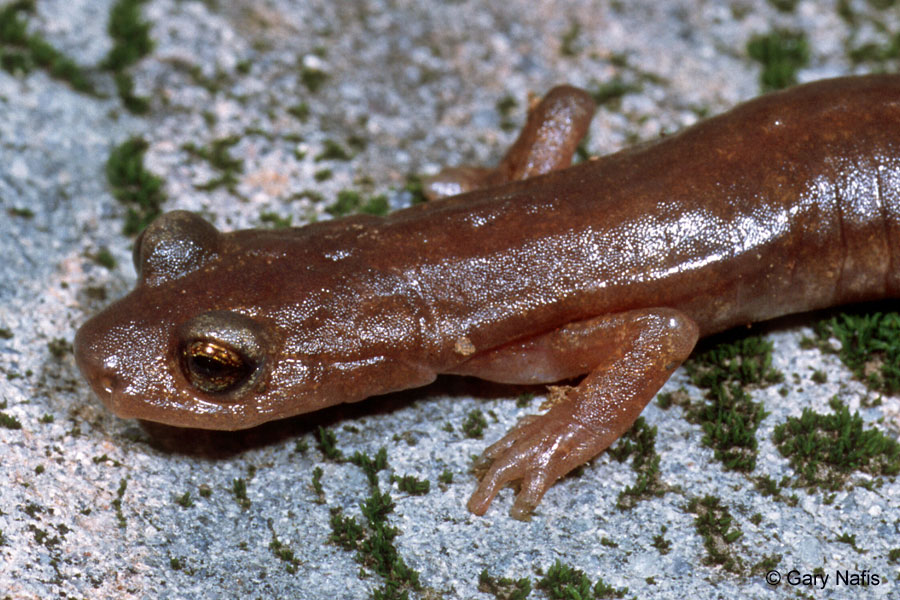
| Adult, Mariposa County |
Adult, Mariposa County |
Adult, Mariposa County
|
 |
 |
 |
| Adult, Mariposa County |
Adult, Mariposa County |
Adult, Mariposa County |
 |
 |
 |
| Adult, Mariposa County |
Adult, Mariposa County
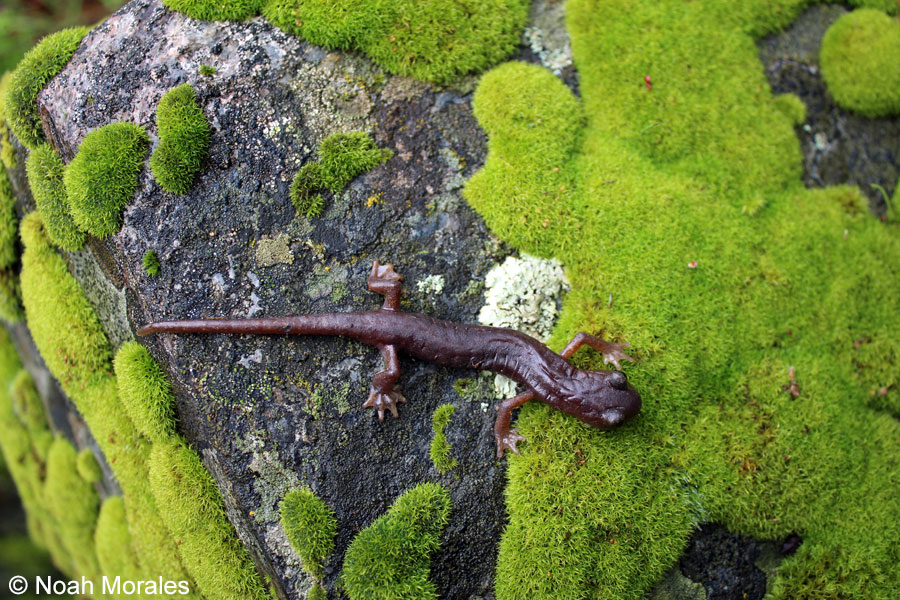
© Noah Morales |
Adult, Mariposa County
© Noah Morales |
 |
 |
| Adult, Mariposa County © Ryan Sikola |
 |
 |
 |
Adult, Mariposa County
© Benjamin Genter |
Adult, Mariposa County © Ryan Sikola |
The hind feet have webbed toes to help these salamanders climb steep rock surfaces. |
| |
|
|
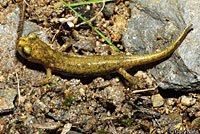
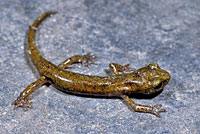
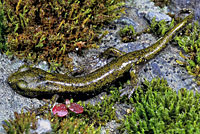
| Juveniles |
 |
 |
 |
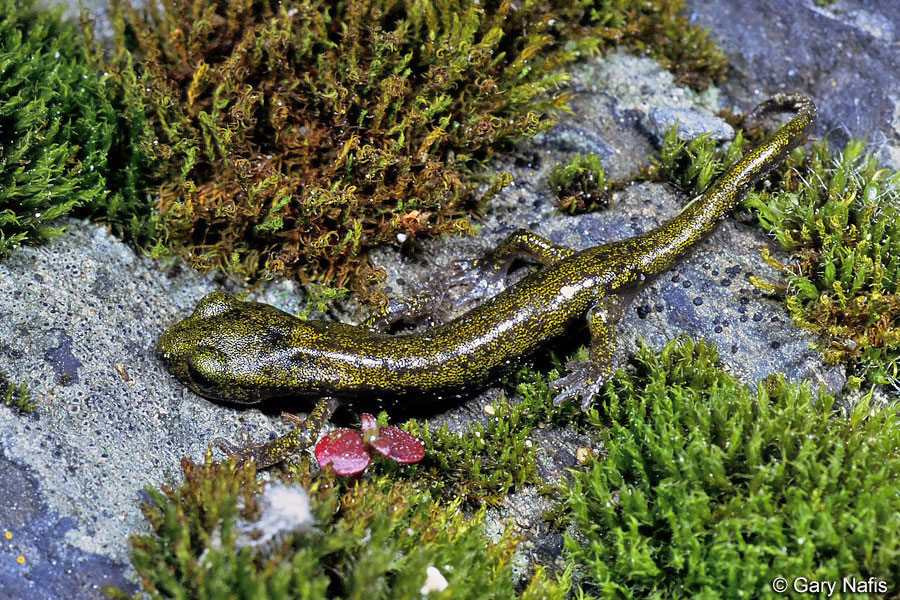
| Juvenile, Mariposa County |
Juvenile, Mariposa County |
Juvenile, Mariposa County |
 |
 |
|
| Juvenile, Mariposa County |
Juvenile, Mariposa County |
|
| |
|
|
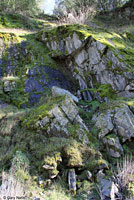
| Habitat |
 |
 |
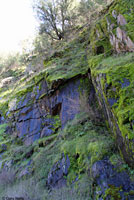 |
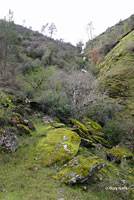
| Habitat, Mariposa County |
Habitat, Mariposa County |
Habitat, Mariposa County |
 |
 |
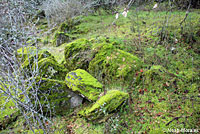 |
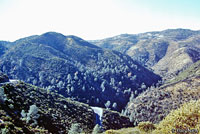
| Habitat overview, Mariposa County |
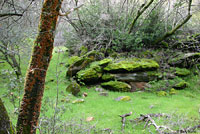
Habitat, 1,500 ft., Mariposa County |
Habitat, Mariposa County
© Noah Morales |
| |
|
|
| Short Video |
 |
 |
|
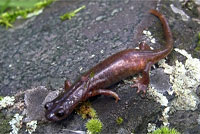
| An adult limestone salamander crawls down a limestone rock and underneath another one. |
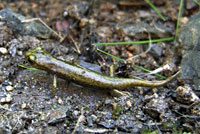
A tiny juvenile limestone salamander is discovered when a rock is turned over. It is allowed to crawl outside of the footprint of the rock before the rock is replaced. |
|
|
|
|
| Description |
| |
| Size |
Adults measure 2 - 3 inches long (5 - 7.5 cm) from snout to vent length.
|
| Appearance |
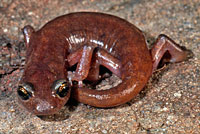
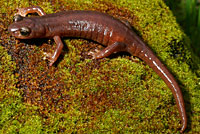
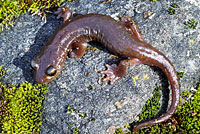
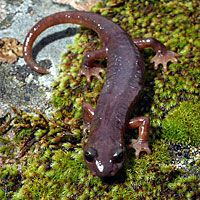
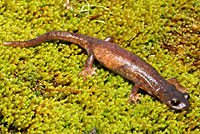
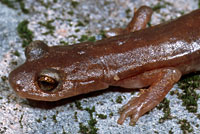
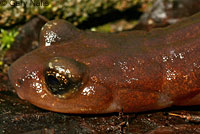
A small stocky salamander with webbed toes, nasolabial grooves, a flattened head and body, and 13 costal grooves.
Toe tips of adpressed limbs overlap by 1.5 costal folds. |
| Color and Pattern |
Adults are a brownish color above with a pale ventral surface.
|
| Male / Female Differences |
| Males have an oval-shaped mental gland. |
| Juveniles |
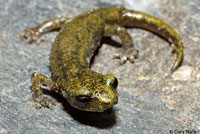
Juveniles are yellowish green above, darkening with age.
|
| Life History and Behavior |
A member of family Plethodontidae, the Plethodontid or Lungless Salamanders.
Plethodontid salamanders do not breathe through lungs. They conduct respiration through their skin and the tissues lining their mouth. This requires them to live in damp environments on land and to move about on the ground only during times of high humidity. (Plethodontid salamanders native to California do not inhabit streams or bodies of water but they are capable of surviving for a short time if they fall into water.)
Plethodontid salamanders are also distinguished by their nasolabial grooves, which are vertical slits between the nostrils and upper lip that are lined with glands associated with chemoreception.
All Plethodontid Salamanders native to California lay eggs in moist places on land.
The young develop in the egg and hatch directly into a tiny terrestrial salamander with the same body form as an adult.
(They do not hatch in the water and begin their lives as tiny swimming larvae breathing through gills like some other types of salamanders.)
|
| Activity |
Little is known about this species.
H. brunus is active during wet or rainy periods in fall, winter, and spring when temperatures are not exceedingly low, and inactive during extreme winter weather and during hot, dry periods in spring, summer, and fall.
They might also be active in summer well below the surface where there is sufficient moisture - an adult was found active in a mine tunnel in July.
Uses its tail and webbed feet to assist in climbing.
|
| Defense |
When threatened, this salamander has been observed coiling and rolling downhill to escape.
(You can watch a short video of a different species of salamander using this coiling, rolling and springing escape technique here.) |
| Diet and Feeding |
| Probably consumes a variety of small invertebrates. |
| Reproduction |
Little is known about the breeding behavior of this species.
Reproduction is terrestrial.
|
| Eggs |
| Females lay eggs most likely in deep moist talus or crevices in late spring. |
| Young |
Young develop completely in the egg and hatch fully formed in the summer..
Summer is hot and dry in the range of the Limestone Salamander, so hatchlings probably remain underground until at least the following fall rains.
|
| Habitat |
H.brunus inhabits mossy limestone crevices and talus in the Grey Pine, Oak, Buckeye, Chaparral belt of the lower Merced River Canyon, typically on steep slopes. Has also been found in abandoned mine tunnels.
|
| Geographical Range |
Endemic to California. Found along the Merced River from Lake McClure to about 4 miles NE of Briceburg, Mariposa County. Also occurs along the Merced River tributaries including Bear Creek and its feeder creeks, south of Briceburg.
|
 |
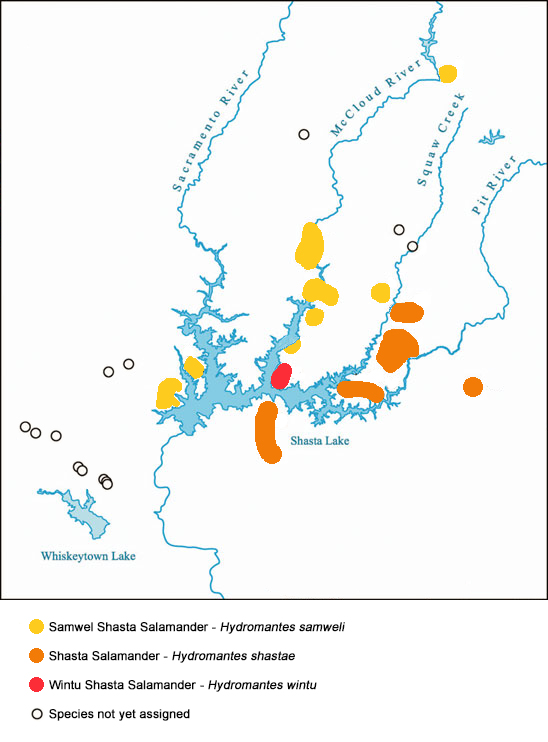
Approximate range of Hydromantes - Web-toed Salamanders
Bright Green: Hydromantes brunus - Limestone Salamander
Red: Hydromantes platycephalus - Mount Lyell Salamander
Yellow: Hydromantes samweli - Samwel Shasta Salamander
Orange: Hydromantes shastae - Shasta Salamander
Bright Blue: Hydromantes wintu - Wintu Shasta Salamander
Close-up Range Map of Shasta Salamanders
|
| Notes on Taxonomy |
Discovered in 1952, H. brunus has always been considered a distinct taxon.
---------------------------------------------------------------------------------------------------------------------------------------------------------------------
H. brunus is one of five species of Hydromantes, all of which are endemic to California. The others are the three Shasta complex Hydromantes and H. platycephalus.
---------------------------------------------------------------------------------------------------------------------------------------------------------------------
"Bingham et al. (2018, Bulletin of the Museum of Comparative Zoology 161: 403–427) provided range-wide geographic sampling for mitochondrial and nuclear data to revise the taxonomy of this complex, which had previously been estimated as inadequate by Rovito (2010, Molecular Ecology 19: 4554–4571). They also reported newly discovered populations of the H. shastae complex to the west and south which have not been studied and the taxonomic status of these populations requires further study."
(Nicholson, K. E. (ed.). 2025 SSAR Scientific and Standard English Names List)
---------------------------------------------------------------------------------------------------------------------------------------------------------------------
Eight species of similar salamanders once placed in the genus Hydromantes but now placed in the genus Speleomantes occur in Italy and southern France and on the island of Sardinia. They are the only plethodontid salamanders found outside of the Americas. (A new species of lungless salamander found in Asia in 2004 was placed in a new genus.) Why Hydromantes/Speleomantes are found only in Europe and California is still a biogeographical mystery.
---------------------------------------------------------------------------------------------------------------------------------------------------------------------
SSAR Herpetological Circular No. 43, 2017 shows the following note:
"Rovito (2010, Mol. Ecol. 19: 4554–4571) evaluated genetic variation in both mitochondrial and nuclear genes in H. brunus and H. platycephalus and those data supported the hypothesis that H. brunus was derived from H. platycephalus by peripatric speciation. Thus H. platycephalus is paraphyletic, but no changes in its taxonomy were suggested."
---------------------------------------------------------------------------------------------------------------------------------------------------------------------
Alternate and Previous Names (Synonyms)
Hydromantes brunus - Limestone Salamander (Stebbins 1966, 1985, 2003, 2012)
|
| Conservation Issues (Conservation Status) |
| This salamander is listed as a threatened species by the state, due to its limited range and habitat, although there is no indication that their range or population density have decreased or changed significantly. But there have not been any discoveries of new populations in many years, either. |
|
| Taxonomy |
| Family |
Plethodontidae |
Lungless Salamanders |
Gray, 1850 |
| Genus |
Hydromantes |
Web-toed Salamanders |
Gistel, 1848 |
Species
|
brunus |
Limestone Salamander |
Gorman, 1954 |
|
Original Description |
Gorman, 1954 - Herpetologica, Vol. 10, p. 153
from Original Description Citations for the Reptiles and Amphibians of North America © Ellin Beltz
|
|
Meaning of the Scientific Name |
Hydromantes - Greek - hydro = water + mantis = soothsayer or prophet
brunus - Latin = brown, referring to the color of adults
from Scientific and Common Names of the Reptiles and Amphibians of North America - Explained © Ellin Beltz
|
|
Related California Salamanders |
Shasta Salamander
Samwel Shasta Salamander
Wintu Shasta Salamander
Mt. Lyell Salamander
|
|
More Information and References |
California Department of Fish and Wildlife
AmphibiaWeb
Hansen, Robert W. and Shedd, Jackson D. California Amphibians and Reptiles. (Princeton Field Guides.) Princeton University Press, 2025.
Stebbins, Robert C., and McGinnis, Samuel M. Field Guide to Amphibians and Reptiles of California: Revised Edition (California Natural History Guides) University of California Press, 2012.
Stebbins, Robert C. California Amphibians and Reptiles. The University of California Press, 1972.
Flaxington, William C. Amphibians and Reptiles of California: Field Observations, Distribution, and Natural History. Fieldnotes Press, Anaheim, California, 2021.
Nicholson, K. E. (ed.). 2025. Scientific and Standard English Names of Amphibians and Reptiles of North America North of Mexico, with Comments Regarding Confidence in Our Understanding. Ninth Edition. Society for the Study of Amphibians and Reptiles. [SSAR] 87pp.
Samuel M. McGinnis and Robert C. Stebbins. Peterson Field Guide to Western Reptiles & Amphibians. 4th Edition. Houghton Mifflin Harcourt Publishing Company, 2018.
Stebbins, Robert C. A Field Guide to Western Reptiles and Amphibians. 3rd Edition. Houghton Mifflin Company, 2003.
Behler, John L., and F. Wayne King. The Audubon Society Field Guide to North American Reptiles and Amphibians. Alfred A. Knopf, 1992.
Robert Powell, Roger Conant, and Joseph T. Collins. Peterson Field Guide to Reptiles and Amphibians of Eastern and Central North America. Fourth Edition. Houghton Mifflin Harcourt, 2016.
Powell, Robert., Joseph T. Collins, and Errol D. Hooper Jr. A Key to Amphibians and Reptiles of the Continental United States and Canada. The University Press of Kansas, 1998.
American Museum of Natural History - Amphibian Species of the World 6.2
Bartlett, R. D. & Patricia P. Bartlett. Guide and Reference to the Amphibians of Western North America (North of Mexico) and Hawaii. University Press of Florida, 2009.
Bishop, Sherman C. Handbook of Salamanders. Cornell University Press, 1943.
Lannoo, Michael (Editor). Amphibian Declines: The Conservation Status of United States Species. University of California Press, June 2005.
Petranka, James W. Salamanders of the United States and Canada. Smithsonian Institution, 1998.
|
|
|
The following conservation status listings for this animal are taken from the July 2025 State of California Special Animals List and the July 2025 Federally Listed Endangered and Threatened Animals of California list (unless indicated otherwise below.) Both lists are produced by multiple agencies every year, and sometimes more than once per year, so the conservation status listing information found below might not be from the most recent lists, but they don't change a great deal from year to year.. To make sure you are seeing the most recent listings, go to this California Department of Fish and Wildlife web page where you can search for and download both lists:
https://www.wildlife.ca.gov/Data/CNDDB/Plants-and-Animals.
A detailed explanation of the meaning of the status listing symbols can be found at the beginning of the two lists. For quick reference, I have included them on my Special Status Information page.
If no status is listed here, the animal is not included on either list. This most likely indicates that there are no serious conservation concerns for the animal. To find out more about an animal's status you can also go to the NatureServe and IUCN websites to check their rankings.
Check the current California Department of Fish and Wildlife sport fishing regulations to find out if this animal can be legally pursued and handled or collected with possession of a current fishing license. You can also look at the summary of the sport fishing regulations as they apply only to reptiles and amphibians that has been made for this website.
|
| Organization |
Status Listing |
Notes |
| NatureServe Global Ranking |
G2G3 |
Imperiled - Vulnerable |
| NatureServe State Ranking |
S2S3 |
Imperiled - Vulnerable |
| U.S. Endangered Species Act (ESA) |
None |
|
| California Endangered Species Act (CESA) |
ST |
Listed as Threatened 6/27/1971 |
| California Department of Fish and Wildlife |
FP |
Fully Protected |
| Bureau of Land Management |
S |
Sensitive |
| USDA Forest Service |
S |
Sensitive |
| IUCN |
VU |
Vulnerable |
|
|
|