|
 |
 |
 |
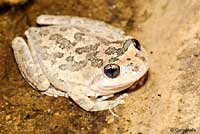
| Adult male, San Diego County |
Adult male, San Diego County |
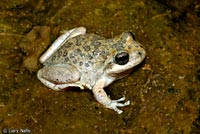
Adult, Riverside County |
 |
 |
 |
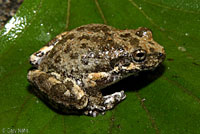
| Adult, San Diego County |
Adult male in breeding season, San Diego County |
 |
 |
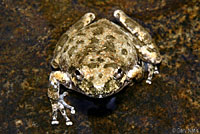 |
| Adult, Los Angeles County |
Adult, Los Angeles County |
Adult, Los Angeles County |
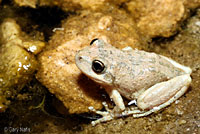 |
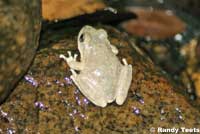 |
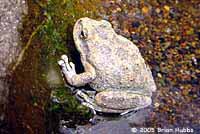 |
| Adult, San Diego County |
Pale adult, San Gabriel Mountains, Los Angeles County. © Randy Teets. |
Adult, Santa Monica Mountains,
Ventura County © 2005 Brian Hubbs |
 |
 |
 |
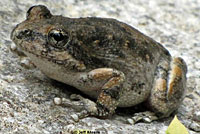
Adult, San Bernardino County
© Jeff Ahrens |
Adult, San Bernardino County
© Jeff Ahrens |
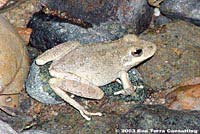
Adult, Santa Ana Mountains, Orange County © 2003 Bon Terra Consulting |
 |
 |
 |
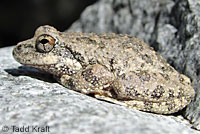
Adult, Santa Ana Mountains,
Orange County © Tadd Kraft |
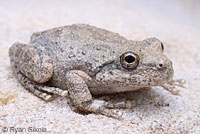
Adult, Santa Barbara County
© Ryan Sikola |
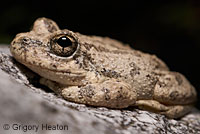
Adult, San Gabriel Mountains,
Los Angeles County
© Grigory Heaton |
 |
 |
 |
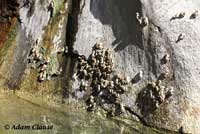
Large group of adults, San Diego County. © Adam Clause.
California Treefrogs often assemble in large numbers like this at desert springs.
|
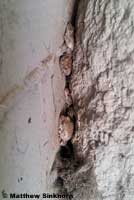
Adults hiding between a rock and a concrete bridge pillar, Los Angeles County © Matthew Sinkhorn |
Adult, Los Angeles County |
 |
 |
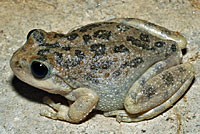 |
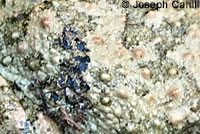
Adult, Ventura County © Joseph Cahill
This frog was found in an unburned yard after the Thomas fire burned much of the area. They're not a common yard inhabitant, so it's possible the frog moved to better habitat after the fire. |
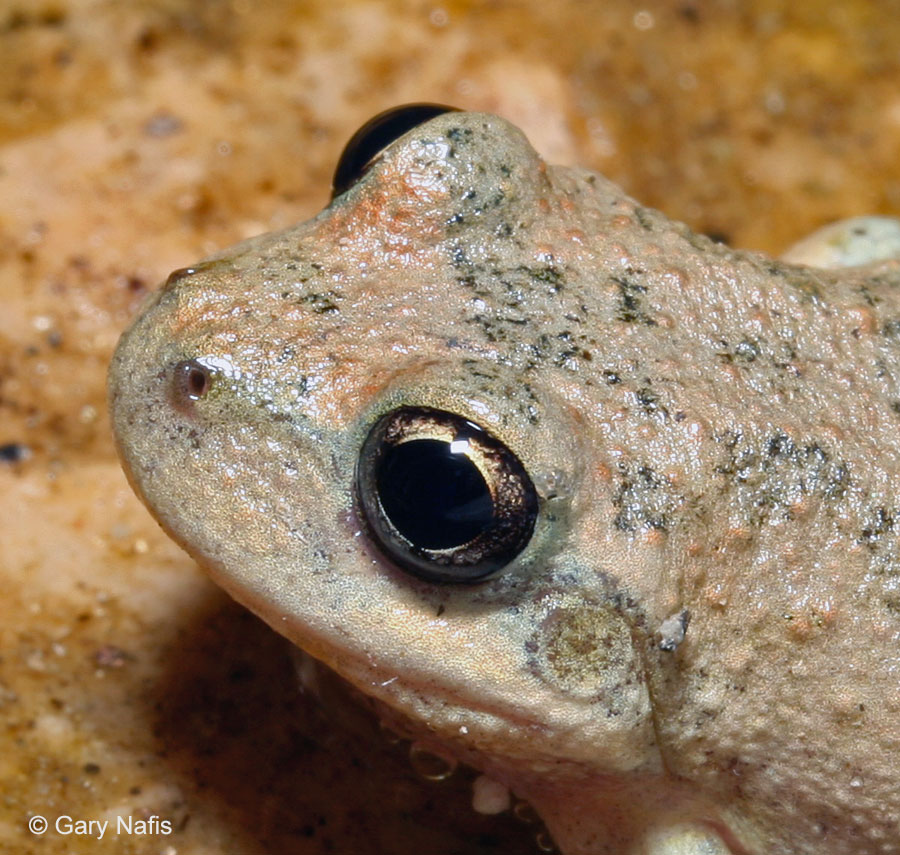
This close-up of the Ventura County frog shown to the left shows the rough toad-like texture of the skin of this species that helps it imitate its rough rocky habitat. © Joseph Cahill |
Adult, San Diego County |
 |
 |
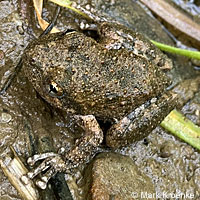 |
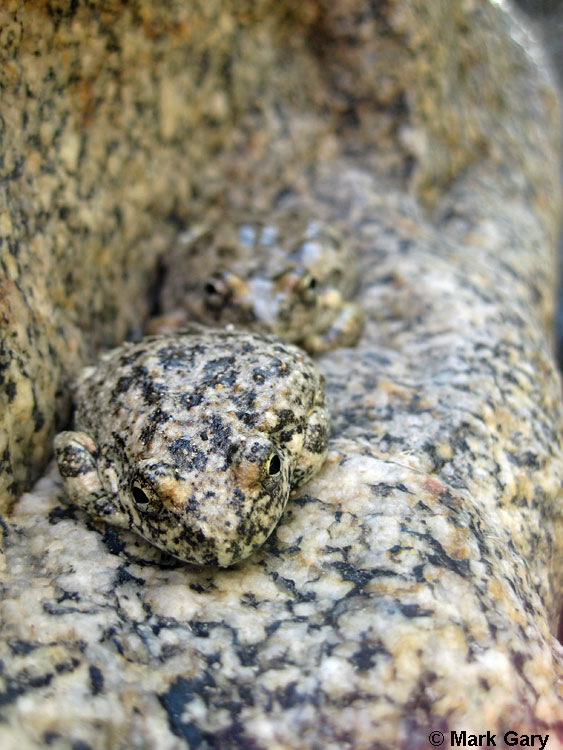
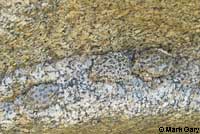
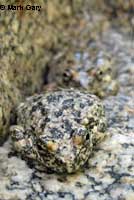
Adult frogs on granite rocks next to a desert creek in San Diego County.
© Mark Gary
These photos show how well the markings of California Treefrogs allow them to blend in with their environment to avoid detection. |
Adult, Ventura County © Mark Kroenke |
| |
 |
|
| |
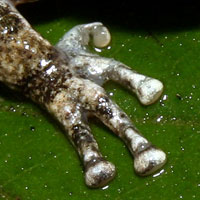
Like most treefrogs, this species has enlarged rounded pads on its front toes that allow it to climb on steep surfaces. |
|
| |
|
|
| Juveniles |
 |
 |
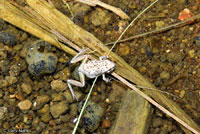 |
Recently metamorphosed juvenile,
San Diego County
|
Recently metamorphosed juvenile,
San Diego County |
Recently metamorphosed juvenile,
San Diego County |
 |
|
|
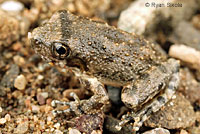
Juvenile, San Luis Obispo County
© Ryan Sikola |
|
|
| |
|
|
| Adults in the Mating Season |
 |
 |
 |
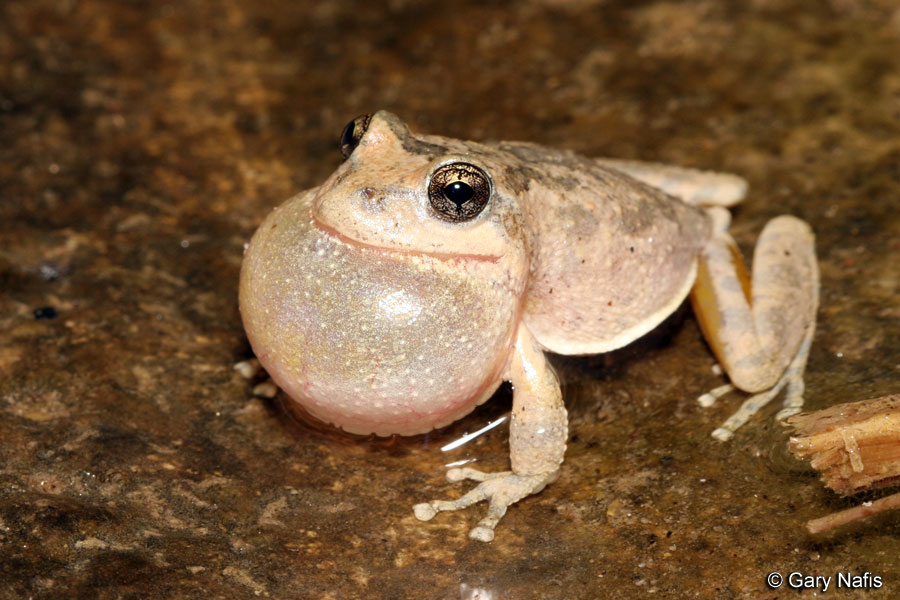
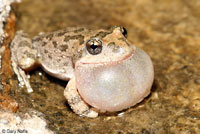
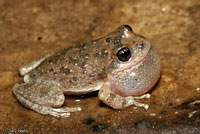
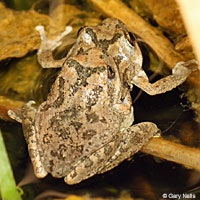
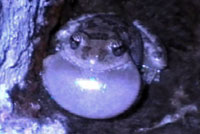
| Calling adult male, San Diego County |
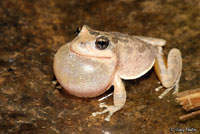
Calling adult male, San Diego County |
Calling adult male, San Diego County |
 |
 |
 |
| Calling adult male, San Diego County |
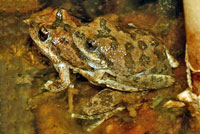
Adult male and female in amplexus,
San Diego County |
Adult male and female in amplexus,
San Diego County |
| |
|
|
| Comparison with Similar Sympatric Species |
 |
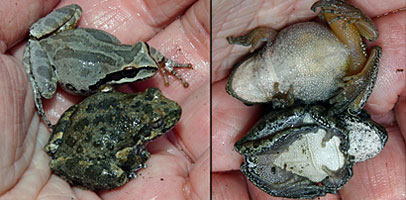 |
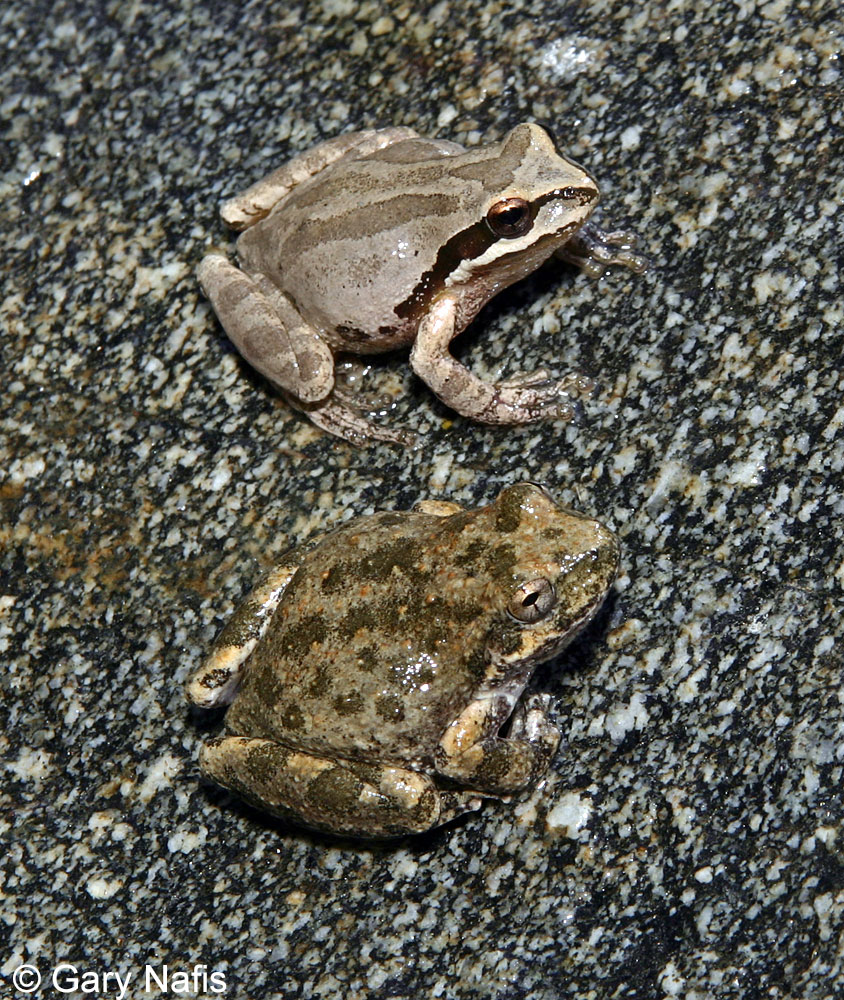
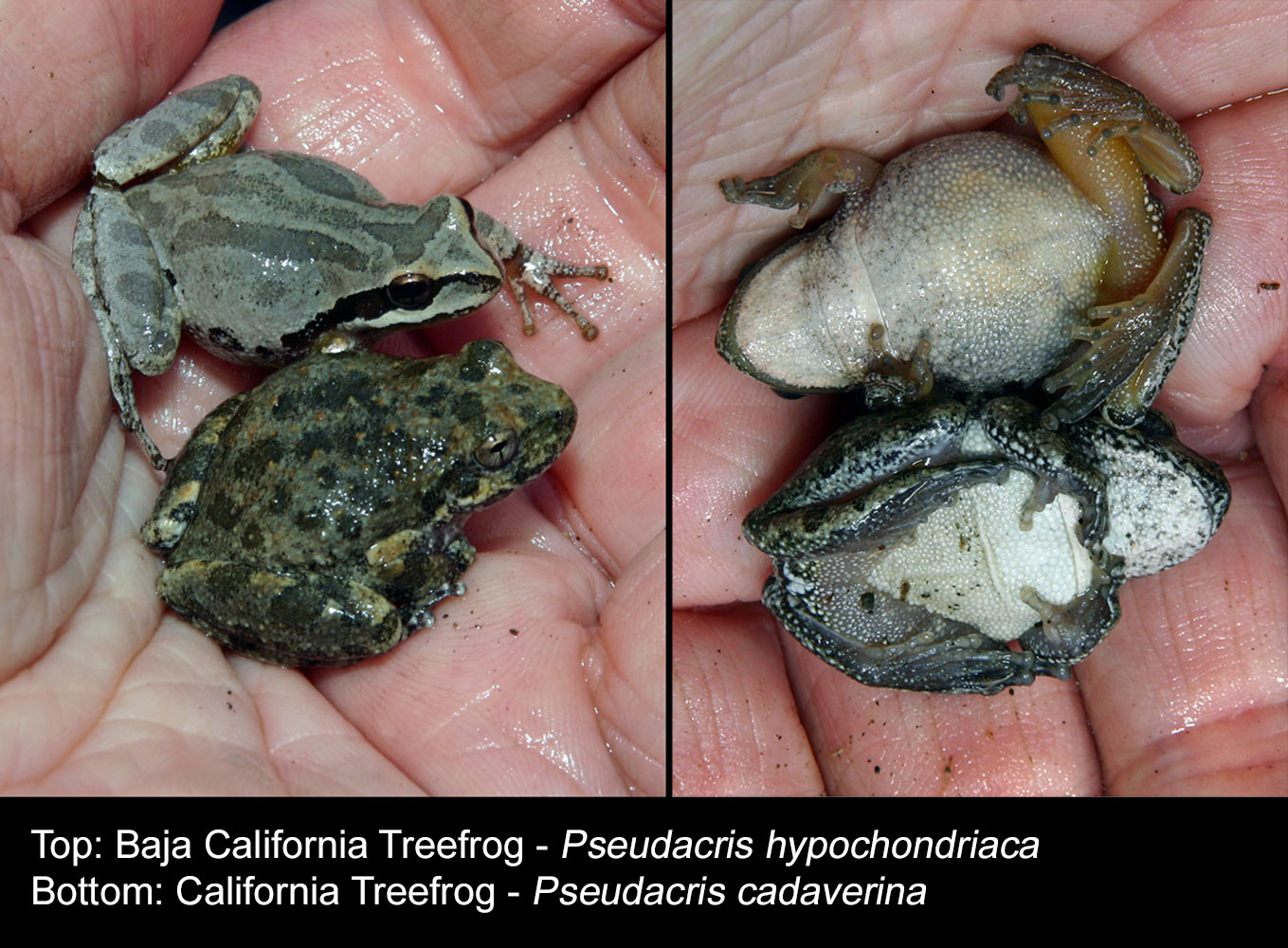
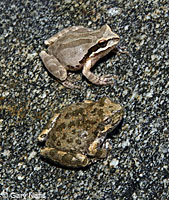
Top:
Baja California Treefrog (Pseudacris hypochondriaca)
Bottom: California Treefrog (or Chorus Frog)
Both frogs were found
in the same area in a creek in the San Gabriel Mountains, Los Angeles County.
|
 |
 |
 |
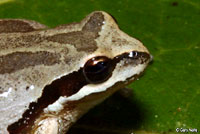
The Baja California Treefrog
Has a wide dark stripe through eye |
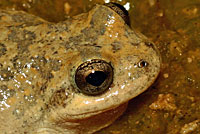
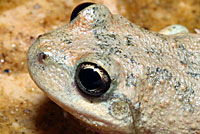
The California Treefrog (or Chorus Frog)
Does not have a wide dark stripe through the eye |
| |
|
|
| Eggs |
 |
 |
 |
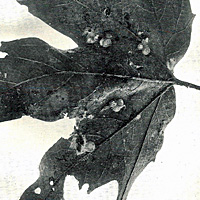
"Eggs attached singly to sycamore leaf." "Material from Snow Creek, Riverside County, collected April 15, 1923."
From: Storer, Tracy I. A Synopsis of the Amphibia of California. University of California Press Berkeley, California 1925. |
This is an extreme close-up of an egg containing a single developing tadpole that was found while conducting surveys in a Riverside County creek. It appears to be a California Treefrog (Chorus Frog) based on the location and habitat and because it was laid individually and not part of an egg cluster. © Nathan Kudla |
| |
|
|
| Tadpoles |
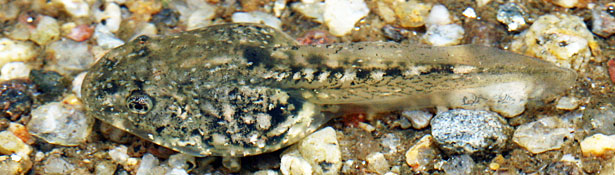 |
| Tadpole, San Diego County |
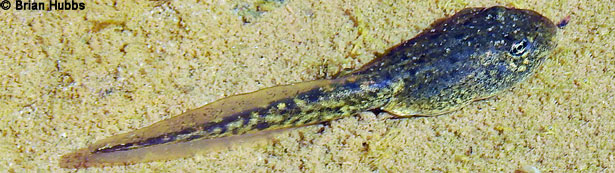 |
| Tadpole, Ventura County © Brian Hubbs |
 |
 |
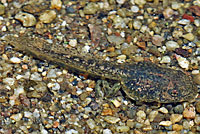 |
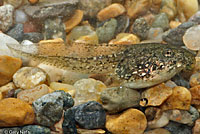
| Tadpole, San Diego County |
Tadpole, San Diego County |
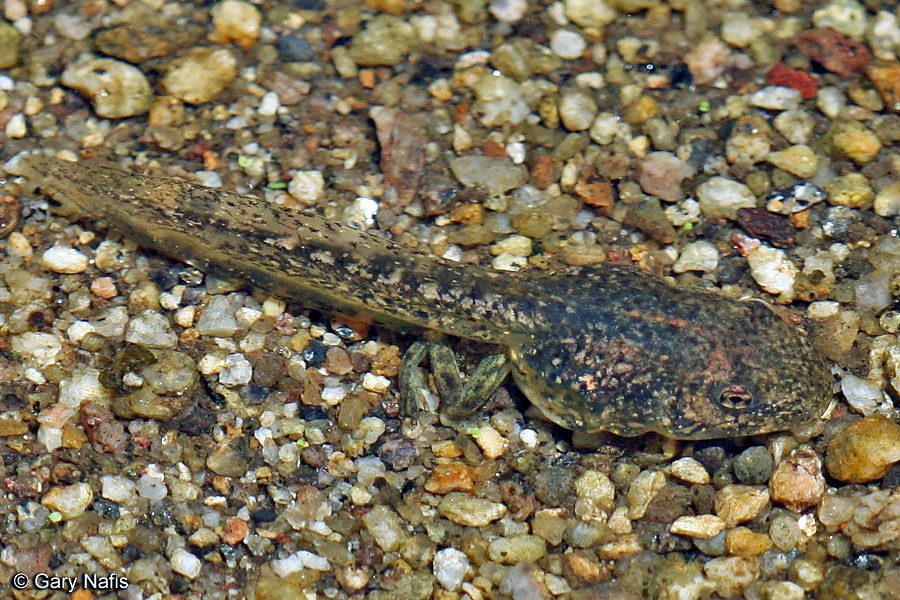
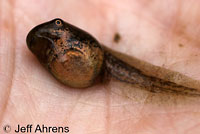
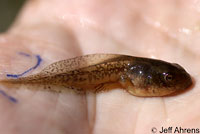
Mature tadpole with rear legs,
San Diego County |
 |
 |
|
| Tadpoles, Orange County © Jeff Ahrens |
|
 |
 |
|
| Unusually-pigmented tadpole, Santa Barbara County © Regan Sikola |
Left: typically-pigmented tadpole
Right: unusually-pigmented tadpole Santa Barbara County © Regan Sikola |
|
| |
|
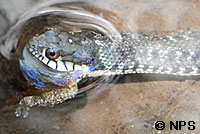
| Predators |
 |
 |
|
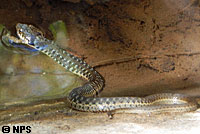
| A juvenile Two-striped Gartersnake eating a young California Treefrog. © NPS |
|
| |
|
|
| Habitat |
 |
 |
 |
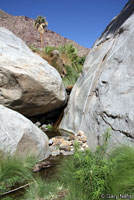
| Desert Oasis pool , San Diego County |
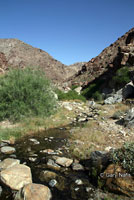
Desert creek habitat, San Diego County
|
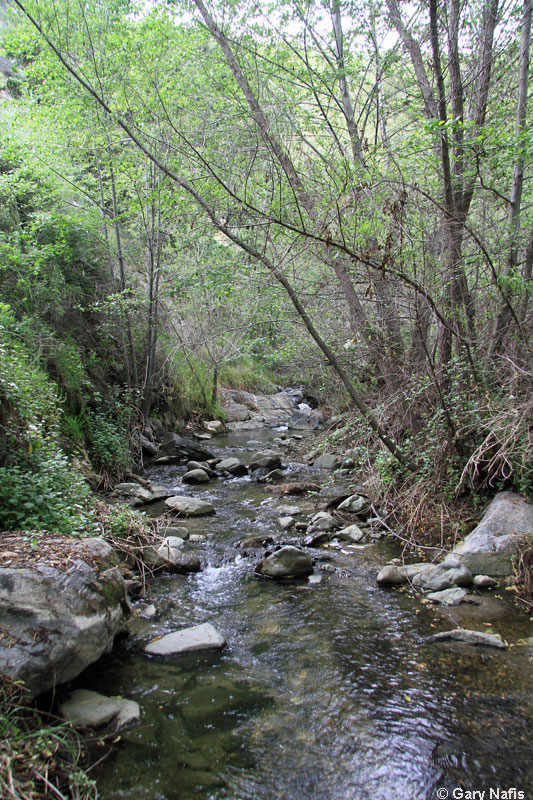
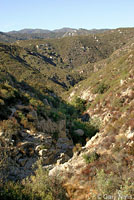
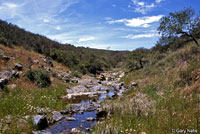
Habitat, seasonal creek, Santa Ana Mountains, Riverside County |
 |
 |
 |
| Habitat, rocky creek,
Riverside County |
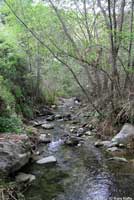
Habitat, small creek, San Gabriel Mountains, Los Angeles County |
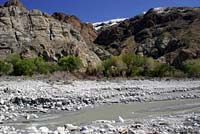
Habitat, riparian desert canyon,
Riverside County |
 |
 |
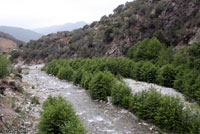 |
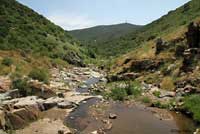
Habitat, rocky creek, Riverside County
© Nathan Kudla |
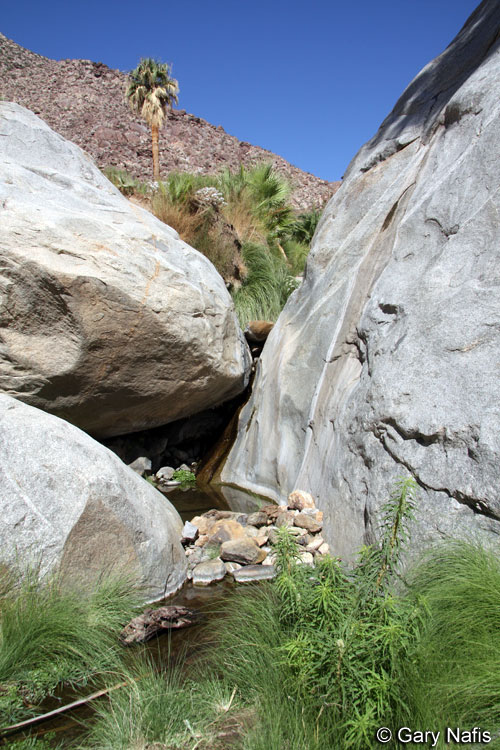
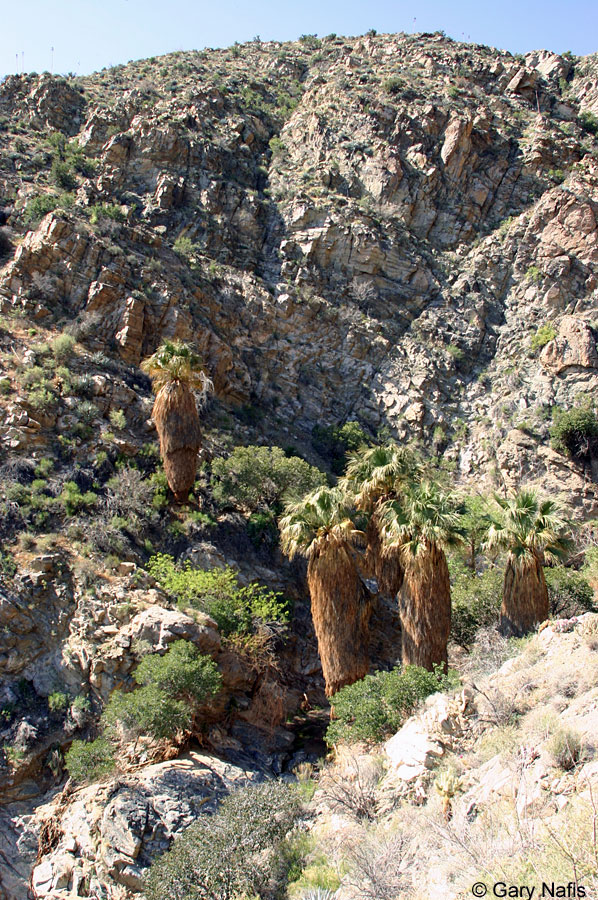
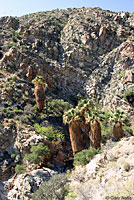
Desert palm oasis habitat,
Riverside County |
Habitat, San Gabriel Mountains,
Los Angeles County
|
| |
 |
 |
| |
Habitat, San Diego County
|
Habitat, Santa Ana Mountains,
Orange County
© 2003 Bon Terra Consulting |
| |
|
|
| Short Videos |
 |
 |
 |
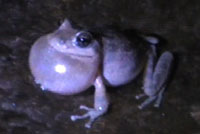
A male calls on a windy night from the edge of a small pond in San Diego County. He makes three distinct sounds - a low call, then several higher-pitched calls followed by some ratcheting encounter calls, ending with another high-pitched call. Other calling California Treefrogs are heard in the background.
|
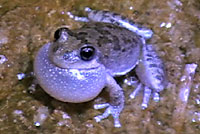
At night at a small pond in San Diego County, after I make an imitation of his call, a male frog repeatedly makes what appears to be his encounter call while aggressively moving towards the camera until he finally hops away. A Red-spotted Toad and other CA Treefrogs are heard in the background. |
A male calls on a windy night from the edge of a small pond in San Diego County. Other calling California Treefrogs (Chorus Frogs) are heard in the background. |
| |
 |
|
| |
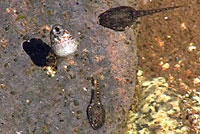
California Treefrog (Chorus Frog) tadpoles in a shallow sunny pool in a slow-moving creek flowing through a San Diego County desert canyon. |
|
|
|
|
| Description |
| |
| Size |
Adults are 1.25 - 2.25 inches long from snout to vent ( 3.2 - 5.7 cm). (Stebbins & McGinnis, 2012)
|
| Appearance |
A small treefrog with webbing and expanded pads on the toes.
|
| Color and Pattern |
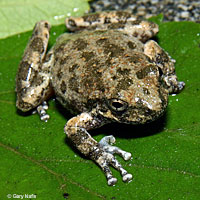
Skin is rough and cryptically colored: gray or brown with dark blotches, tending to match the habitat.
Usually there is no dark stripe through the eye as there is on the similar and sympatric Pseudacis hypochondriaca but there may be a vague stripe and juveniles sometimes have a more pronounced eye stripe.
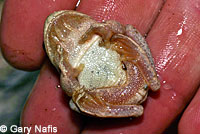
The underside is whitish.
Rear legs, groin, and lower abdomen are yellow. |
| Male/Female Differences |
| Males have dusky coloring on the throat. |
| Larvae (Tadpoles) |
Tadpoles grow up to about 1.5 inches in length (3.7 cm). (Stebbins & McGinnis, 2012)
|
| Comparison with sympatric Baja California Treefrogs - Pseudacris hypochondriaca |
Adults
Baja California Treefrogs have a dark stripe through each eye.
California Treefrogs do not have a dark stripe through each eye.
(Sometimes a faint stripe is presnet, and juveniles may have a more pronounced eye stripe that fades with age.)
Baja California Treefrogs are found in a variety of colors including greens, greys and browns.
California Treefrogs are gray or tan or brown with dark markings.
Tadpoles
Baja California Treefrog tadpoles have eyes that when seen from above are on the edge of the outline of the head.
California Treefrog tadpoles have eyes that, when viewed from above, are set barely within the outline of the head.
California Treefrog (Chorus Frog) tadpoles have a flatter body than Baja California Treefrogs and a more acute snout.
(Stebbins & McGinnis, 2012)
|
| Life History and Behavior |
| Activity |
Nocturnal.
Takes shelter in shaded rock crevices or small depressions on boulders near water during the day.
Most commonly found along stream channels.
Outside of the breeding season, they do not spend much time in the water.
Inactive during very cold and very hot and dry periods.
Adults use spring and summer habitat near streams, then move to crevices higher above drainages in fall and winter, remaining mostly inactive from December to mid March.
Mark and recapture studies have shown that some females are found in the same location each year. |
| Defense |
| California Treefrogs and tadpoles rely on cryptic coloring to hide from predators. When disturbed, they jump into water, returning to the shore very quickly. |
Territoriality
|
| Males exhibit aggressive territorial behavior towards other males during the breeding season. |
| Longevity |
| Not known. |
| Voice (Listen) |
Males make an advertisement call at night from the shore, from rocks, or floating vegetation mats, and occasionally from water.
The advertisement call is a loud quick low-pitched duck-like quacking that ends abruptly and is given repeatedly.
Males also produce a trilled encounter or warning call when interacting closely with other males of the species. |
| Diet and Feeding |
Eats insects, spiders, centipedes and other invertebrates.
Typical of most frogs, the prey is located by vision, then a large sticky tongue is used to catch the prey and bring it into the mouth to eat. Tadpoles feed on organic detritus and plant material. |
| Reproduction |
Reproduction is aquatic.
Fertilization is external, with the male grasping the back of the female and releasing sperm as the female lays her eggs.
Amplexus is inguinal - the male grasps the female around her waist.
The reproductive cycle is similar to that of most North American Frogs and Toads. Mature adults come into breeding condition and move to ponds or ditches where the males call to advertise their fitness to competing males and to females. Males and females pair up in amplexus in the water where the female lays her eggs as the male fertilizes them externally. The adults leave the water and the eggs hatch into tadpoles which feed in the water and eventually grow four legs, lose their tails and emerge onto land where they disperse into the surrounding territory.
Adults appear to be reproductively mature at two years of age. Mature adults come into breeding condition and move to ponds or ditches where the males call to advertise their fitness to competing males and to females.
Mating and egg-laying occurs from early February to early October after the high-flow from seasonal storms starts to decrease. Males and females pair up in amplexus in the water where the female lays her eggs as the male fertilizes them externally. The adults leave the water and the eggs hatch into tadpoles which feed in the water and eventually grow four legs, lose their tails and emerge onto land where they disperse into the surrounding territory.
|
| Eggs |
Eggs are laid singly (but tend to stick together in clusters) and are attached to twigs, leaves, and other stationary debris on the bottom of quiet pools in still or slowly flowing water that is typically surrounded by rocks and boulders.
(Putting the eggs under water protects them from harmful solar UV-B rays.)
|
| Tadpoles and Young |
Tadpoles metamorphose 40 - 75 days after hatching.
For a short time, recently metamorphosed juveniles are often very common surrounding their natal pools, then they become scarce due to mortality or to their moving into other habitat.
|
| Hybrids |
"Probable natural adult hybrids between California treefrogs and Pacific treefrogs have been reported (Brattstrom and Warren, 1955; Gorman, 1960). However, attempts to hybridize these species in the laboratory have resulted in the production of inviable crosses that failed at the earliest stages of development (Maxon and Jameson, 1968; Ball and Jameson, 1970; Gaudin, 1979)." (Edward L. Ervin, Lannoo, 2005)
|
| Habitat |
Typically found around canyon streams and rocky washes with permanent quiet pools. Found in desert streams and palm oases, coastal streams, and up into the mountain pine belt. Coexists with P. hypochondriaca in some areas.
|
| Geographical Range |
Occurs in Coastal Southern California throughout the Coast Ranges from San Luis Obispo county south to and across the Transverse Ranges east to Joshua Tree National Park, and south through the Peninsular Ranges, including the desert slopes, into northern Baja California, Mexico.
|
 |
Red: Pseudacris cadaverina - California Treefrog
|
| Elevational Range |
Found at elevations from near sea level to 7,500 ft. (2,290 m.) (Stebbins, 2003)
|
| Notes on Taxonomy |
Genus changed from Hyla to Pseudacris
The Generic name of this species was changed from Hyla (Treefrogs) to Pseudacris (Chorus Frogs). This creates confusion when some continue to use the long-used common name Treefrog, even though Chorus Frog is more accurate. Most authorities show the common name as either Treefrog or Chorus Frog, which I do here.
-------------------------------------------------------------------------------------------------------------------------------------------------------------------
Genus Hyliola
In a paper published April 2016 * William E. Duellman, Angela B. Marion & S. Blair Hedges present a new phylogenetic tree of hylid frogs (Family Hylidae Rafinesque, 1815) that consists of three families, nine subfamilies, and six resurrected generic names and five new generic names. The family Hylidae contains 7 subfamiles, based on molecular information, not necessarily morphologic characters. Using this tree, the four hylid species found in California become part of the subfamily Acridinae (Acridinae Mivart, 1869) which contains two genera, Pseudacris, and Hyliola (Hyliola Mocquard, 1899.) Our treefrogs (formerly placed in the genus Pseudacris) are placed in the genus Hyliola:
Hyliola cadaverina (Cope),
Hyliola hypochondriaca (Hallowell),
Hyliola regilla (Baird and Girard) &
Hyliola sierra (Jameson, Mackey, and Richmond.)
* William E. Duellman, Angela B. Marion & S. Blair Hedges. Phylogenetics, classification, and biogeography of the treefrogs (Amphibia: Anura: Arboranae)
Zootaxa 4104 (1): 001–109 http://www.mapress.com/j/zt/ Copyright © 2016 Magnolia Press.
Hansen and Shedd (2025) use Psedudacris with this comment: "...Duellman et al. (2016) recommended moving California species [of hylid frogs] to a third genus, Hyliola, based on their geographic separation from eastern members of Pseudacris, a move we find unnecessary and needlessly disruptive of now-established taxonomy. We follo wth reasoning of Faivovich et al. (2018) and Banker et al. (2020) in retaining use of Pseudacris."
Amphibiaweb (accessed January, 2025) uses the genus Pseudacris with the subgenus Hyliola.
Nicholson, K. E. (ed.). 2025 SSAR Scientific and Standard English Names List comment: on Hyliola
"Based on a re-analysis of previously published molecular data, Duellman et al. (2016, Zootaxa 4104: 1–109) restricted the name Pseudacris to the eastern and Rocky Mountain species related to P. nigrita and allocated the western species, P. cadaverina, P. hypochondriaca, P. regilla, and P. sierra to Hyliola Mocquard, 1899. Based on genome-wide nDNA data, Banker et al. (2020, Systematic Biology 69: 756–773) argued that Hyliola should not be recognized because (a) the genus Pseudacris already is a monophyletic taxon without the change, and (b) the geographic separation rationale cited by Duellman et al. (2016, Zootaxa 4104: 1–109) is insufficient as the sole criterion for splitting a long-recognized monophyletic clade, causing unnecessary taxonomic instability. Use of Hyliola has not gained any traction in the systematic community, presumably because of the small number of species involved."
-------------------------------------------------------------------------------------------------------------------------------------------------------------------
Alternate and Previous Names (Synonyms)
Pseudacis cadaverina - California Chorus Frog (Hansen and Shedd 2025)
Pseudacis cadaverina - California Treefrog (or Chorus Frog) (Amphibiaweb 1/25)
Pseudacis cadaverina - California Treefrog (or Chorus Frog) (iNaturalist 1/25)
Pseudacis cadaverina - California Treefrog (CDFW 2024-25)
Pseudacris cadaverina - California Chorus Frog (McGinnis & Stebbins 2018)
Hyliola cadaverina (Duellman, Marion, & Hedges 2016)
Pseudacris cadaverina - California Chorus Frog (California Treefrog) (Stebbins & McGinnis 2012)
Hyla cadaverina - California Treefrog (Stebbins 1985, 2003)
Hyla californiae - California Treefrog (Stebbins 1966)
Hyla arenicolor - Canyon Tree-Frog (Stebbins 1954
Hyla arenicolor - Canyon Tree Frog (Canyon Tree Toad, Desert Tree Toad, Cope's Hyla, Arizona Tree Frog, Sonoran Tree Toad) (Wright & Wright 1949)
Hyla arenicolor - Cañon Tree-toad (Storer 1925)
Hyla arenicolor - Arizona Tree-frog - Cope's Treepfrog, Tree-toad, Cope's Hyla, Sand-colored Tree Frog
(Grinnell and Camp 1917)
Hyla affinis (Baird 1854)
|
| Conservation Issues (Conservation Status) |
No known issues, although unpublished data suggests that some populations may be experiencing declines where non-native predatory fish have become established. (Ervin in Lanoo, 2005).
The effect of non-native aquatic predators - fish, caryfish, African Clawed Frogs, Bullfrogs - has not been determined. |
|
| Taxonomy |
| Family |
Hylidae |
Treefrogs |
Laurenti, 1768 |
| Genus |
Pseudacris |
Chorus Frogs |
Fitzinger, 1843 |
| Species |
cadaverina |
California Treefrog
(or Chorus Frog)
|
(Cope, 1866) |
|
Original Description |
Originally Hyla cadaverina - Cope, 1866 - Journ. Acad. Nat. Sci. Philadelphia, Ser. 2, Vol. 6, No. 2, p. 84
from Original Description Citations for the Reptiles and Amphibians of North America © Ellin Beltz
|
|
Meaning of the Scientific Name |
Pseudacris
Greek - pseudes = false, deceptive
Greek - akris = locust
[Acris is also the genus of Cricket Frogs, which make a sound similar to a locust, so the name probably refers to this frog's call, which could be heard as similar to the sounds of locusts or Cricket Frogs.]
cadaverina - Latin = cadaver - a corpse and -ina = having the appearance of - refers to the pale corpse-like appearance in life of some morphs of this frog
from Scientific and Common Names of the Reptiles and Amphibians of North America - Explained © Ellin Beltz
|
|
Related or Similar California Frogs |
Pseudacris hypochondriaca - Baja CaliforniaTreefrog
|
|
More Information and References |
California Department of Fish and Wildlife
AmphibiaWeb
Hansen, Robert W. and Shedd, Jackson D. California Amphibians and Reptiles. (Princeton Field Guides.) Princeton University Press, 2025.
Stebbins, Robert C., and McGinnis, Samuel M. Field Guide to Amphibians and Reptiles of California: Revised Edition (California Natural History Guides) University of California Press, 2012.
Stebbins, Robert C. California Amphibians and Reptiles. The University of California Press, 1972.
Flaxington, William C. Amphibians and Reptiles of California: Field Observations, Distribution, and Natural History. Fieldnotes Press, Anaheim, California, 2021.
Nicholson, K. E. (ed.). 2025. Scientific and Standard English Names of Amphibians and Reptiles of North America North of Mexico, with Comments Regarding Confidence in Our Understanding. Ninth Edition. Society for the Study of Amphibians and Reptiles. [SSAR] 87pp.
Samuel M. McGinnis and Robert C. Stebbins. Peterson Field Guide to Western Reptiles & Amphibians. 4th Edition. Houghton Mifflin Harcourt Publishing Company, 2018.
Stebbins, Robert C. A Field Guide to Western Reptiles and Amphibians. 3rd Edition. Houghton Mifflin Company, 2003.
Behler, John L., and F. Wayne King. The Audubon Society Field Guide to North American Reptiles and Amphibians. Alfred A. Knopf, 1992.
Robert Powell, Roger Conant, and Joseph T. Collins. Peterson Field Guide to Reptiles and Amphibians of Eastern and Central North America. Fourth Edition. Houghton Mifflin Harcourt, 2016.
Powell, Robert., Joseph T. Collins, and Errol D. Hooper Jr. A Key to Amphibians and Reptiles of the Continental United States and Canada. The University Press of Kansas, 1998.
American Museum of Natural History - Amphibian Species of the World 6.2
Bartlett, R. D. & Patricia P. Bartlett. Guide and Reference to the Amphibians of Western North America (North of Mexico) and Hawaii. University Press of Florida, 2009.
Elliott, Lang, Carl Gerhardt, and Carlos Davidson. Frogs and Toads of North America, a Comprehensive Guide to their Identification, Behavior, and Calls. Houghton Mifflin Harcourt, 2009.
Lannoo, Michael (Editor). Amphibian Declines: The Conservation Status of United States Species. University of California Press, June 2005.
Storer, Tracy I. A Synopsis of the Amphibia of California. University of California Press Berkeley, California 1925.
Wright, Albert Hazen and Anna Wright. Handbook of Frogs and Toads of the United States and Canada. Cornell University Press, 1949.
Davidson, Carlos. Booklet to the CD Frog and Toad Calls of the Pacific Coast - Vanishing Voices. Cornell Laboratory of Ornithology, 1995.
Storer, Tracy I. A Synopsis Of The Amphibia of California. University of California Press, 1925.
Joseph Grinnell and Charles Lewis Camp. A Distributional List of the Amphibians and Reptiles of California. University of California Publications in Zoology Vol. 17, No. 10, pp. 127-208. July 11, 1917.
|
|
|
The following conservation status listings for this animal are taken from the July 2025 State of California Special Animals List and the July 2025 Federally Listed Endangered and Threatened Animals of California list (unless indicated otherwise below.) Both lists are produced by multiple agencies every year, and sometimes more than once per year, so the conservation status listing information found below might not be from the most recent lists, but they don't change a great deal from year to year.. To make sure you are seeing the most recent listings, go to this California Department of Fish and Wildlife web page where you can search for and download both lists:
https://www.wildlife.ca.gov/Data/CNDDB/Plants-and-Animals.
A detailed explanation of the meaning of the status listing symbols can be found at the beginning of the two lists. For quick reference, I have included them on my Special Status Information page.
If no status is listed here, the animal is not included on either list. This most likely indicates that there are no serious conservation concerns for the animal. To find out more about an animal's status you can also go to the NatureServe and IUCN websites to check their rankings.
Check the current California Department of Fish and Wildlife sport fishing regulations to find out if this animal can be legally pursued and handled or collected with possession of a current fishing license. You can also look at the summary of the sport fishing regulations as they apply only to reptiles and amphibians that has been made for this website.
This frog is not included on the Special Animals List, meaning there are no significant conservation concerns for it in California according to the Dept. of Fish and Game.
|
| Organization |
Status Listing |
Notes |
| NatureServe Global Ranking |
|
|
| NatureServe State Ranking |
|
|
| U.S. Endangered Species Act (ESA) |
None |
|
| California Endangered Species Act (CESA) |
None |
|
| California Department of Fish and Wildlife |
None |
|
| Bureau of Land Management |
None |
|
| USDA Forest Service |
None |
|
| IUCN |
|
|
|
|
|